
Spring BioBlitz: Tortolita Preserve Report
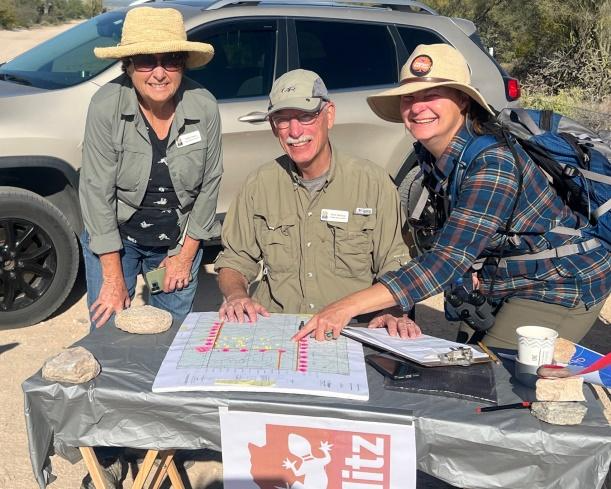
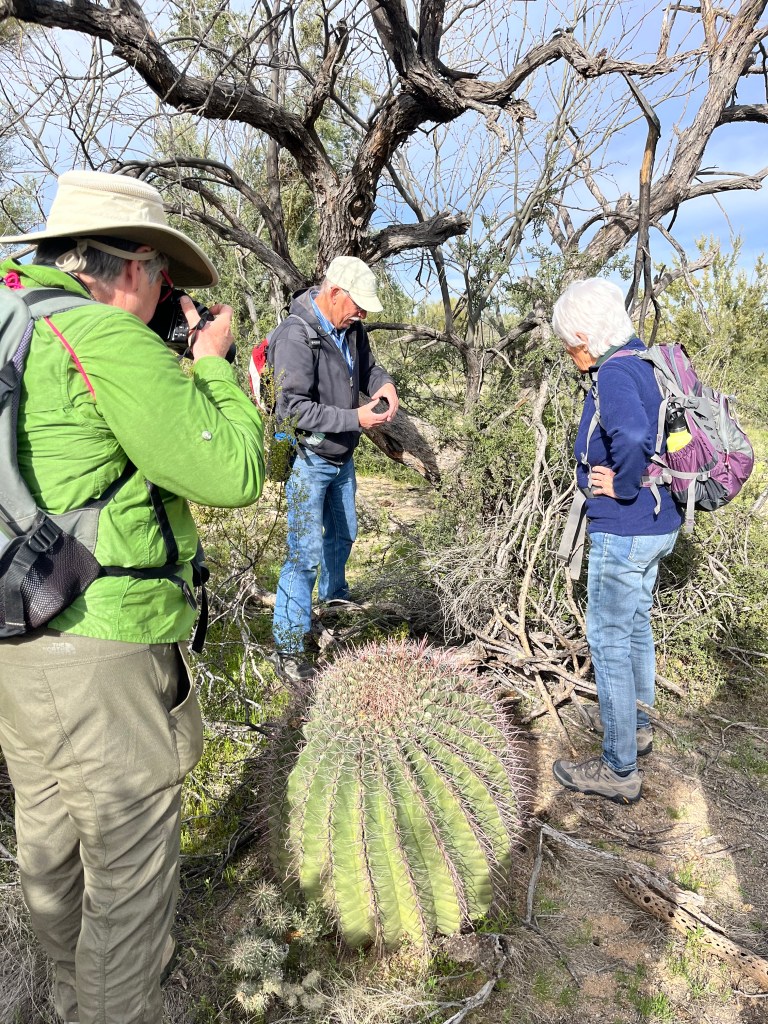
Photo: PCMNs Izetta Feeny C6, Dave DeGroot C2, and Dre Hoerr C3 at the trailhead.
By Dave DeGroot, April 20, 2023
Master Naturalists find many previously unrecorded species – It’s amazing to see what a couple dozen highly motivated Master Naturalists can accomplish in just a few hours!
On Saturday morning, April 15, 24 iNaturalist-toting MN’s converged on the Tortolita Preserve in northwest Tucson for a Spring BioBlitz. Unlike other BioBlitzes in the Tucson area, this one was run by and for MN’s only, at the request of the Town of Marana, which oversees the Preserve. Many participants drove down from Maricopa County. When the dust cleared, 293 observations had been made of 115 species.
Many species were observed for the first time in the Preserve. Not only that, but when you look at iNaturalist’s map showing “all nearby observations” in about 80 square miles of desert north of Tangerine Road, many of the observed species are unique sightings for the whole surrounding area. For example, a little Rufous-Winged Sparrow, a well-known resident of Mexico, was observed at the extreme northern edge of its range. Some unique plants included: Brittle Spineflower (Chorizanthe brevicornu), Woolly Plantain (Plantago patagonica), Pringle’s Woolly Sunflower (Eriophyllum pringlei), Barestem Larkspur (Delphinium scaposum), Doubleclaw (Proboscidea parviflora), and Fremont’s Pincushion (Chaenactis fremontii).
The prize for the most heart-stopping sighting goes to Jennifer Spawn, who observed and confirmed a Coachwhip Snake that was approximately 8 feet long.
There’s an interesting history behind this BioBlitz. It was a follow-up to a groundbreaking Fall BioBlitz in the Preserve (2022) which combined the efforts of seven organizations and agencies: the Town of Marana, Arizona Master Naturalists, the Tortolita Alliance, Arizona Game and Fish, the Coalition for Sonora Desert Protection, The Wildlife Society, and the Audubon Society. The two BioBlitzes, one in the fall and this one in the spring, are now creating a first-ever list of plants and animals in the Preserve – a list that will be useful for conservation efforts in the future.
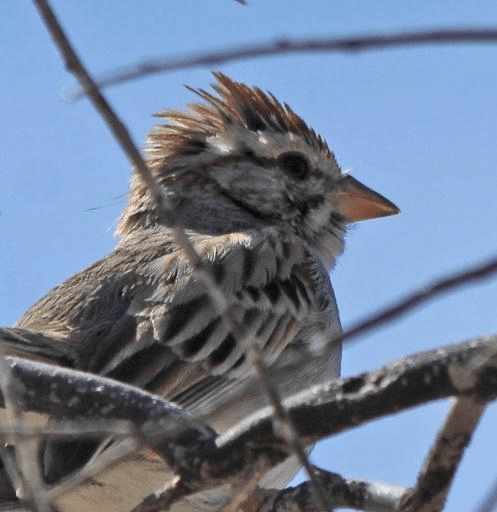
This Rufous-Winged Sparrow, more common in Mexico, was seen at the northern edge of its range.

The Brittle Spineflower looked a little like the insides of a plastic dish scrubber, stretched apart!
Earth Day Events with PCMN
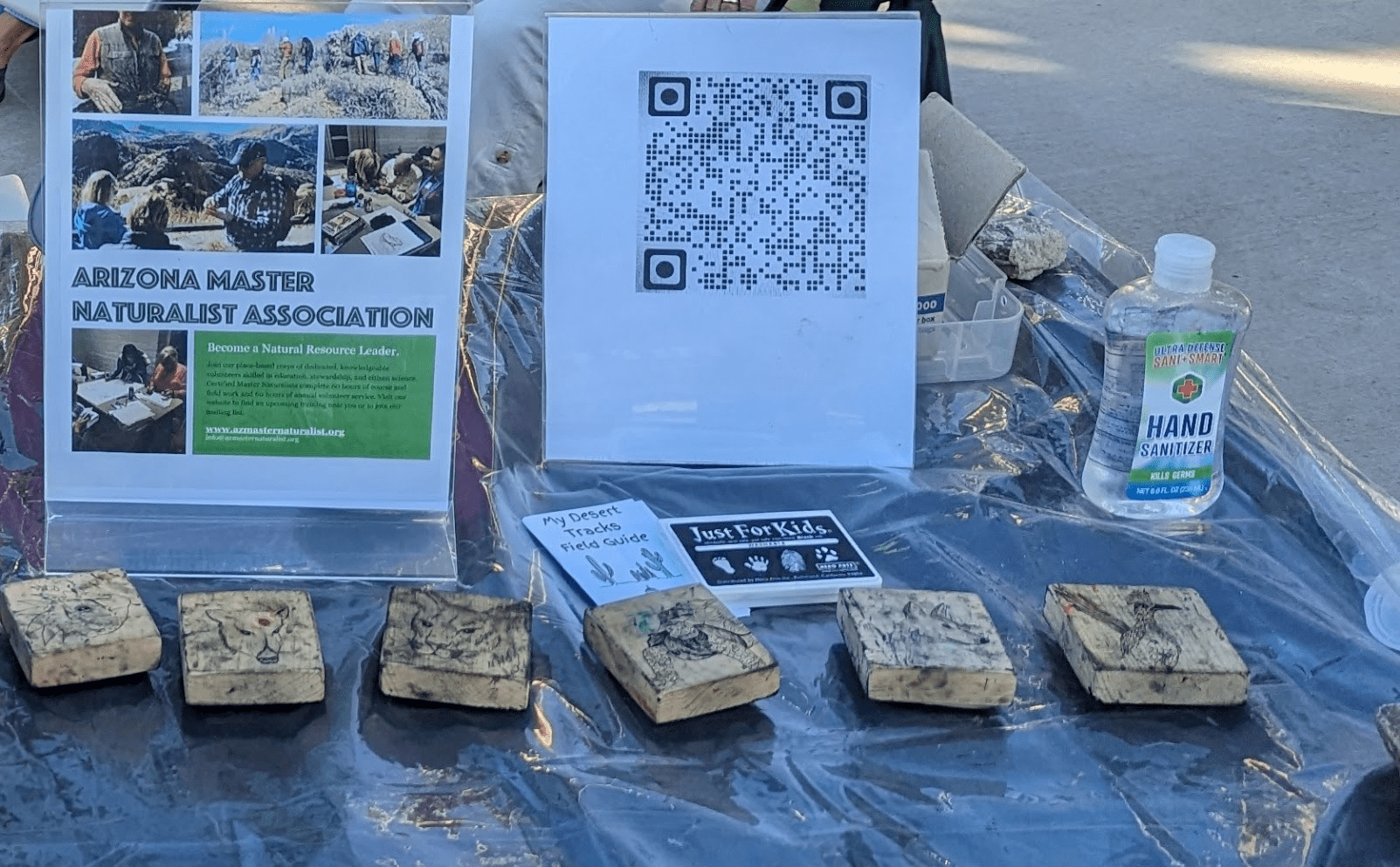
Earth Day at Marana Parks and Natural Resources
PCMN was invited by our partners at Marana Parks and Natural Resources to table at their earth-day themed Concert in the Courtyard on April 20th. Vicki Ettleman (C3), Peggy Ollerhead (C3) and Izetta Feeney (C6) enjoyed introducing families to the signs and tracks of their desert neighbors! The family-friendly event featured food trucks, a country western dance band, and Earth Day themed tabling partners.

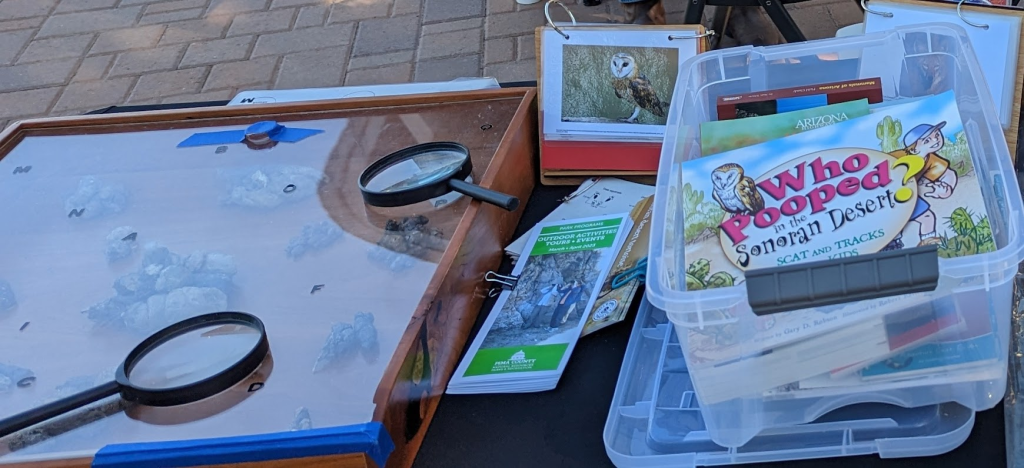
Mission Garden Earth Day 2023
Great fun and outdoor educational opportunities were evident at Mission Garden’s Earth Day on April 22nd. Speakers shared their personal and historic knowledge about acequias ( engineered water canals). Over 300 people attended, many of them families who enjoyed events led by a number of our PCMNs.
Melissa Mundt, Cohort 5 and from PCNRPR – our chapter sponsor, worked with Mission Garden Youth Education volunteers exploring the acequia with families; dip netting for macro-invertebrates. Finding dragonfly and mayfly larvae to show the acequia’s waters are of good water quality.
Xerces Wildlife Biologist Saff Killingsworth and Chris Robie (06) shared the wonders of our native bees of AZ. Did you know there are over 1,300 native bee species in AZ making us a hotspot for bee biodiversity not just in the US but in the world?
Linda Doughty and Izetta Feeny (both 06) guided people through the steps to download the iNaturalist App and support the 2023 City Nature Challenge.
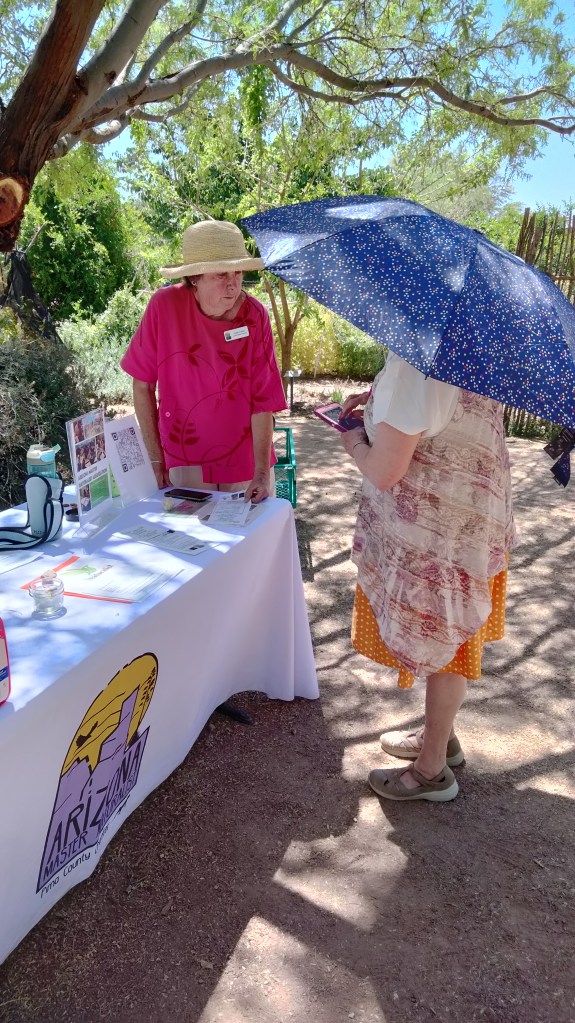
Jane Davenport (01) assisted with any First Aid needs.

Wildflower seed ball making with the Cooperative Extension, highlighted Elise Gornish’s work including a new children’s book about Ecological Restorations.
Samantha Brewer with Nature’s Notebook created a scavenger hunt unique for the flora and fauna of Mission Garden. Melissa has encouraged this talented woman to register for the PCMN class of 2024!
Guests could also make a cienega in a jar and learn more about bats with Mission Garden volunteers. Archaeology Southwest was there too.
THANKS to all for the great team work on Earth Day at Mission Garden!
MARK your calendars for August 18th for Critter Night at Mission Garden from 5:30-8:30. If you have an AZ critter that you would like to share/table about please contact Chris Robie at christinerobie8@gmail.com.
Both posts along with photos submitted by Peggy Ollerhead, Cohort 3
Salt River Wild Horses

Submitted by Jean Loney, Cohort 1
Taking a trip to the lower Salt River to see the wild horses was a dream come true. Leaving early on a Sunday morning in late March from Tucson we drove onto Power Road from Loop 202 which turned into N Bush Highway. At Tonto National Forest we paid our fee for parking so that we would be able to pull out and stop at the various areas to search for the wild horses. Being told that we shouldn’t be disappointed if we didn’t see them on our first excursion, we kept our hopes in check.
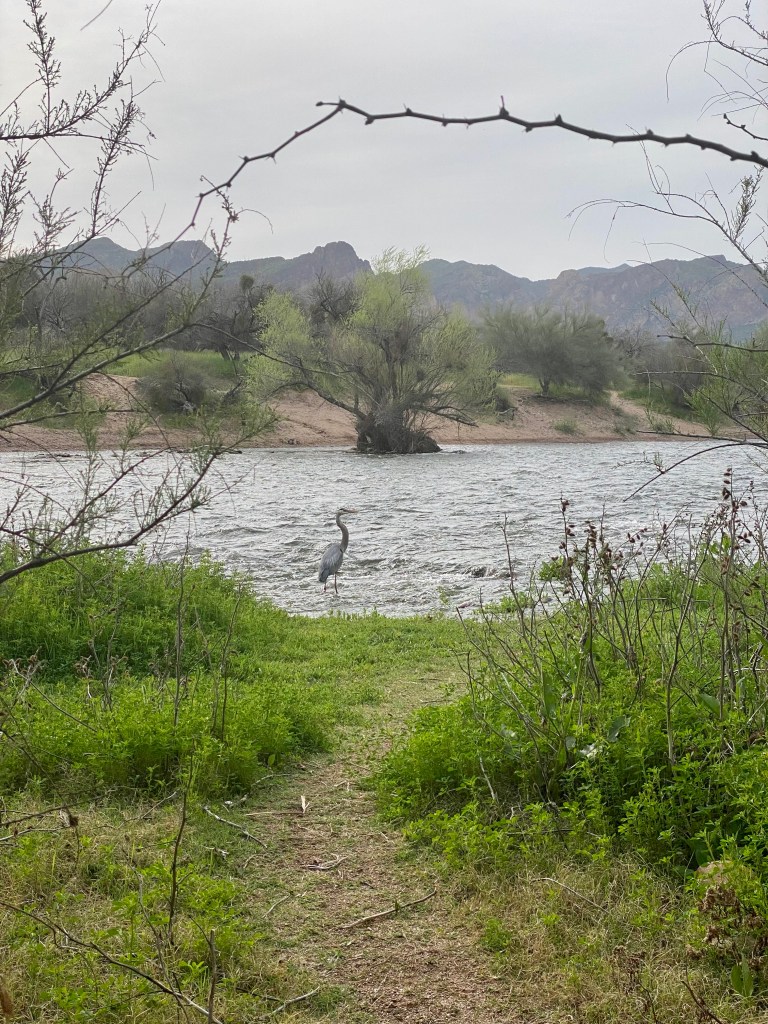
At each stopping point along the way we would get out and wander down to the Salt River and walk along in search of these majestic beauties. Our first 3 stops were unsuccessful and we were wondering if this may have been a long trip for nothing. But it was a beautiful day, slightly overcast at times and the wildflowers were in bloom so it didn’t seem like a total loss. Once we passed Saguaro Lake we discovered cars parked along the highway and off to our left we saw a small band of horses! We quickly found a place to pull off and wandered back to observe with our binoculars and cameras with telephoto lens. This was a small band of approximately 30 horses – mostly grazing on grasses with a few laying down and resting in the wildflowers. It felt like we hit the lottery.
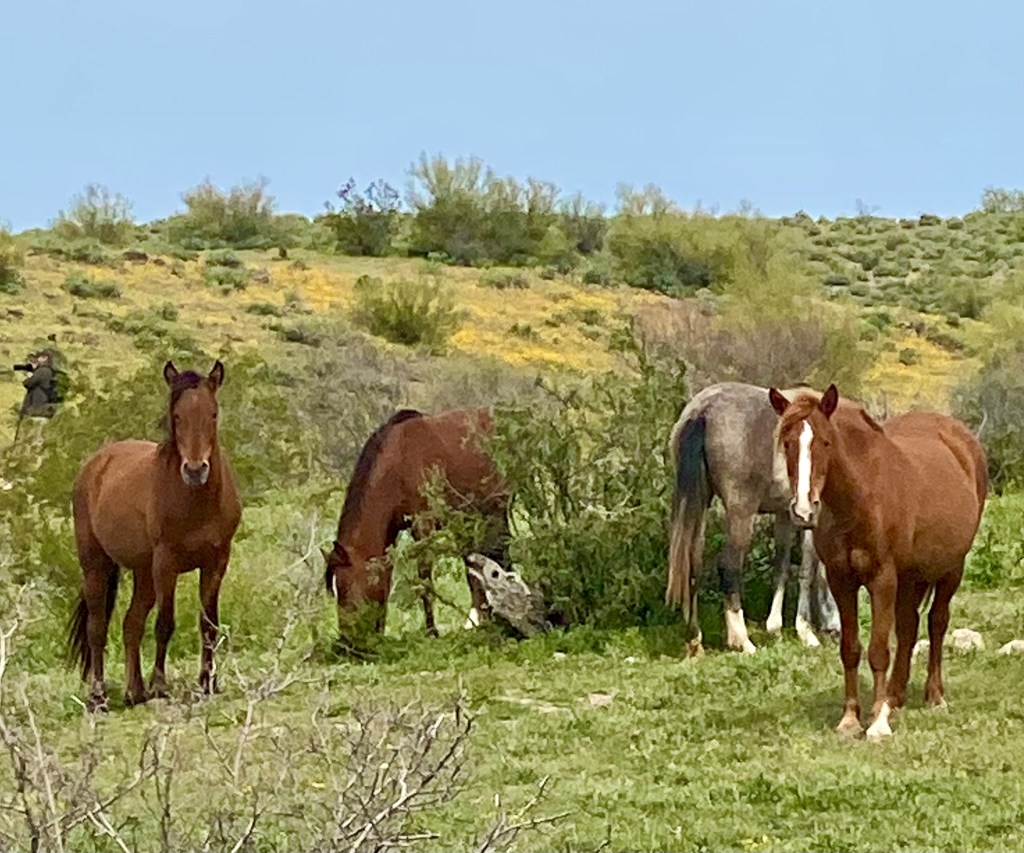
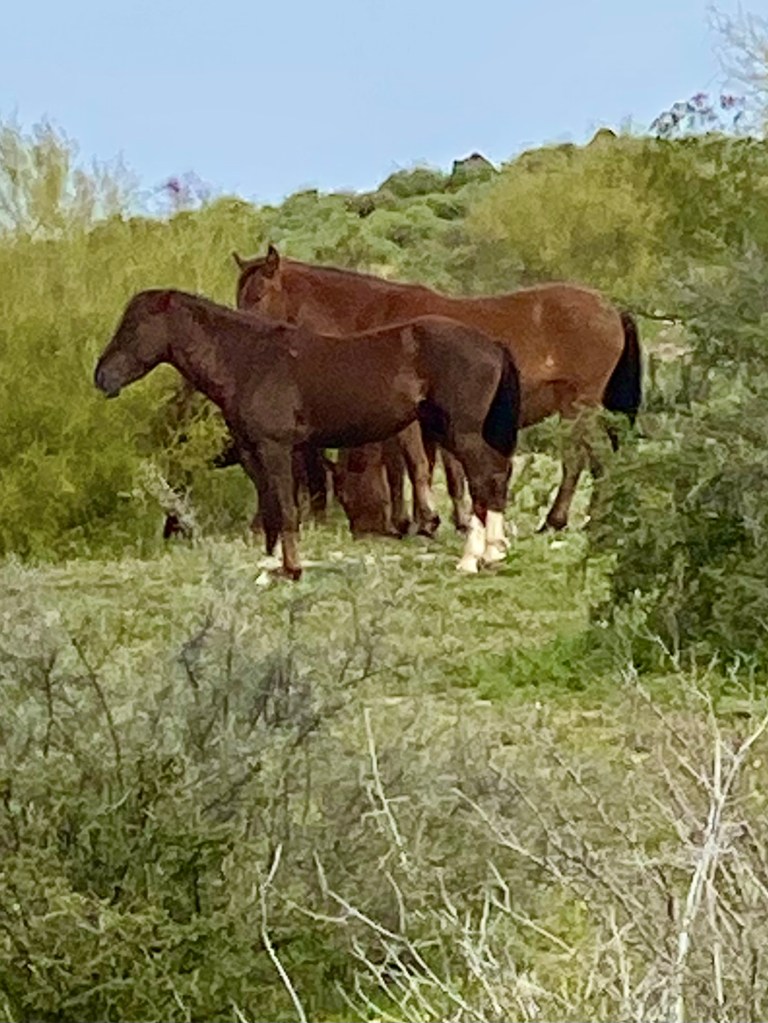
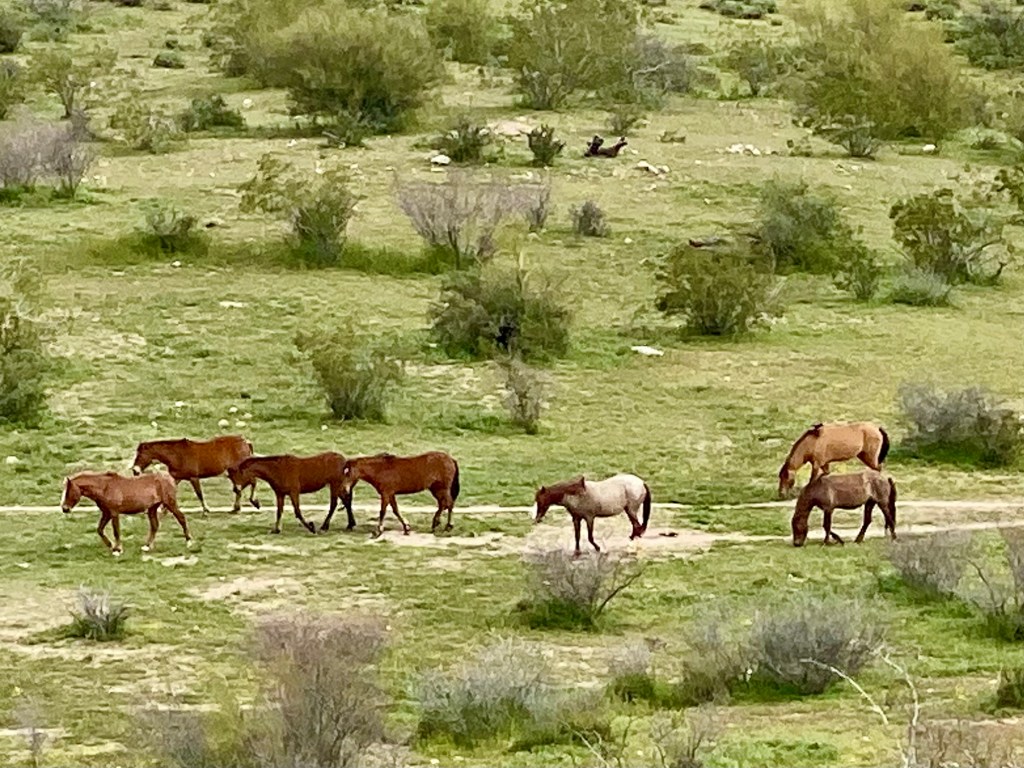
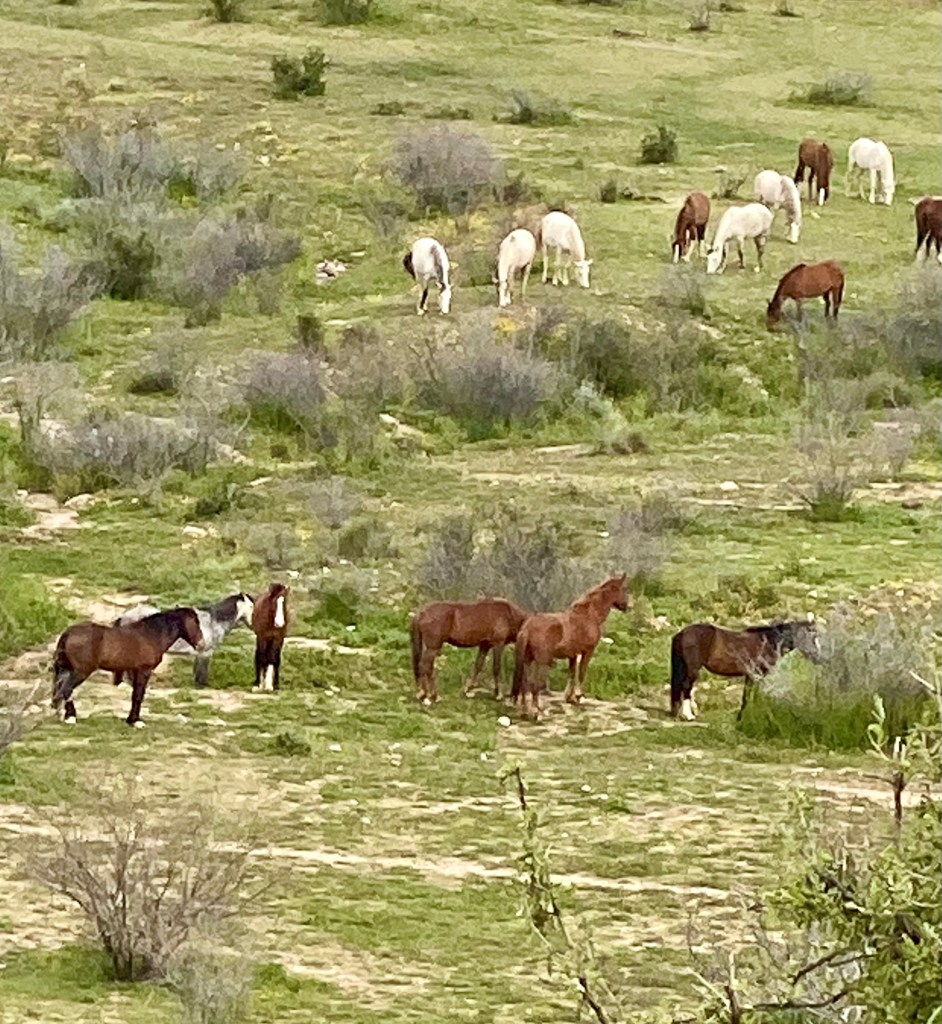
These horses are a symbol of the wild west and the pride of Arizona. Keeping our distance of at least 50 feet (although some individuals seemed to think it was OK to wander out into the fields trying to get as close as they could to these horses and disturb them) we enjoyed watching them in their natural habitat. Leaving this area it wasn’t much further along the road that we found another band of wild horses – at least another 30+ and again enjoyed just watching them from a distance.
Most people kept their distance and just enjoyed the privilege of being in the presence of these wild animals. Prying ourselves away from this sight we continued on down the highway and pulled off in a small dirt parking lot that was full of cars. Watching people walk through the gate and down into the valley we followed along to see if there were any more horses behind the hills. We were greeted by at least 40+ horses in this band with staff from the Salt River Wild Horse Management Group providing information to the visitors and making sure that they kept their distance from the horses so they would not be disturbed.
We observed several horses sparring with each other, some horses just grazing and others resting – but keeping a watchful eye on the humans that took in their beauty. The combination of these wild horses and the wildflowers was almost overwhelming. In our wildest dreams we never thought we would be so lucky to see over 100+ wild horses in one day – much less within a 2 hour drive from Tucson.
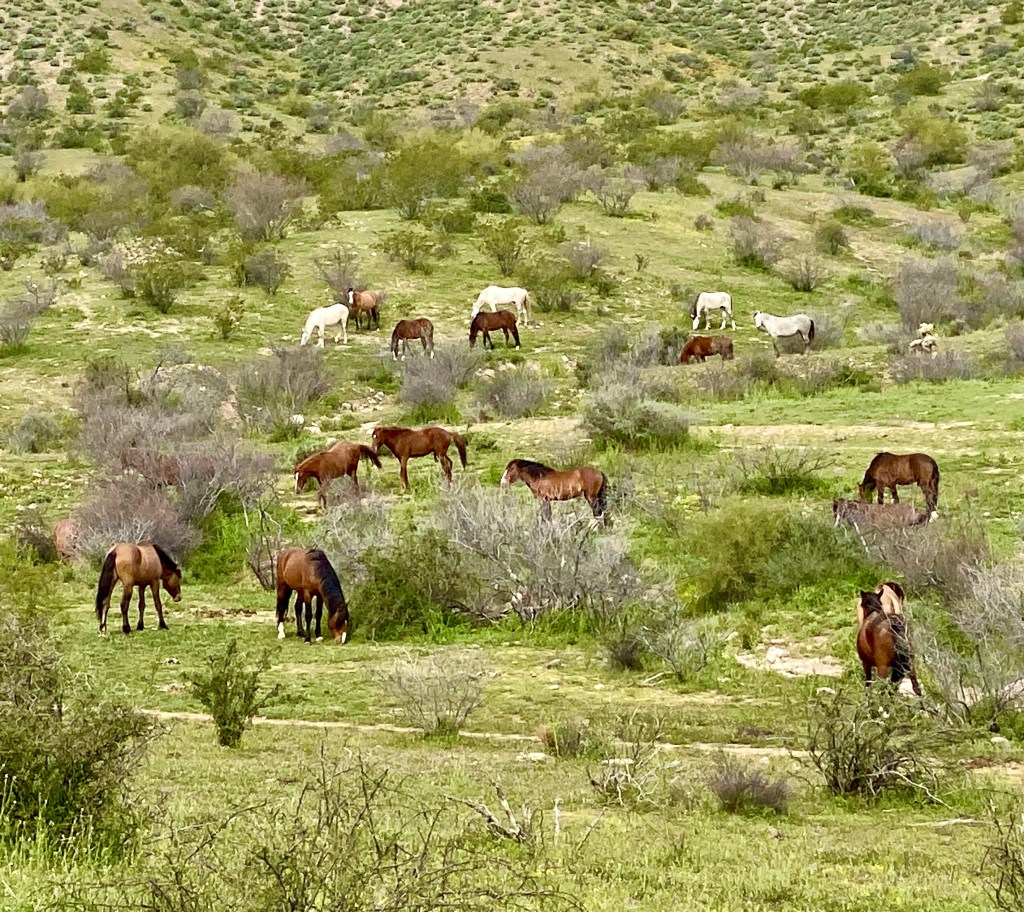
To think that these horses were once considered a nuisance and that people wanted to round them up and get rid of them is incomprehensible. Back in 2015 the Forest Service put out an impound notice to remove the horses from the Tonto National Forest. Fortunately with public input and the help of politicians they are now protected pursuant to Arizona Revised Statute 3-1491 (aka The Salt River Horse Act). The horses are now overseen and protected by the federal government, state government and a non governmental organization (NGO) to humanely monitor as part of our national heritage.
Should you decide to check them out – be prepared to walk over uneven ground, get wet and if you are lucky to find them take time to enjoy them from a safe distance.
Living Lab Experience, Watershed Management Group

Submitted by Aster Schaefer, Cohort 7
Photos: Melissa Mundt, Chapter Advisor
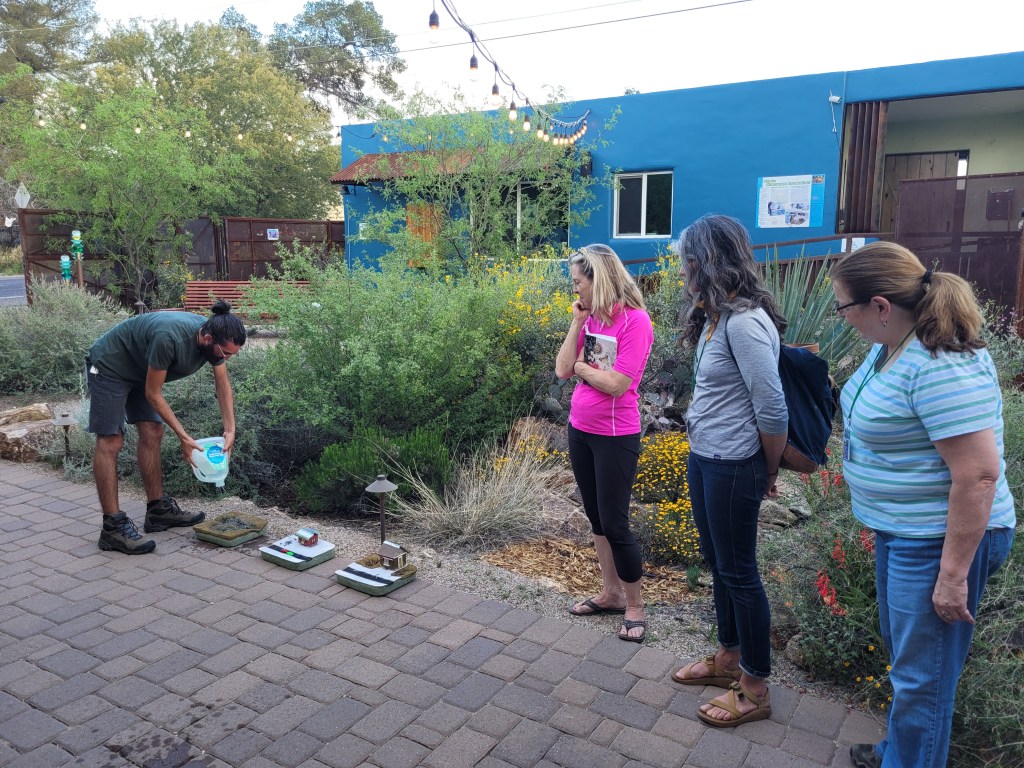
My name is Aster, and I’m a part of PCMN’s Cohort 7. Our class recently went to Watershed Management’s Living Lab on Dodge/Speedway one evening for a field lab, and having never known such a place existed, I was already floored by the time I walked through the gate. Our class was visiting to learn about urban habitat restoration, rainwater harvesting, and generally why the Living Lab is a place that exists and deserves to be excited about. For me, I had a lot of trouble understanding watersheds from the class presentation on hydrology, and this field lab really made it all click for me in several ways. Knowledge is inherently place-based, and my god, what a place we were in that evening!
First, seeing it in person was very different from a PowerPoint slideshow, which was already a huge plus; but what I really saw the Living Lab demonstrate was how reconciling one aspect of city planning with our local landscape (green stormwater infrastructure, basin-building, etc) necessarily means impacting all aspects of our urban ecology. To affect a part of the whole is to affect the whole itself. Building basins means more trees and plants, which means more food sources for birds, insects, and animals (humans included); more exposed and unpaved earth means more room for shade trees, more water retention and filtration through root networks, and increased groundwater recharge among other things… The downsides of embracing and integrating the land in urban planning are laughably small indeed.

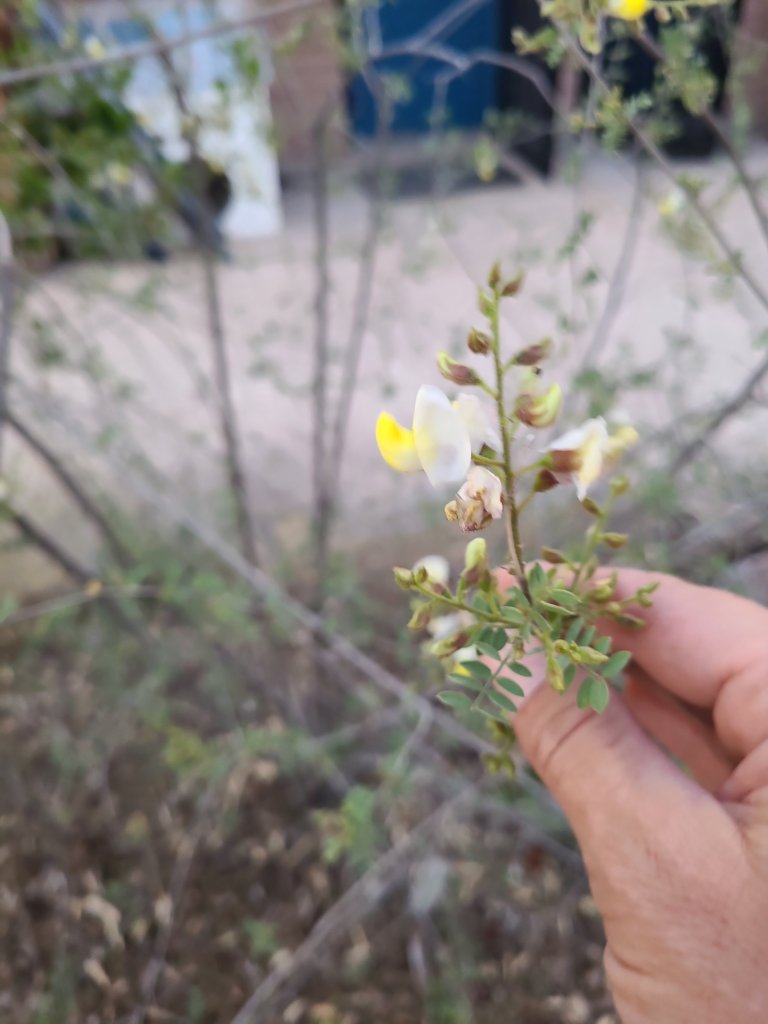
It’s almost like reconciling city habitation with the land and the more-than human world actually doesn’t require more and more high-tech solutions, and that the best methods are actually quite simple and frustratingly obvious. Shocking, I know. In any case, the demonstrations, the lab’s simple and well-thought-out design, and the uncompromising diversity of life that the space hosts show that not only are much better alternatives out there in theory, but that our city (as well as others across southern AZ) can get to those healthier alternatives from where we are now and that there is already a team of people who are on the right track. Thanks again to Watershed Management and our facilitator Catlow!
Camp Cooper Critter Camp
Submitted by Summer Marshall, Cohort 7
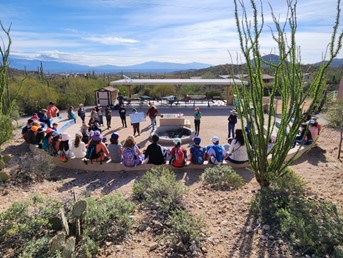
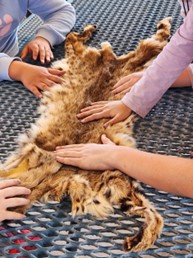
Did you know that bobcats have binocular vision? Or that some animals can mimic certain colors in nature to hide from predators? Students from the Sunrise Drive School spent a Monday and Tuesday morning at the Cooper Center for Environmental Education to get their hands dirty and learn about desert animals and their adaptations at the annual Critter Camp. Teachers, parents, and volunteers enjoyed helping them learn how to use binoculars, get up-close-and-personal with some reptiles, and identify tracks and skulls.
Each student came equipped with a neat green notebook filled with pages of activities to complete at each station they stopped at. After a land acknowledgement and brief introduction, the kids eagerly broke into groups with their teachers and parent chaperones and got to work.
Master Naturalists Kathe Sudano (C3), Peggy Ollerhead (C3), Richard Linsenberg (C6), Summer Marshall (C6), and Dana Hook (C6) assisted at different stations and lended their knowledge to help the students complete their workbooks and have memories and knowledge to last.
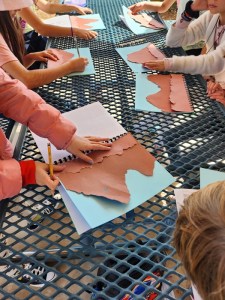
Station one taught students all about bobcats and binocular vision, courtesy of the wonderful group Bobcats in Tucson, where volunteer Gale Sherman explained the adaptations bobcats have evolved as predators, as well as the important information they have gained by radio collaring bobcats. Students then used binoculars to focus on the den site of Dos Picos in the distance. Afterwards, they created layered art of Dos Picos, the land, and the sky behind them. The kids just loved the tearing of paper!
Station two was the messy one! Art skills were put to the test as students blended primary colors to create different shades of greens, browns, and purples. Then they had to create shades that best matched the desert plants around them – jojoba, saguaro, and bursage – not an easy task! Multicolored fingers wiggled in delight as the students tried their artistic best to camouflage their workbooks into the desert landscape.

Station three was a favorite – snakes and lizards only inches away in glass containers, courtesy of the Tucson Herpetologcial Society, and a real live rattlesnake showing off its namesake rattle. Tails were the attraction here and how they helped each creature adapt and survive. And then, from Mr. Packrat, an ode (actually, a rap!) to packrats – not just a nuisance, but an essential part of Sonoran Desert ecology!

Stations four and five found students identifying animal tracks in kinetic sand and learning critter physiology by studying skulls. Whoa, javelina have huge teeth! Yes, those huge holes really are their eye sockets! Finally, the last station ended with a short hike in the desert, hikers on the lookout for anything that could be an animal den – holes, nests, cavities – you name it.
At the end of the day, both students and volunteers enjoyed an enriching experience on the beautiful sunny, warm morning that the weather provided – perfect for the outdoor activities and much more preferred to last year’s rain and thunderstorms. It was a wonderful day for education and everyone looks forward to the next year!

El Camino Del Diablo
By Franklin Lane
Traversing “The Devil’s Highway” from Ajo to Yuma has been on my Sonoran Desert bucket list for quite a while. It has just been a matter of the right time, the right wingman and the right vehicle. In late March 2023 I finally pulled together all three. This time of year, the weather is still agreeable, and my long-time exploring buddy (everybody needs one) was game if I bought the bacanora and did the camp cooking. Padre Kino did the Camino in 1699 on foot and horseback. We decided on a 2017 Jeep Rubicon.
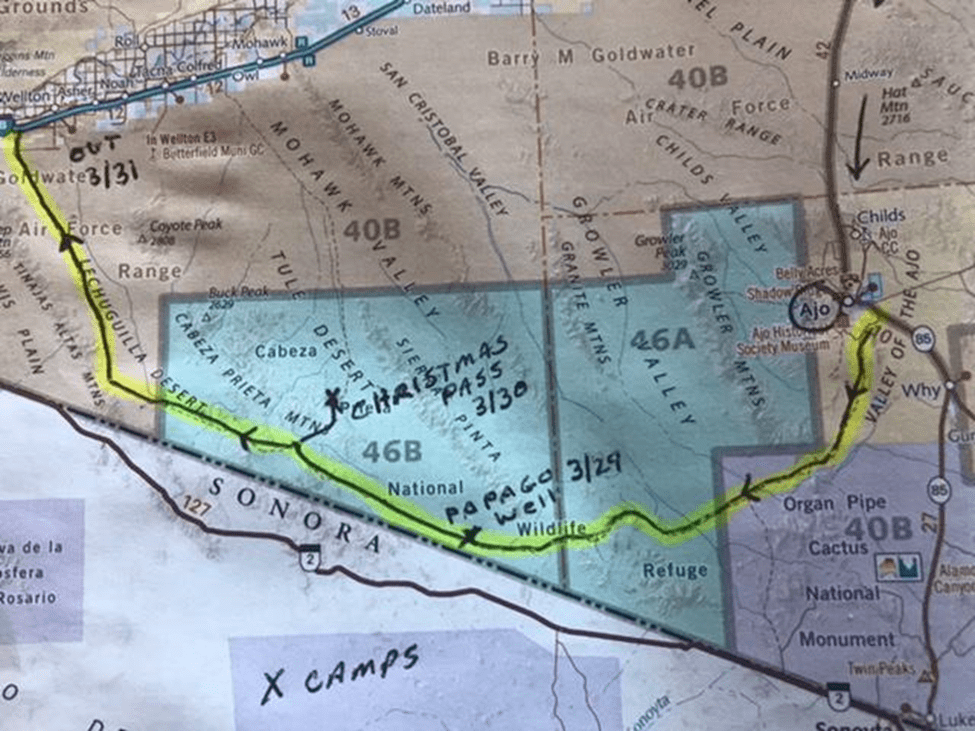
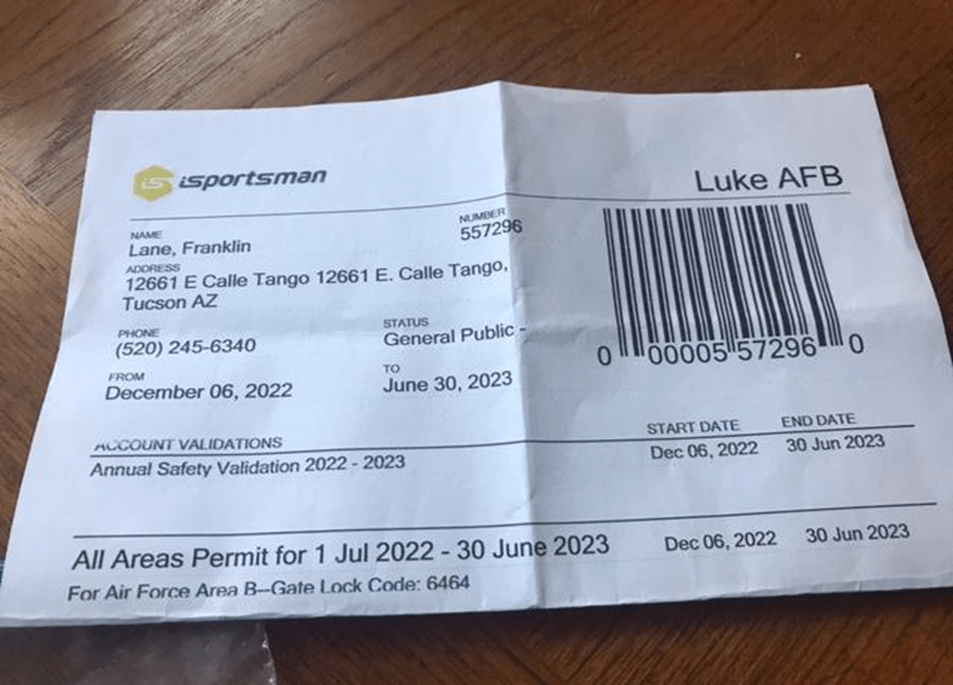
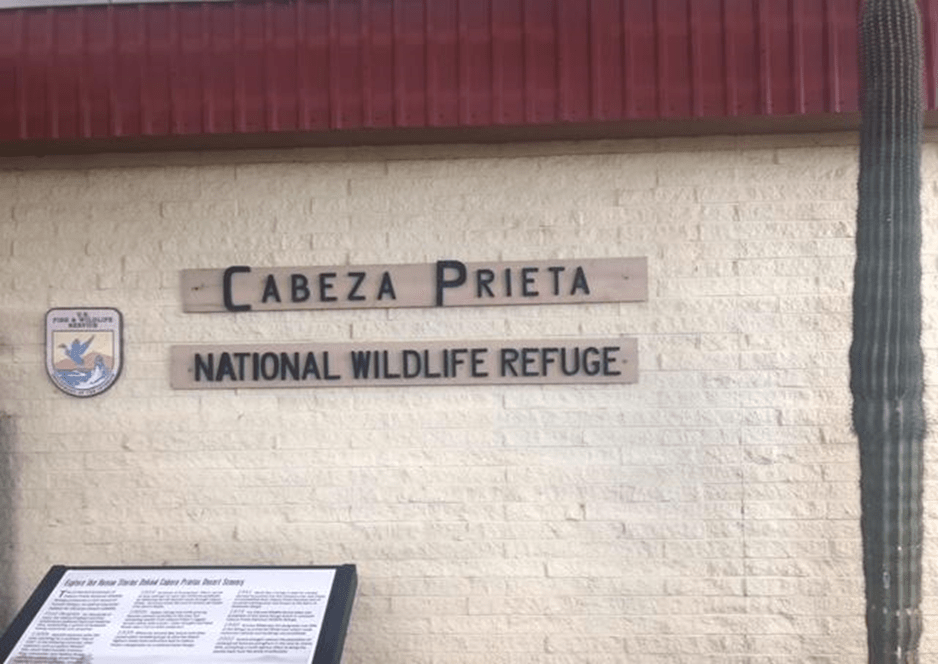
Our @ 125-mile route went through multiple jurisdictions. It began on BLM land as we turned onto Darby Well Road just south of Ajo. We cut through the Northwest corner of Organ Pipe National Monument and then entered Cabeza Prieta National Wildlife Refuge. The last part of the Camino was in the USAF/USMC Goldwater Aviation Firing Range. For this reason, you must obtain a permit from Luke Air Force Base. See sample document below. It requires a short online orientation, safety presentation and easy quiz. Basically, the message is, “don’t pick up any unexploded ordinance.” We probably wouldn’t have done that anyway, but it was a comforting reminder.
The first non-indigenous person to travel the Camino was Captain Melchior Diaz in 1540. He had been dispatched to ascertain the head waters of the Gulf of California while Coronado and his main expedition proceeded north up the San Pedro Valley. Both were looking for those elusive Seven Cities of Gold! In 1856 U.S. Army Lieutenant Nathaniel Michler reported:
“All traces of the road are sometimes erased by high winds sweeping soil before them, but death has strewn a continuous line of bleached bones and withered carcasses of horses and cattle, as monuments to mark the way.”
A lot of these bones were from immigrants and 49ers headed to California who opted to chance this southern route to avoid Apache encounters farther north. The hope was that the deep ‘Tinajas’ in the Tinajas Altas mountains were still holding collected precipitation.
We had decided on our specific route after an earlier recon trip to the area that included receiving a briefing and set of maps at the Cabeza Prieta Wildlife Refuge field office in Ajo. We gave them a courtesy call when we started the trip. We also touched base with Master Naturalist Kim Girard (C6) who was working as a seasonal ranger at Organ Pipe.
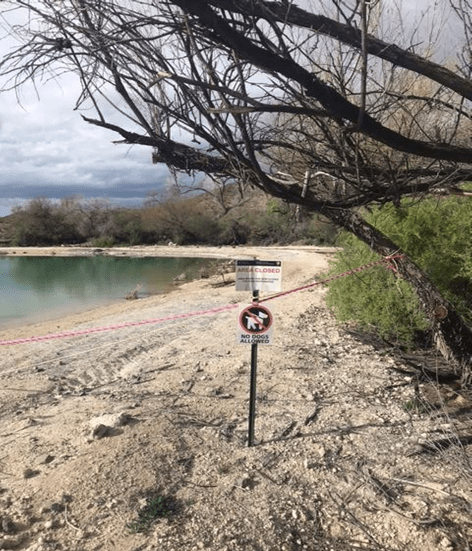
During our reconnaissance trip we also visited Quitobaquito Spring to determine for ourselves
the rumored impacts of the trump-era wall construction. While the soul-killing ‘Wall’ definitely looms near the Spring (within about 60 meters) we learned that the current low water level is actually due to a recent draining. All fauna was removed (fish, turtles etc.) and a synthetic bottom was laid to prevent future leakage. Shoreline flora will be replaced once the Spring reaches a natural balance (input – evaporation).
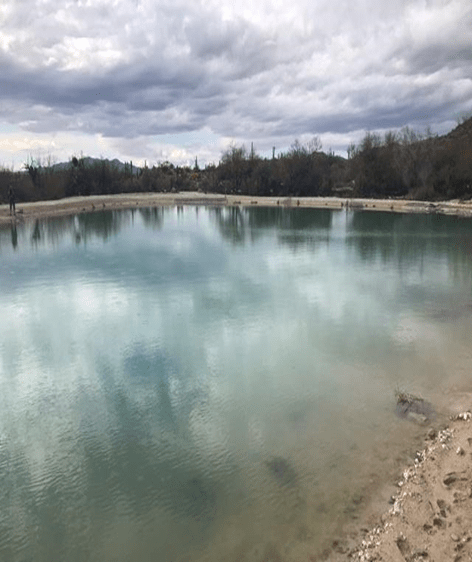

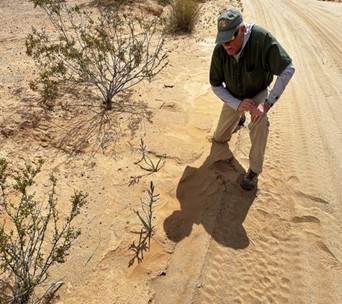
While this remote portion of the Sonoran Desert remains absolutely stunning, we were a bit disappointed in the lack of challenge in driving it. So much of the ‘old’ Camino we had anticipated has been graded since 2005 to provide wall construction access that it threw the timing of our transit off. We found ourselves at Christmas Pass so early in Day 2 that we decided to push on to the Tinajas Altas mountains for our second night’s camp. The map below depicts our original intent.
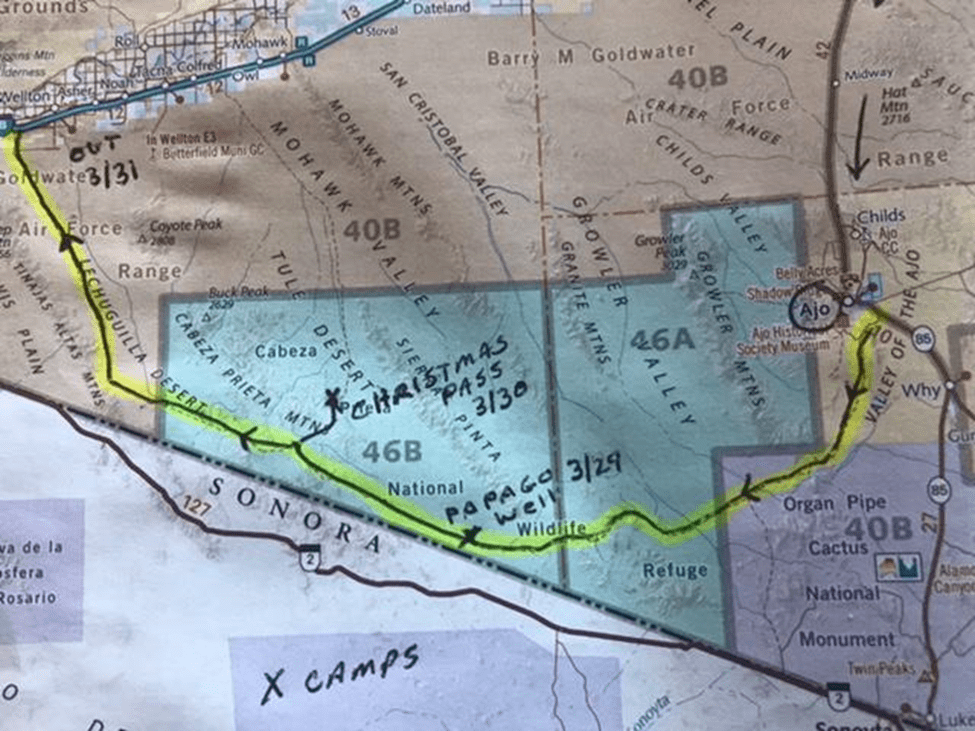
While a high clearance four-wheel drive vehicle is definitely needed to drive the spur road north to Christmas Pass from the intersection at Tule Well, I really feel that I could have done the rest of the trip with some cautious driving in my AWD Subaru Forester. There are some lava tongues that extend north from the Pinacate (Mexico). These rough lava beds cross the Camino between Papago Well and Tule Well but can be traversed with a bit of attention and care.
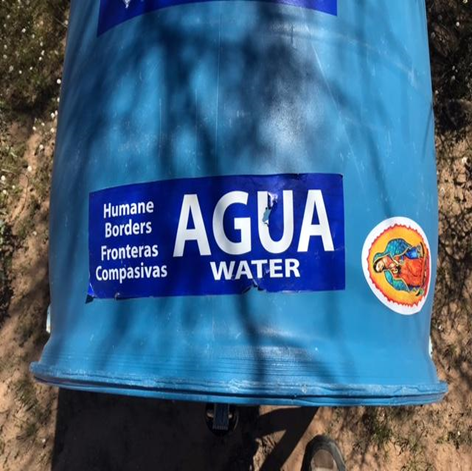
Caution however, just because the Camino has become more vehicle friendly does not mean it is now easy country. I still cannot imagine the courage and fortitude to cross this terrain on foot, especially in the summer. It is our intention to return in July or August to fully experience these challenges. Fortunately, we saw some evidence of compassion. Pictures below.
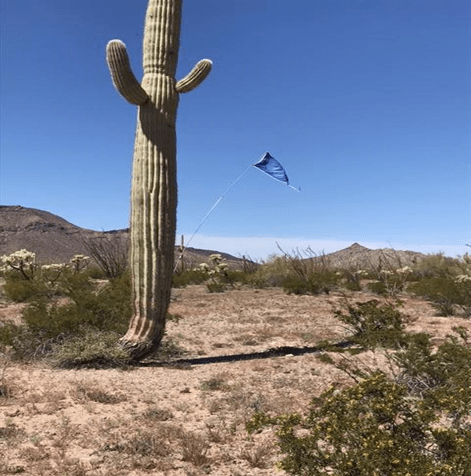
One great success of the trip was finding an elusive Ajo lily (Hesperocallis undulata). This beautiful flower is the only species in the genus. Apparently, the bulb can be eaten but has a slightly garlic taste, so the early Spaniards gave it the name Ajo (Garlic). I assume then, the namesake of the town.

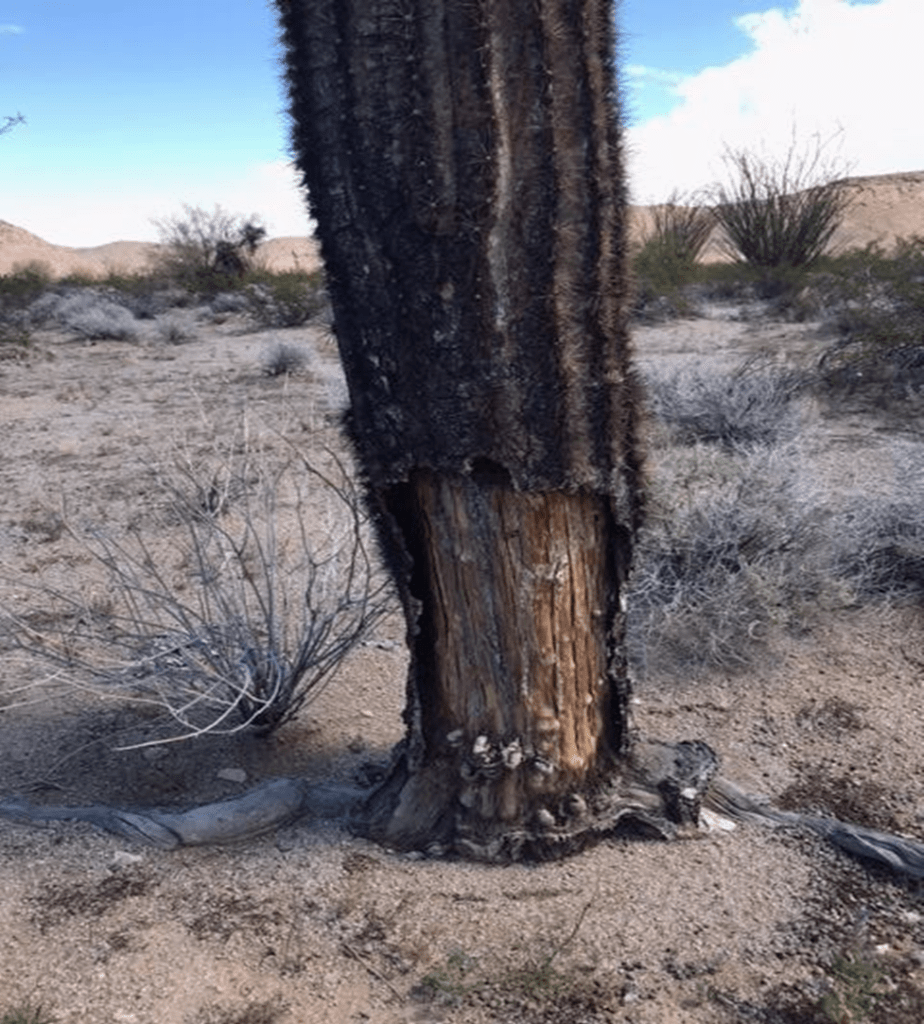
Perhaps indicative of the harshness of the environment, many of the bases of the Saguaros have been eaten away by pack rats. Other than this evidence there was a noticeable lack of fauna, particularly mammals. While we had binoculars in hopes of seeing Desert Pronghorns or some Big Horn in the Copper or Tinajas Altas Mountains…we had no success. Not even rabbits or hares. Only the sounds of birds and coyotes at night. The birds in fact made a bit of a nuisance of themselves ALL NIGHT from down in the wash at Papago Well.
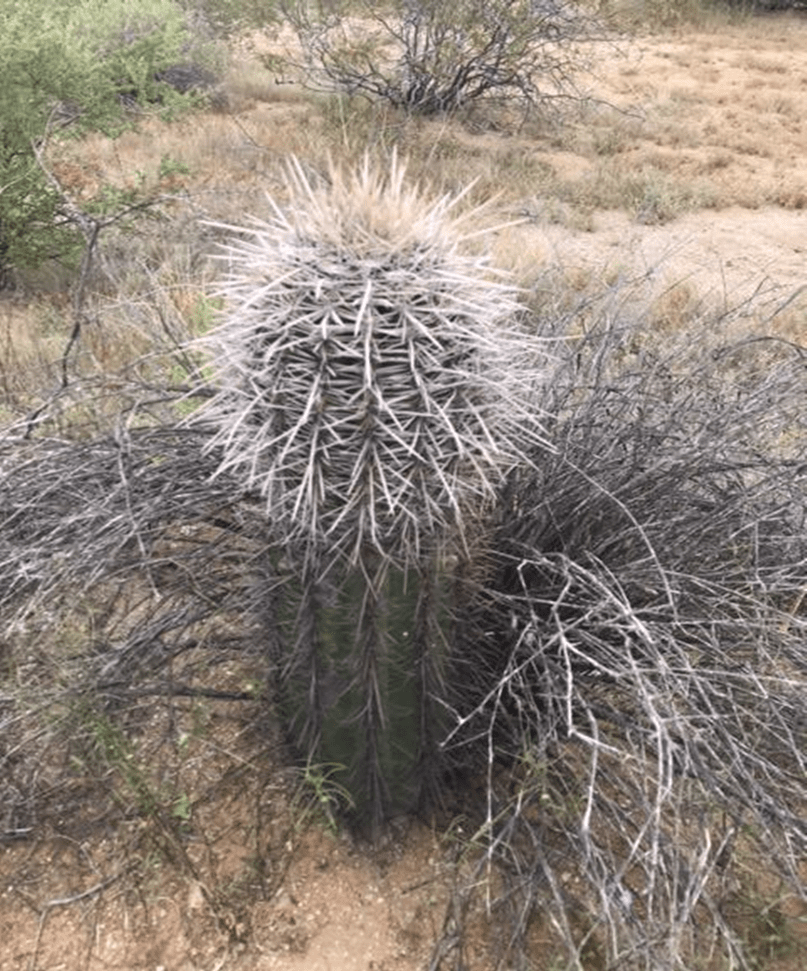
A final observation on Saguaros. While healthy Saguaros in the Tucson area often have a whitish cap, we observed that many individuals in the Cabeza Prieta were ‘whitish’ down about 1/3 of their height. I’m still researching this interesting phenomenon.
If anyone is planning a similar visit and has questions or would like additional insight, please feel free to contact me via the Pima County Chapter.
Two terrific books on the area that added to the experience include: “The Devil’s Highway” by Luis Alberto Urrea And “Sunshot” by Bill Broyles.
Celebrating Treasures of the Tortolita Preserve
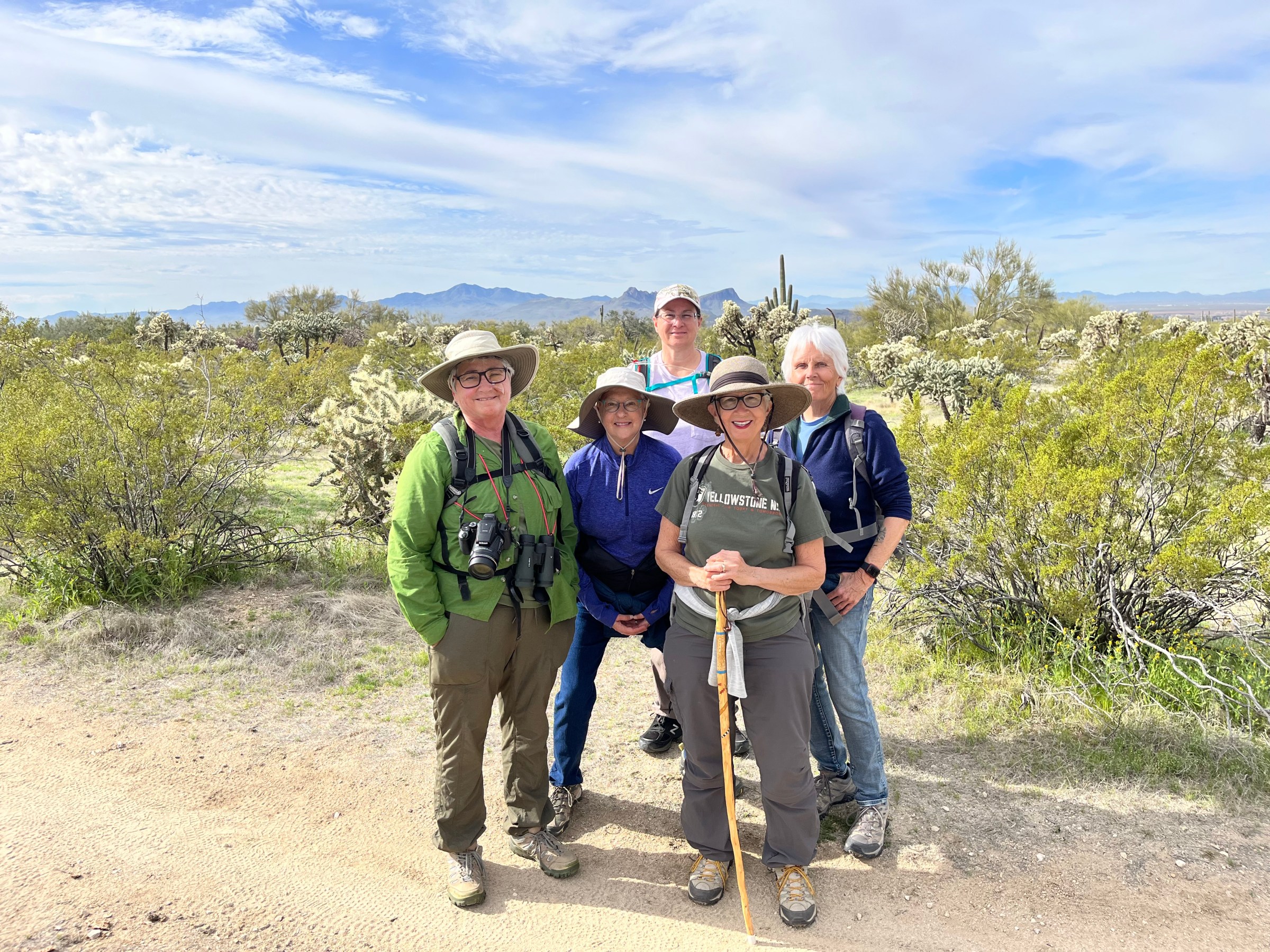
With the Wild Sonoran Women – Cohort 6 & Dave De Groot, March 7, 2023
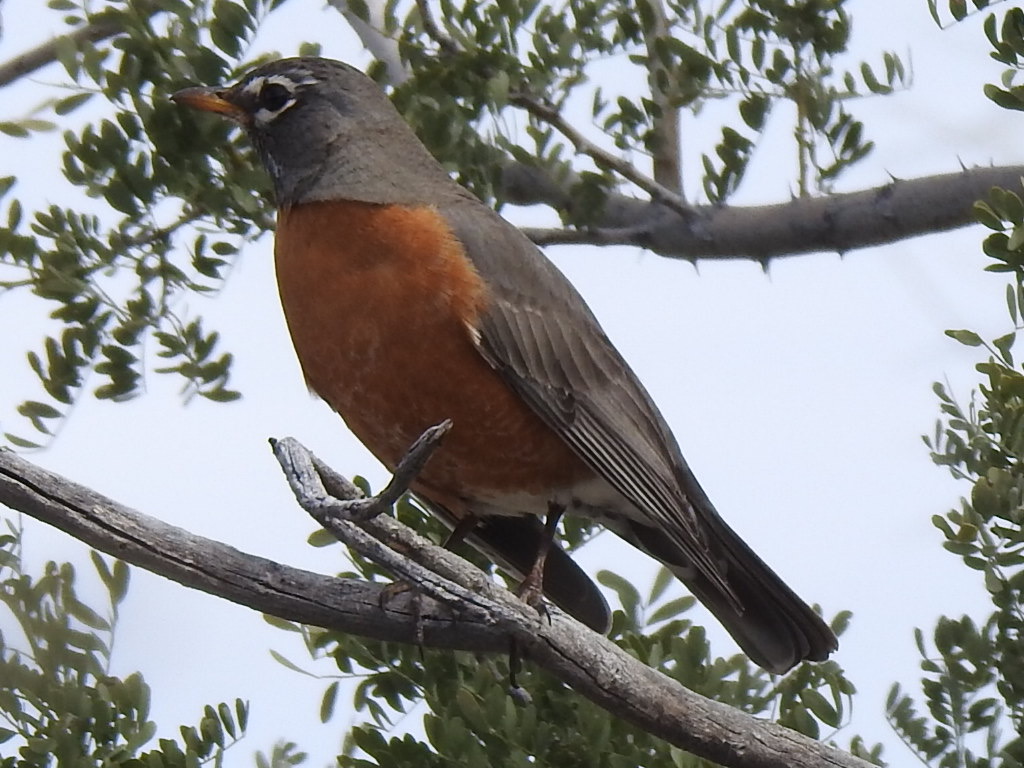
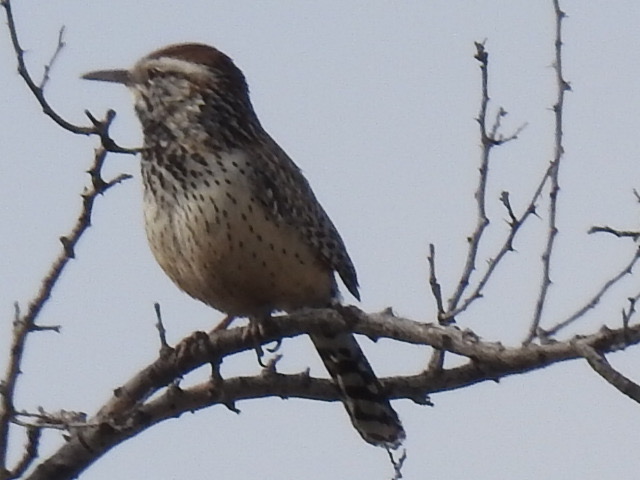
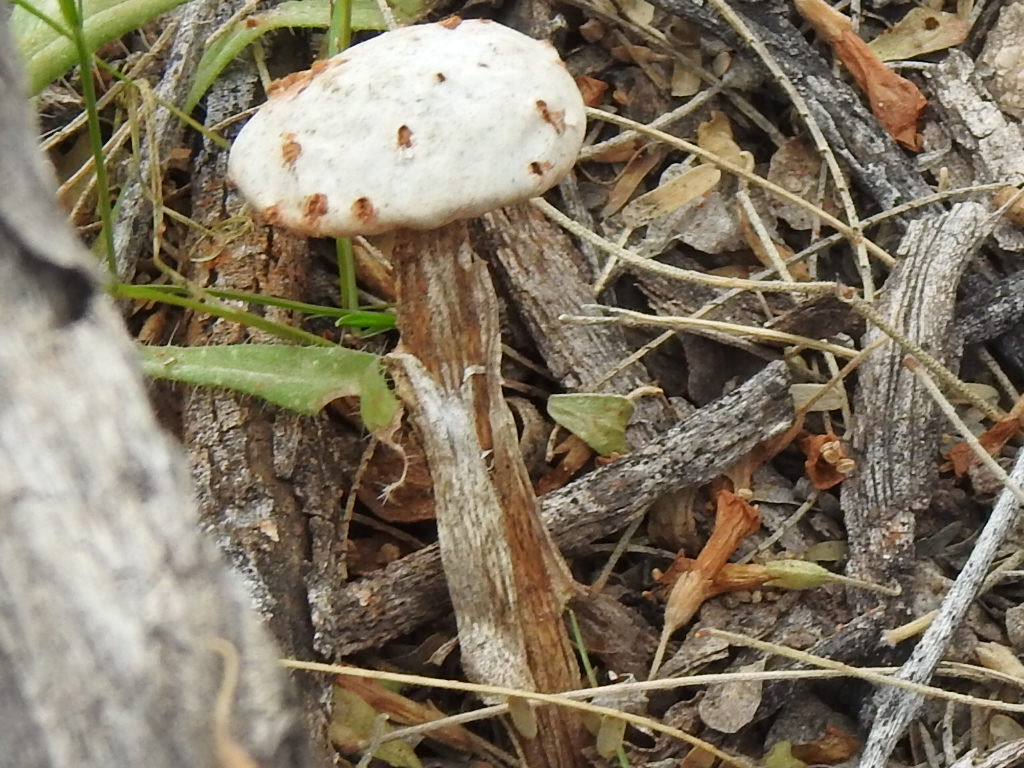
Dave is a knowledgeable, humble guide.
long way in, short way out
easy 5.25 mile hike
filled with treasures.
Night blooming Arizona Queen of the Night.
We eye-hunt for this special Snake Lily “stick” among
hundreds of scattered dead sticks.
Dana’s 35mm catches
gilded flicker and a Battarreoides diguetii.
Francesca and Merlin App identify rufous winged sparrow song.
Fresh rabbit kill
crimson splattered on rocks
like a desert painting.
Jan’s Picture This App captures Blue Dicks near cholla
Cholla captures Jan
Francesca combs out cholla.
Chris retrieves a golf ball
probably from the golf course that
cut down saguaros that morning.
Francesca carries out a bullet-riddled muffler.
The Queen of the Night eludes us.
Years old mountain lion latrine;
Wait – Chris R finds fresher puma scat!
iNaturalist it with a ruler.
Dave tries to contain his excitement
but it is okay;
We are Pima County Master Naturalists
we get excited and celebrate documenting
tiny blooms
scat and tracks
and the beauty of friendship
in the Sonoran Desert.


Written By Chris Robie and Inspired by Dave DeGroot, Jan Schwartz, Dana Hook, Chris Murphy, Francesca Ziemba. Photos by Chris Robie and Dana Hook.
Please join Dave at the Tortolita Preserve BioBlitz on April 15th and be prepared to fall in love with this treasure!
SARSEF Awards, March 10, 2023

Post by Peggy Ollerhead C3
As an all-volunteer organization focused on the ecology and natural history of the Sonoran Desert, we have sponsored awards at the Regional SARSEF Science Fair for the past 3 years. SARSEF strives to create AZ’s future critical thinkers and problem solvers through science and engineering and focuses on engaging student populations underrepresented in the field of STEM. This year’s Science Fair was a hybrid with projects available for on-line or in-person judging, as SARSEF (like so many organizations) attempts to adapt to a new post-Covid normal.
This year, PCMN was asked to review and judge middle school (grades 6-8) projects. The team of volunteer judges selected approximately 45 projects to judge that pertained to Sonoran Desert topics. The first prize winner was a unanimous choice. Wade Olsson representing grade 8 of the Olsson Homeschool, demonstrated remarkable persistence and a passion for field work clocking more than 900 field hours over 4 years gathering data and generating hypotheses for his project, “The Invasion of Non-Native Green Sunfish in La Milagrosa Canyon in Pima County.” For his efforts, PCMN awarded a saguaro trophy and a $100 cash prize.
With such a large field, PCMN decided to also award two Honorable Mention Awards of smaller saguaro trophies. Angela Madrid, a sixth grader at Imago Dei Middle School, was recognized for her project “Man-Made Border Wall vs The Natural World.” She gathered information from studies of how animal habits and migration have been impacted by the Border Wall. Greyson Weber, A seventh grader at Dodge Traditional Magnet school was recognized for His project “The AZ Water Crisis” and the website he developed to share sources of information and suggestions for actions that can be taken by the public. Links to winning projects are available on the SARSEF website, listed alphabetically by school.
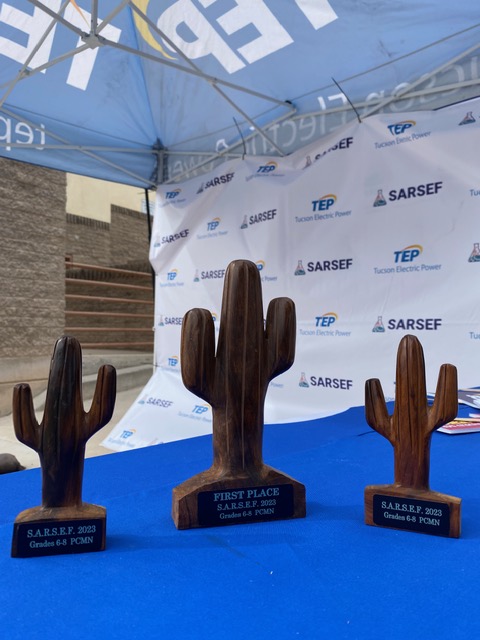
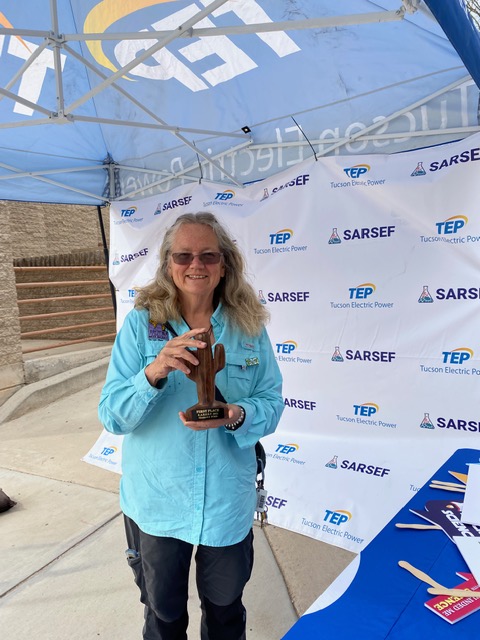

A special thank you to Franklin Lane, former president of PCMN, who initiated this relationship with SARSEF; to the judges, Marlene Shamis, Richard Linsenberg, Francesca Ziemba, and Peggy Ollerhead; and to Marlene Shamis for donating the cash award.
Tucson Festival of Books, March 3-4, 2023
Location: U of A Mall
Post submitted by Kathe Sudano; Photos from Kathe Sudano and Peggy Ollerhead
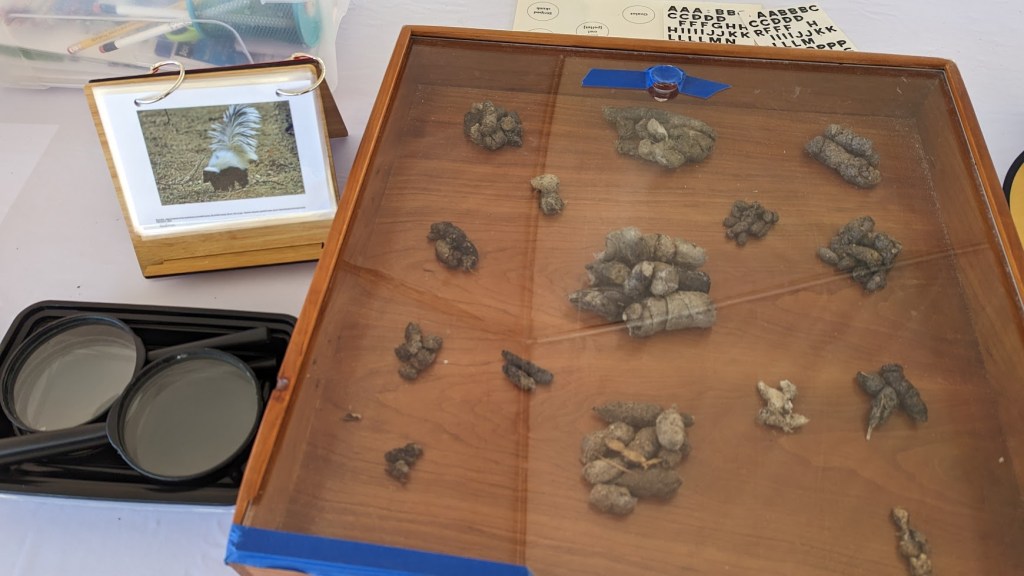
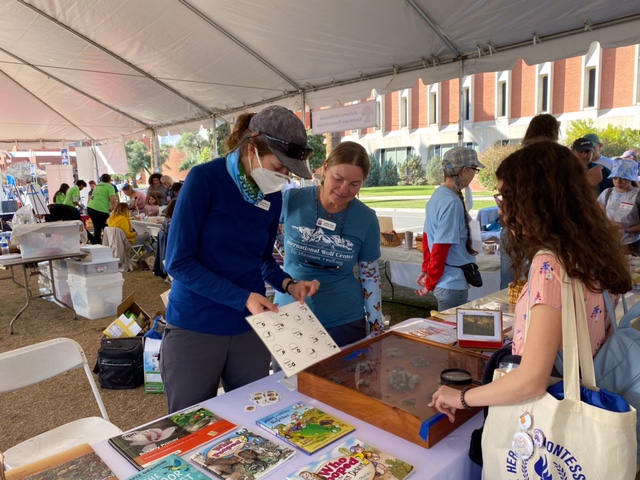
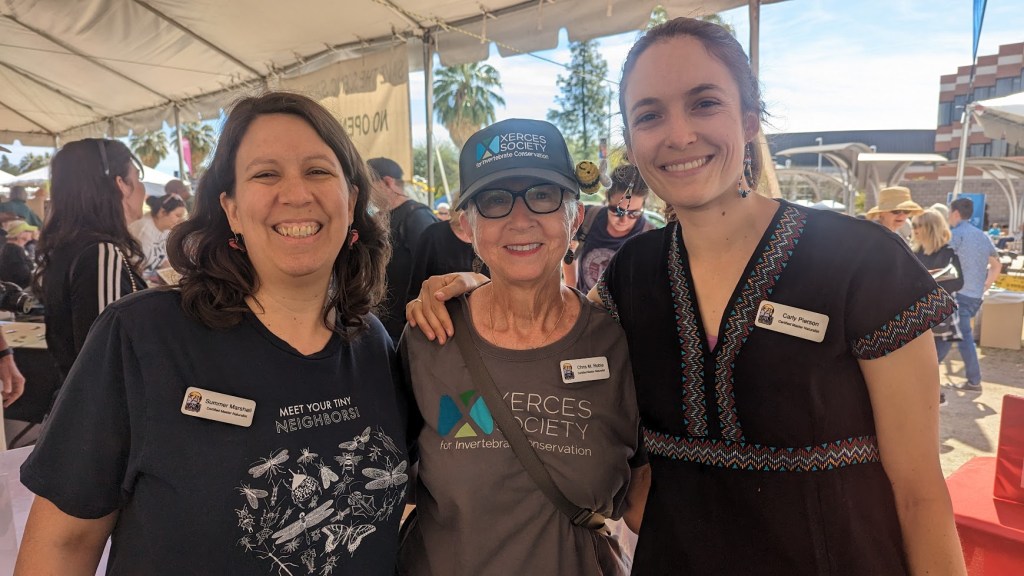
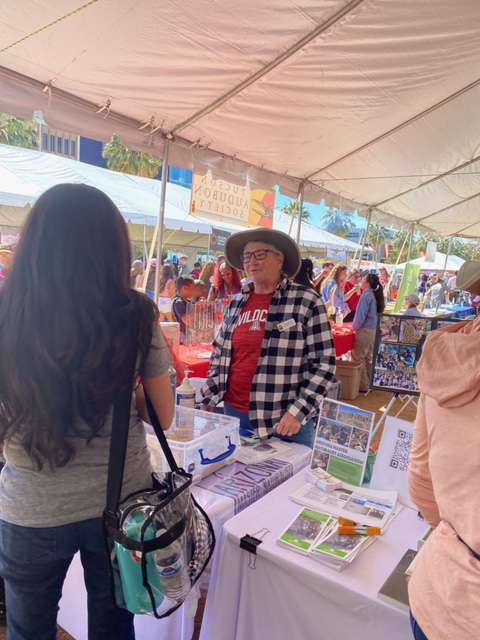
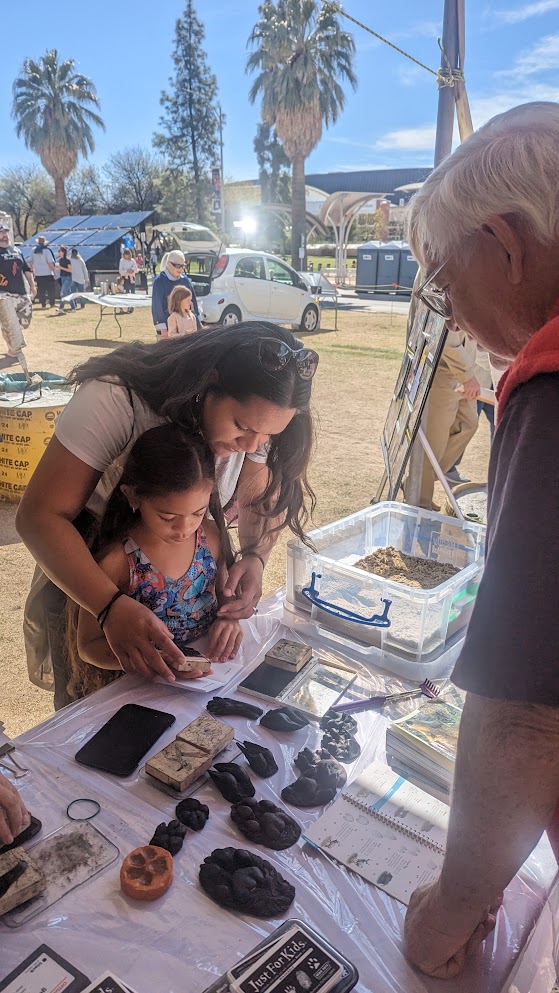
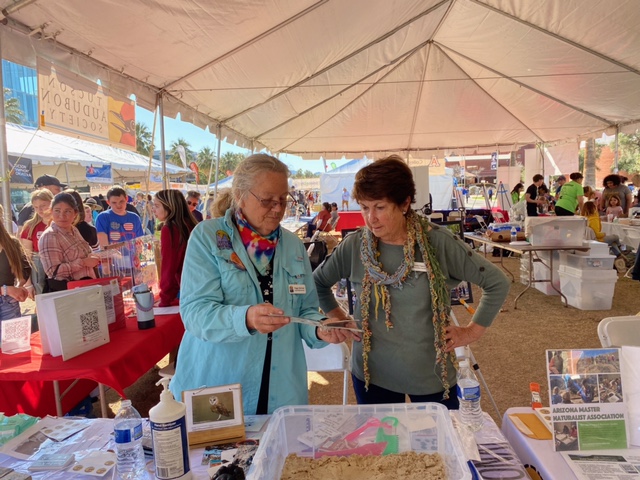
The Pima County Master Naturalists (PCMN) have been watching folks take delight in a beautiful mesquite box full of scat for years. No matter where we are, people make a point of trying to figure out which animals call the places they are visiting in the Sonoran Desert home, based on what they leave behind. So when the opportunity to participate in the TFOB venue with over 180 local and national exhibitors, we were thrilled!
Everyone who chats with the master naturalists at an event has a story to tell and it most always delights. They reveal the name of their favorite 4th grade teacher who introduced them to owl pellets, the ‘gift of scat’ the bobcats leave on their patios and the enchanting call of the coyotes they hear but never see. This year at Science City, a part of the Festival of Books, all of us who volunteered, had a story of our own to tell about how folks are charmed by our wild spaces!
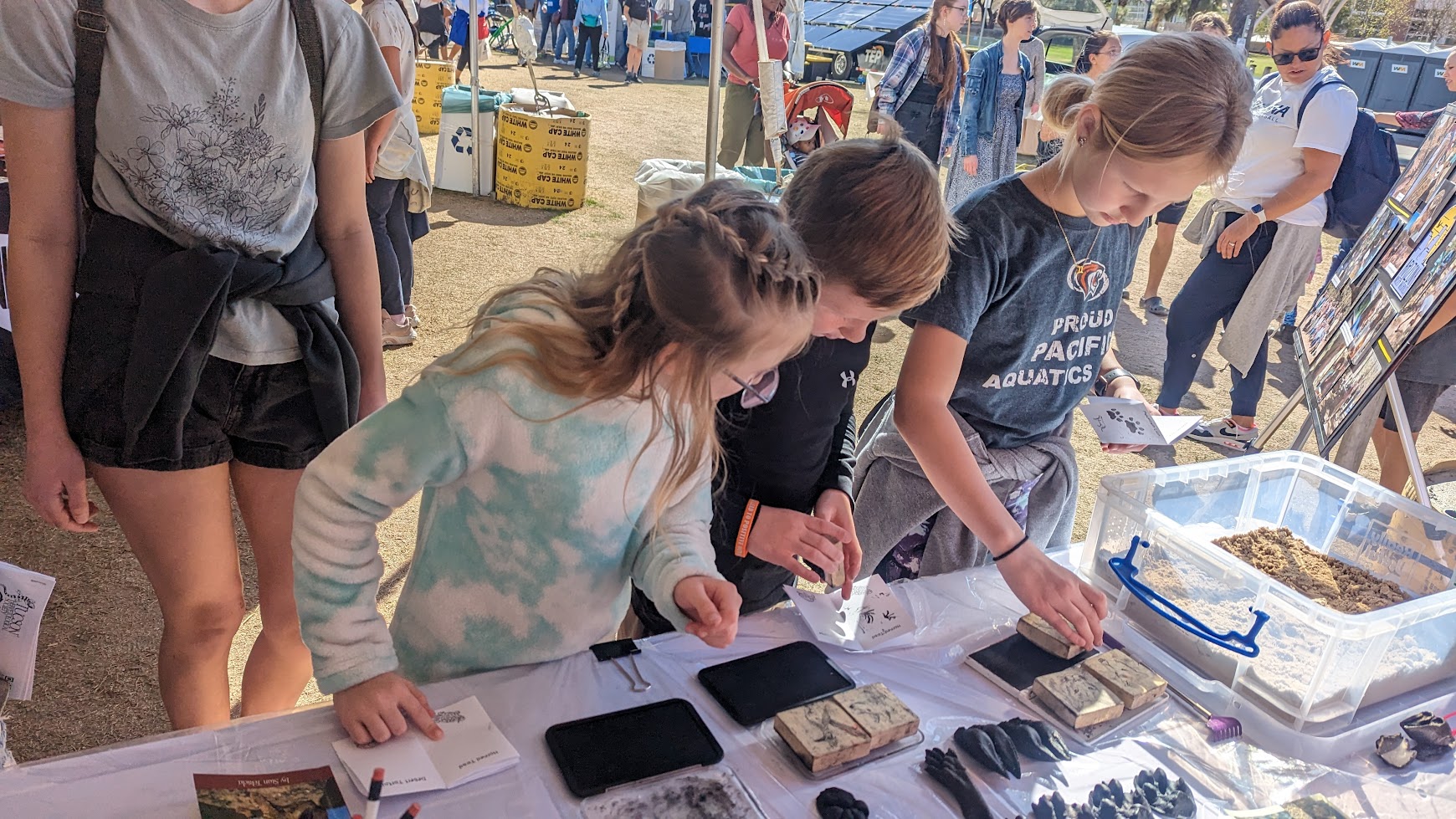
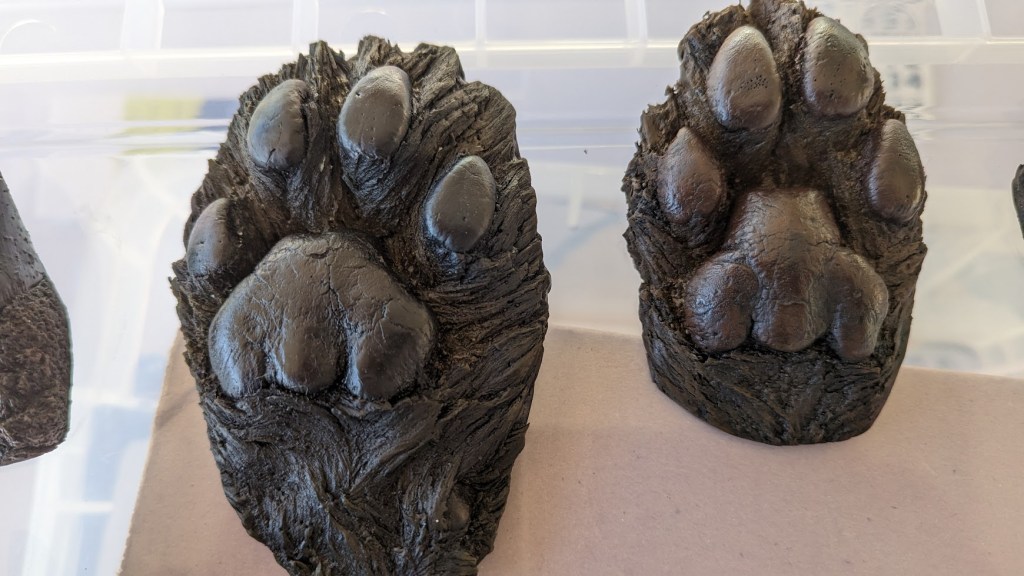
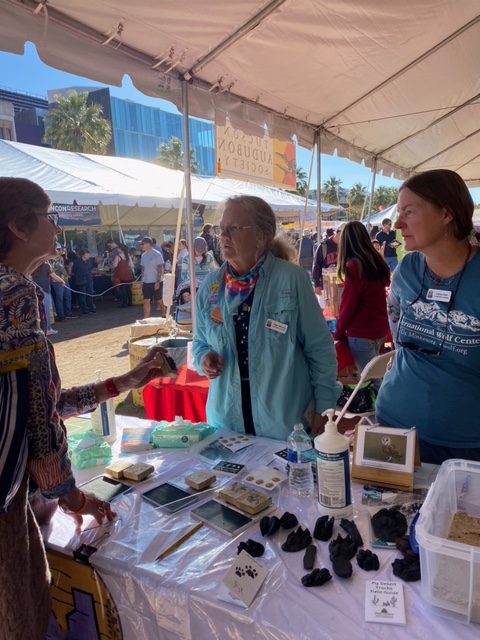
We were thrilled our PCMN Outreach Team, in partnership with Pima County Natural Resources Park and Recreation (PCNRPR), added a new twist to our tabling efforts by expanding the display to ‘Tracks and Scat’ and it was a big hit with all ages.
By including animal footprints, otherwise known as tracks, the team created a pocket-sized take-home field guide. Peggy Ollerhead, C3, found an artist to design stamps of a variety of animal tracks of our most common desert critters and Melissa Mundt, PCNRPR, came up with the field guide design. We could not decide if the adults or kids enjoyed it more and several camps and schools want the master naturalists to share it with their students. The display also included books for kids, adults and information about the many classes, hikes and other opportunities offered by our partner and sponsoring organization, Pima County.
We distributed over 400+ field guides in two days to both Tucson residents and out of town visitors. Every individual left with a better appreciation of who else shares our trails, arroyos and wild spaces and the newfound knowledge of how they might identify even those critters they will not see.
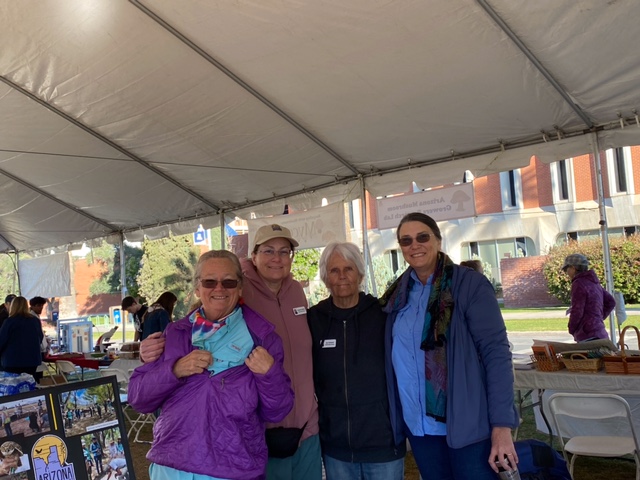
As a multi-day event, the Tucson Festival of Books required a team of volunteers. Many thanks to the following folks: Kathe Sudano C3, Melissa Mundt C4, Summer Marshall C6, Chris Robie C5, Dana Hook C6, Linda Doughty C6,, Jan Schwartz C4, Carly Pierson C6, Elena Garcia Ansani C7, Diane Taylor C6, Izetta Feeny C6, Peggy Ollerhead C3, Dan Judkins C7, Linda Dugan C5, Francesca Ziemba C6, Andrea Hoerr C3.
 Pima Master Naturalists
You must be logged in to post a comment.