
Life at the Urban Oasis (aka Tucson Botanical Gardens)
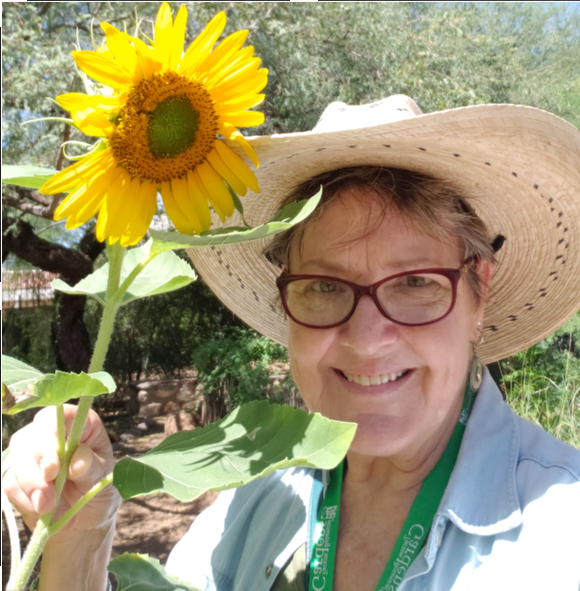

Retirement snuck up on me. Due to unforeseen circumstances, I found myself looking for some volunteer opportunities in the Fall of 2014. What was I searching for? After identifying my several true loves (nature, science and art), I next spread a wide net to see which of the numerous non-profits in Tucson might be a match. And that match needed to serve two purposes: I had to feel engaged, connected, and of service. The recipient non-profit had to benefit from the skills I possessed that best matched the needs therein.
Starting as a volunteer, I soon became involved more deeply in the process of both learning about and sharing the delights of TBG with visitors from around the world. From the small but beautifully curated (and scented) herb garden to the magnificently weird cactus and succulent garden, to the ever-changing and eye-popping colorful palette of the floral pavilion, to the splendor and majesty of some 100-year old trees planted by the Porter family in the 1920’s it was – and is – a fabulous study in both arid-land natives and carefully tended plants from many geographical sources.
Did I mention the exotic tropical Butterfly greenhouse, the coolest rock and mineral collection of Harrison Yoakum, or the frequent visits by local and migrating birds and butterflies, or the ever-changing Porter Gallery art exhibits, often of nature-themed works? This public garden has it all.

From the earliest days, I wanted to add more to my knowledge of plant ID and interpretive skills, so I completed the Docent training offered to volunteers. Soon I was working on creating themed tours, the first of which was “Edible Plants of the Gardens” and featured both native foods (Agave, Prickly Pears, Chiltepin peppers, Mesquite flour, and Tepary beans), as well as heritage and introduced food plants (Mission figs, grapefruits, and pomegranates). It was pre-pandemic, so we were able to have a tasting experience for guests. Most savory, and a reflection of my own interest in Ethnobotany.
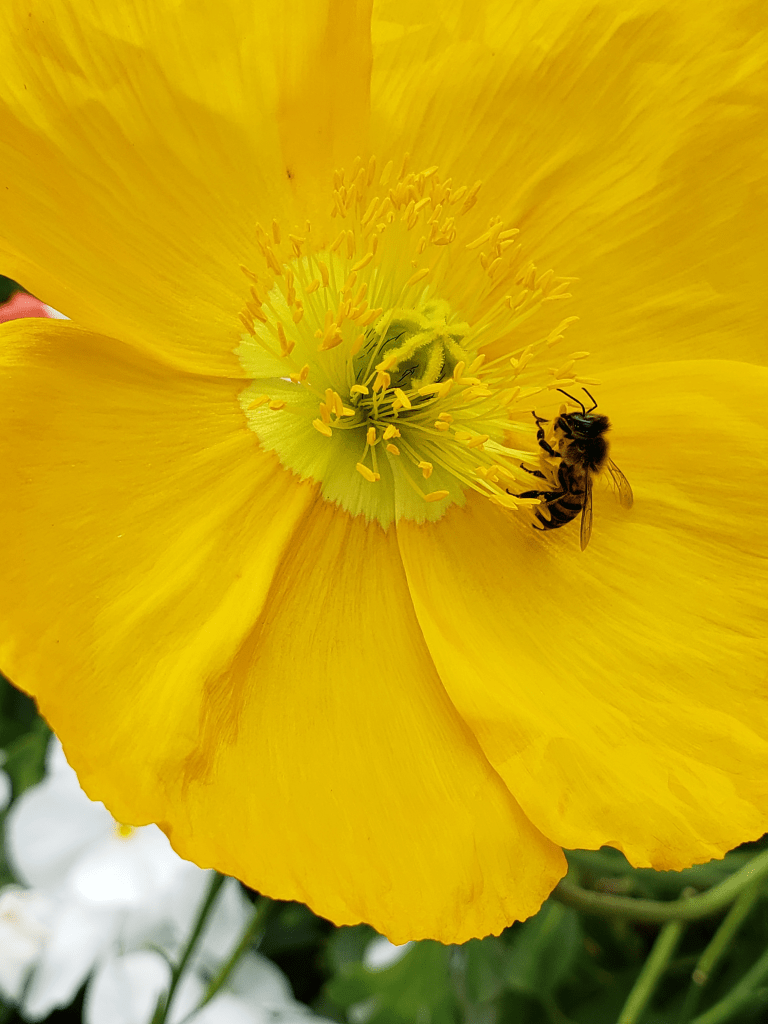
What next? I learned about the start of a new program in Tucson, the AZ Master Naturalist training and certification. And I found myself in the first class in Fall of 2016, armed with a lot of enthusiasm and my increased love for this Sonoran Desert and everything that grew, flew, crawled, swam or slithered within its boundaries. Having lived and hiked here for 40 years, it was incredibly gratifying (and humbling) to find myself in the good company of other “Desert Rats”, regardless of our professional status or prior training. And once I completed the AZMN training, I was able to add to my “tool kit” a deeper understanding of desert ecology to share with the visitors and staff of TBG. One of these was in the creation of a Nature’s Notebook trail (in conjunction with the USA National Phenology Network) in order to participate in the observation of life cycles of select native plants, birds, bees and butterflies. The NPN has as one of its goals the study of the impact of climate change on our native species.
Though small in comparison to other public spaces and botanical gardens, TBG (at 5.5 acres) is a splendid visual and psychological treat for visitors, local or international. I believe that many humans, especially kids, have become isolated from the natural world all around us, and it is crucial that Naturalists and Docents embrace the challenge of re-connecting people with this wonder. My favorite story? It was Spring and the Gardens were bursting with life. Two young adult women from Ontario, Canada were visiting Tucson, and TBG, for the first time. As I welcomed them, and pointed out some highlights that day, a small critter ran across the path in front of them. They both jumped back, a bit alarmed, and asked “What was THAT?” To which I replied, “Oh that’s a Spiny Lizard. They live here”. To which they replied in unison, “Cool!”
Yes, cool indeed. Nature, science and art. It’s the best volunteer job, ever.
Carol Anderson, Cohort 1, AZ Master Naturalist since 2017 with the Pima Chapter
Docent, Tucson Botanical Gardens since 2014
Charron Vineyards’ Bug Night
Post by Chris Robie, Cohort 6
August 22, 2023
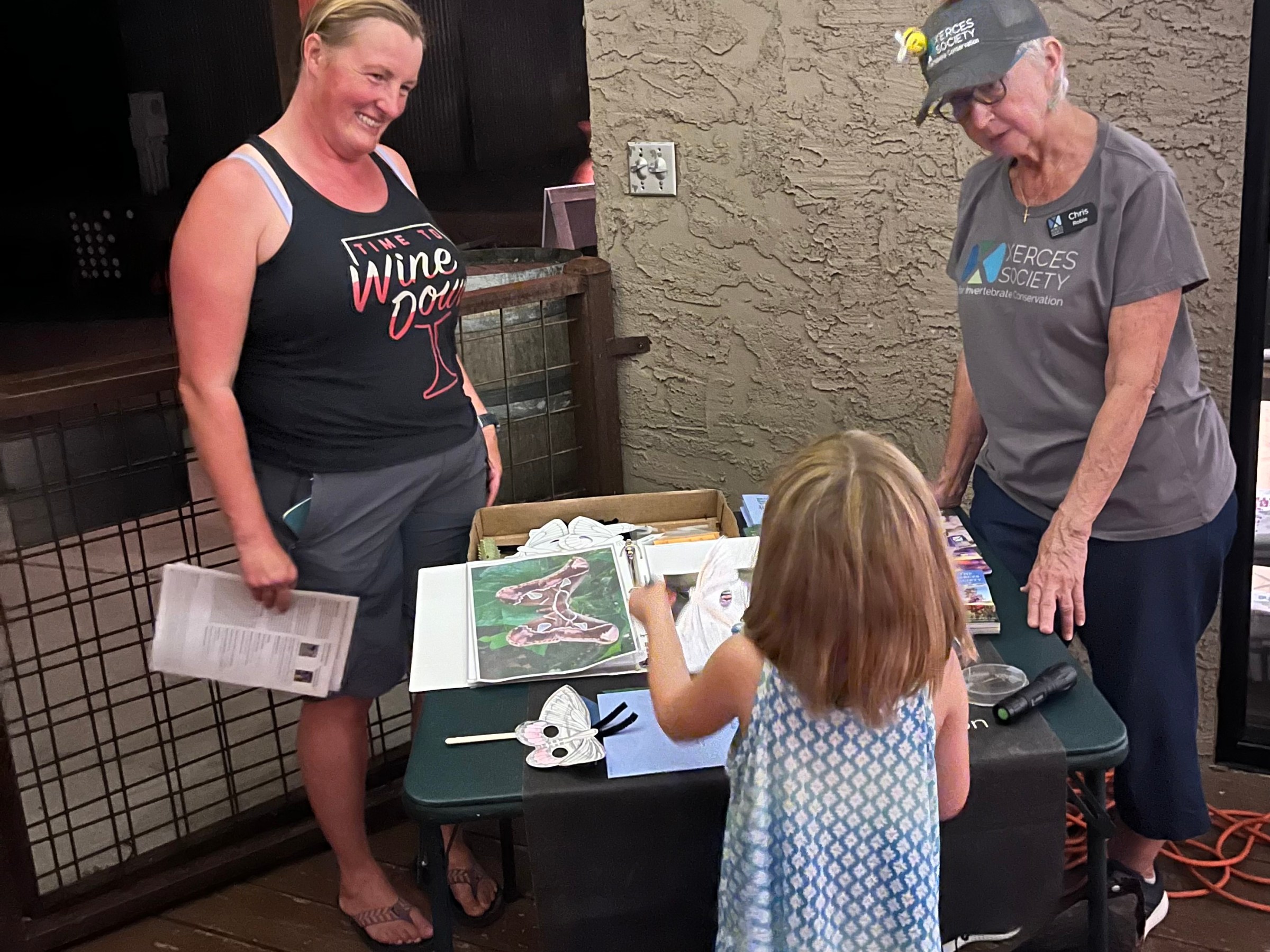
As a PCMN and Xerces Ambassador I have learned to be bold and “go where others (perhaps) have not gone before.” When I asked Charron Vineyards’ owner, Sarah Wolff. if I could join her for their Bug Night on August 19th, as a Xerces representative, to share information about moths, she enthusiastically said yes. I met Joe Cicero, who volunteers with the Xerces Firefly Project in AZ. Yes, we have the Southwest spring fireflies (google for more information)! Hopefully Joe will come to Critter Night at Mission Garden next year to get the word out about these amazing but unfortunately disappearing insects. While at the vineyards, I met Sarah’s daughter who is a budding young entomologist. Eleanor, Sarah and Colton Noble, her husband, love sharing nature related information and guest speakers with their visitors. Their vineyards, close to Vail and the Empire Ranch, sit in the Emperita mountains with stunning views.
Moreover, volunteering as a PCMN and an Ambassador with Xerces (www.xerces.org) opens up opportunities to share my interests about pollinators. Right now Xerces is interviewing for new Ambassadors. If you enjoy the world of insects and like sharing that passion with the public, check out information on their website. You are also welcome to contact me at christinerobie8@gmail.com.
Photo: Sarah Wolff owner of Charron Vineyards and daughter Eleanor talk to Chris Robie
Tohono Chul Happenings

The mission of Tohono Chul is to enrich people’s lives by connecting them with the wonders of nature, art and culture in the Sonoran Desert region and inspiring wise stewardship of the natural world.
Thanks to Olivia Carey, Cohort 3, for providing the information in this blog post!
DÍA DE LOS MUERTOS, August 24 – November 5, 2023, Exhibit House Main Gallery

Images clockwise from upper left: Elisa Salgado, Kristin Harvey, Chuck LaVoie, Karen Wright
The celebration of El Día de los Muertos is a joyful occasion of remembrance, involving feasts and festivities through which death is recognized as a part of the natural process of living. Contemporary celebrations of this holiday bear both ancient traditions and a modern flair and have become a rich part of Tucson’s cultural heritage. Tohono Chul’s biennial exhibition celebrates the creative ways artists honor and enliven this deeply meaningful holiday through artistic expressions of personal and universal significance.
This year’s exhibit was curated by local artist, Sandy Villegas, who also designed and created the ofrenda. In October, Sandy will be offering workshops in Crepe Paper Marigolds and Paper Mache Skulls at Tohono Chul.
For more information on current exhibitions: https://tohonochul.org/galleries/current-exhibitions/
SPANISH COLONIAL GARDEN RENOVATION (in progress)
Please allow your imagination to transport you to November, when the Courtyard featuring our unique Desert Ironwoods will be a magical and serene place to spend lots of quality time.
The main courtyard space will have universally accessible red brick pathways that frame a square of compacted decomposed granite which maintains water/air exchange – – keeping our Ironwood (Olneya tesota) trees healthy and happy. The Exhibit House porch is being reroofed, and new gutters with downspouts are being installed. These improvements will direct roof rainwater to a new passive water-harvesting basin designed to accommodate a 100-year storm event, all while keeping the water away from the foundations. A flat “bridge” will link the courtyard to the porch, making the entire space feel very welcoming.
Three seat walls will activate the edges with places for people to rest and relax. A modest water feature will be installed along the south wall. The water feature will be a quiet and soothing reminder of the preciousness of water in our desert while it quenches the thirst of hummingbirds, butterflies and many other pollinators.
From low-water usage native plants in the courtyard to accessible pathways, and from water-harvesting basins to soft water features, Tohono Chul is embracing the need for preserving our desert and educating its human inhabitants on best-use practices.

Funding for this project is made possible by a generous donation from an anonymous donor.
Critter Night and Parade, Mission Garden, August 8th
Please note that there are 2 posts in this blog.
Critter Night Parade post by Chris Robie, Cohort 6
I write this blog post in honor of this nameless little wild Sonoran creature who joined the 1st Annual (Native Wild) Critter Night Parade at Mission Garden on Friday, August 18th. As a member of the Youth Education Committee at Mission Garden, I had suggested this idea to Kendall Kroesen, the Outreach Coordinator at Mission Garden. Everyone, especially kids and their adults love a parade! So, I was hoping.
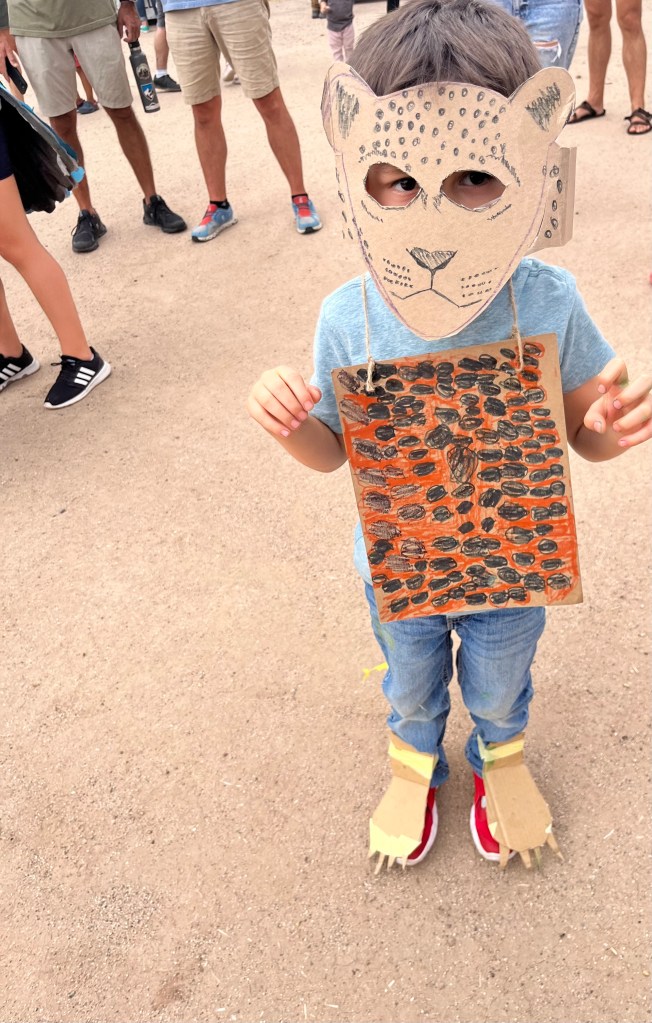
Friday, 6:00 was starting time and as the time approached I, dressed as a moth, was not seeing many children coming to the meeting place by the acequia. And not many kids in costume. So I invited passerby children to my nearby table to color butterfly and moth paper masks I had brought from Xerces, which is an Associate member with PCMN. Then Emily Rockey, the Garden Supervisor, brought some mask items from her trove of goodies in the Educational Building. I shared some costume butterfly wings etc. that I had brought from home. Garden gourds that rattled were passed out. Elena Martin, a volunteer with the Youth Education arrived with her flute. Jodi del Ponte, another Educational volunteer and a children’s book author flew in with the most beautiful butterfly wings. As she danced in joy, she led the parade around part of the garden. It was evident that the grownups who joined were having as much fun as their critter children! All during the parade storm clouds continued to gather. Not long after the parade ended, lightning and rain abruptly ended Critter Night. The human critters scurried for cover while the real wild creatures and plants rejoiced in Mother Nature’s gift of rain.

Chris Robie and Jodi del Ponte
Volunteering as a PCMN and an Ambassador with Xerces (www.xerces.org) at Mission Garden opens up opportunities to not only share my interests about pollinators but I also continue to learn from an amazing community of educators. Right now Xerces is interviewing for new Ambassadors. If you enjoy the world of insects and like sharing that passion with the public, check out information on their website. You are also welcome to contact me at christinerobie8@gmail.com.
Critter Night Event Recap by Peggy Ollerhead, Cohort 3
The recent “Critter Night” on August 18th at Mission Garden was a perfect example of Pima County Master Naturalists supporting their associates and partners. Mission Garden is a living agricultural museum located at the base of Sentinel Peak, highlighting the history of cultivated crops in this area. Some Master Naturalists who are regular volunteers at Mission Garden helped with planning, logistics, and greeting guests. Other Master Naturalists tabled for nature and cultural organizations including the Sonoran Desert Museum, Xerces Society, Bat Conservation International, and Pima County Natural Resources, Parks & Recreation. At least 10 Master Naturalists representing most of the Cohorts participated.
The ”Critter Night” attracted over 480 guests and was highlighted by a children’s parade. Dressed as their favorite desert “critters”, children traversed the garden with wings, antenna, and tails. The garden itself was resplendent with summer crops and echoed with the laughter and contagious excitement of the families as children explored the exhibits, many of which contained live animals and/or “hands-on” activities. The weather was not as cooperative, and while we all love water in the desert, thunderstorms are not a good mix, and festivities were cut short.

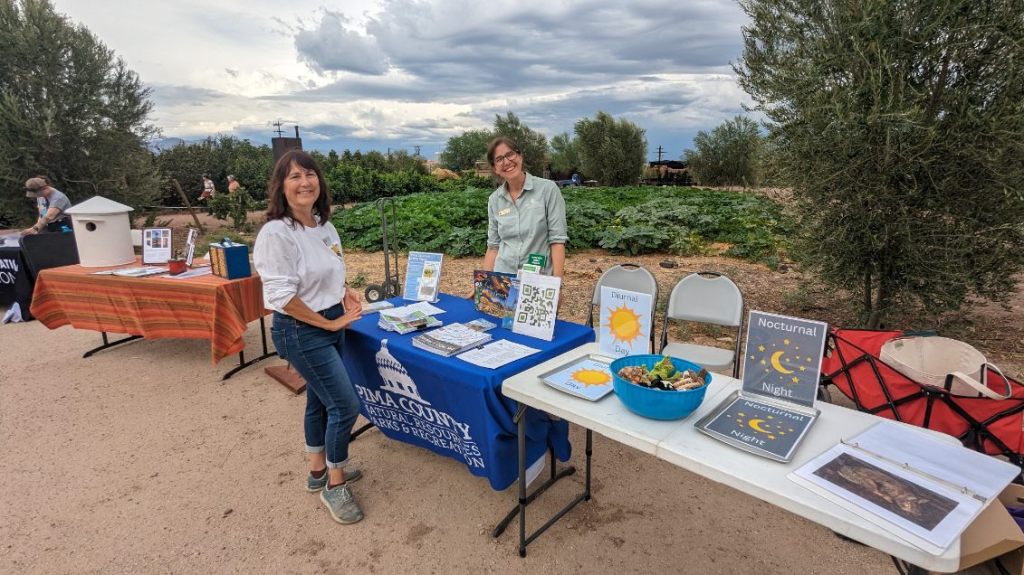
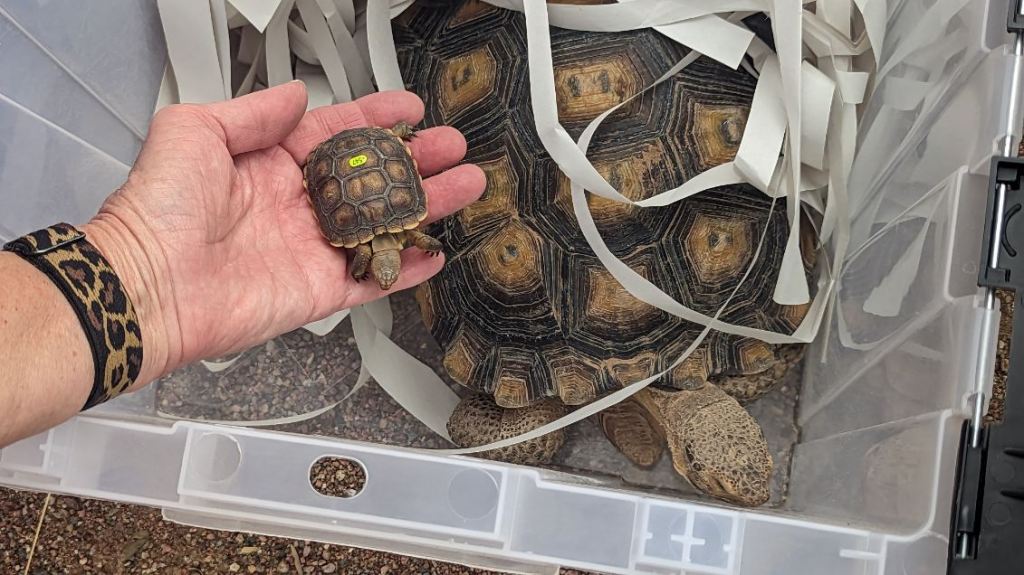
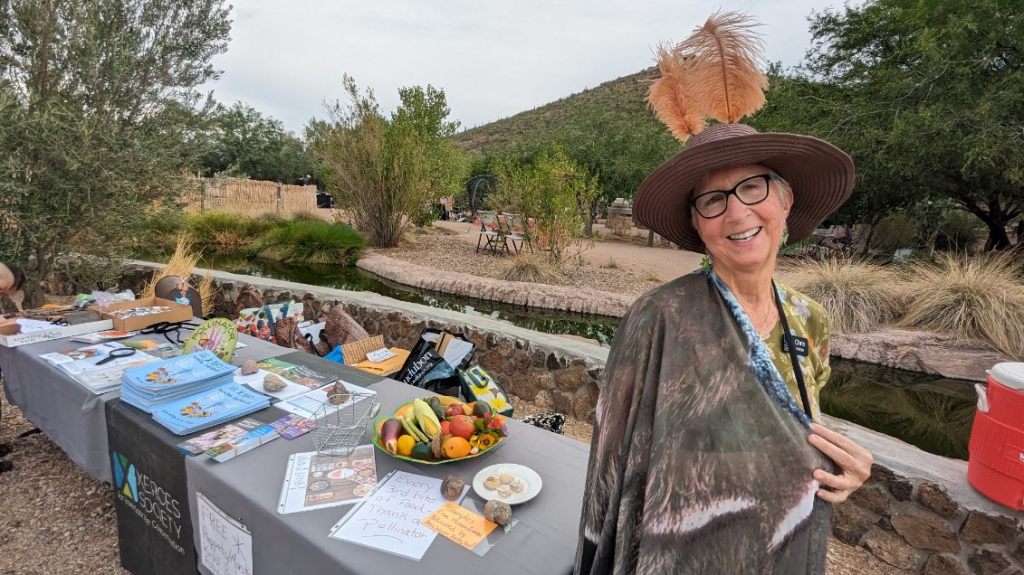
Top left photo: Dan Collins and Sharon Overstreet, C2
Top right photo: Melissa Mundt, C4 and Dena Cowan
Bottom left photo: Tootsie, Peggy Ollerhead’s, C3, adopted tortoise
Bottom right photo: Chris Robie, C6
Mystery at Mission Garden
Linda Doughty, Cohort 6
Land Acknowledgment: From the sweat of our brow to the mud under our nails everything we do is rooted in the acknowledgment that we are on the ancestral lands of the Tohono O’odham Nation. We
strive to protect and care for this land with the awe and respect that the O’odham have
inspired in us. We hope all who experience this place will honor and support the people who
have dwelled here through countless seasons, and that we may all thrive together.
https://www.missiongarden.org/
(The land acknowledgment and link above are from our partner organization, Mission Garden,
where I volunteer.)
It was a bright and scorching morning in the Old Pueblo. The heat radiated through the
windshield the moment I turned off the engine of Bluey, my Highlander. I pulled the brim of my
sunhat down over my forehead and snapped my fanny pack around my waist as I exited the car. Not
a moment too late, I remembered my 24-ounce water bottle.
There are secrets in the garden, and they aren’t going to reveal themselves to everyone. My
job includes giving tour groups an overview of the history and what I like to call the “cultural
confluence” of this place. I hadn’t known what I was getting myself into when I volunteered to be a
docent. New growth and cooperative efforts obscured any past horrors.
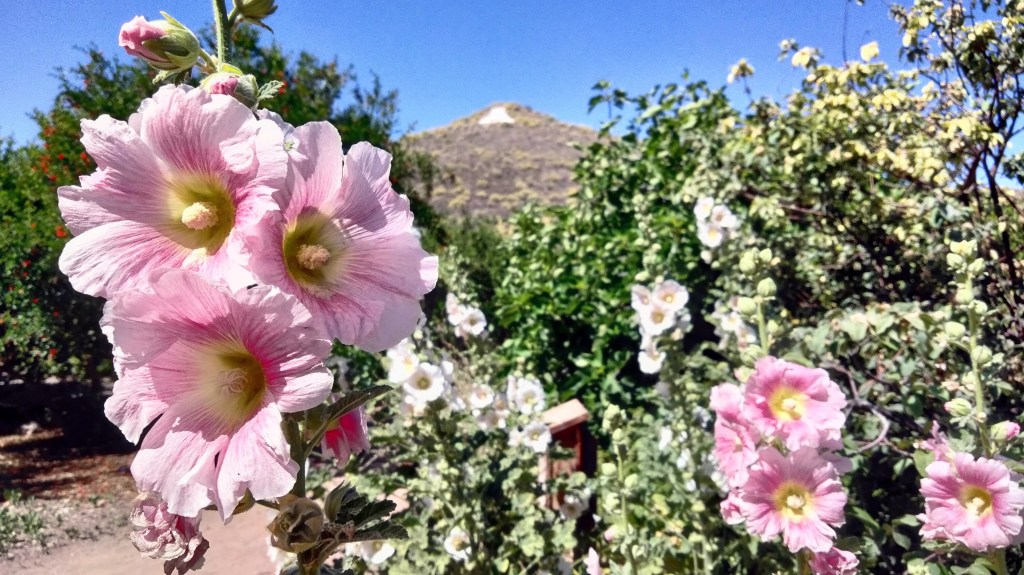
I stuck my magnetized name tag to my long-sleeved UV protection shirt. I strode toward the
entry gate until yellow barricade tape blocked my path. I paused a moment, then backtracked. I
continued walking the path along the west wall of the garden, unable to take any shortcuts. Lynette
and Maegan crouched over an indistinguishable crop. I waved. Maegan looked up, flashing the
famous smile found on the cover of the Tucson Official Travel Guide. They returned to their work,
heads together. I got the distinct impression that they did not have time for me and a bead of hot
sweat rolled down my back.
The Spanish name Tucson derives from the O’odham word “S-chuk son” which means “at
the base of the black mountain. “A” Mountain, also called Sentinel Peak. Early settlers would send sentinels up the mountain to watch for Apache raiders. From the top, you will find a spectacular
panoramic view of the Tucson basin.
I tried to put foreboding thoughts out of my mind. If there had been a recently committed
atrocity someone would have let me know. The garden would not be open.
Mission Garden is an agricultural and historical museum. For at least 4,100 years humans
have been living and cultivating crops on this very spot. “A” Mountain acts as a watershed, along
with the bedrock buried beneath. Water flowed in the irrigation canals for centuries. After
Europeans brought their wheat, grapes, and cattle, the water table declined. They shared what they
thought was a better way with the descendants of the Hohokam. Disease made their job easier, but
the Sonoran Desert is impartial. She sings a siren song in the summer with heat that feels inviting
for a moment, but she can cook your goose.
I wondered again about the blocked off area. If someone had failed to drink enough water
while visiting the desert, why would a barrier remain? There could not have been a body there, other
than those buried by years of mistrust.
I arrived early enough to refill my water bottle and chat with the volunteers at the gift shop.
Bill showed up, notepad in hand, to take inventory of the merchandise. I mustered my courage and
asked about the mysterious yellow tape. Bill asked me if I wanted to see. I asked him the same
question. He smiled and gestured for me to follow him.
We walked with the deliberate gait that heat insists upon, up the Garden’s central path. We
passed fields planted with corn, and grape vines, green globes bagged and ripening, protected from
bugs and birds. We arrived at the yellow tape, tied on one side to an arched trellis loaded with beige
gourds, and to a large prickly pear on the other. Bill took me around the back of the cactus. He
pointed.
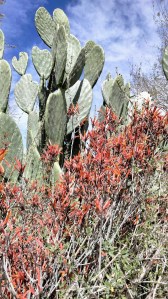
Three feet above the ground and hidden in the depths of the enormous prickly pear was a
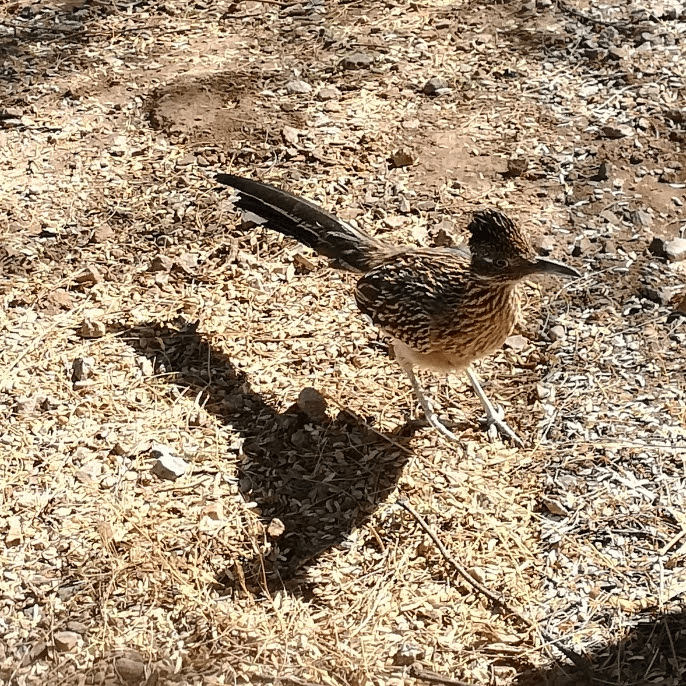
nest made of twigs. I saw at least three baby roadrunners snuggled and silent in a feathery mound.
The black shiny eye of one reflected at me. We call all the roadrunners at Mission Garden Kevin,
though in this case, one might question the accuracy of the moniker.
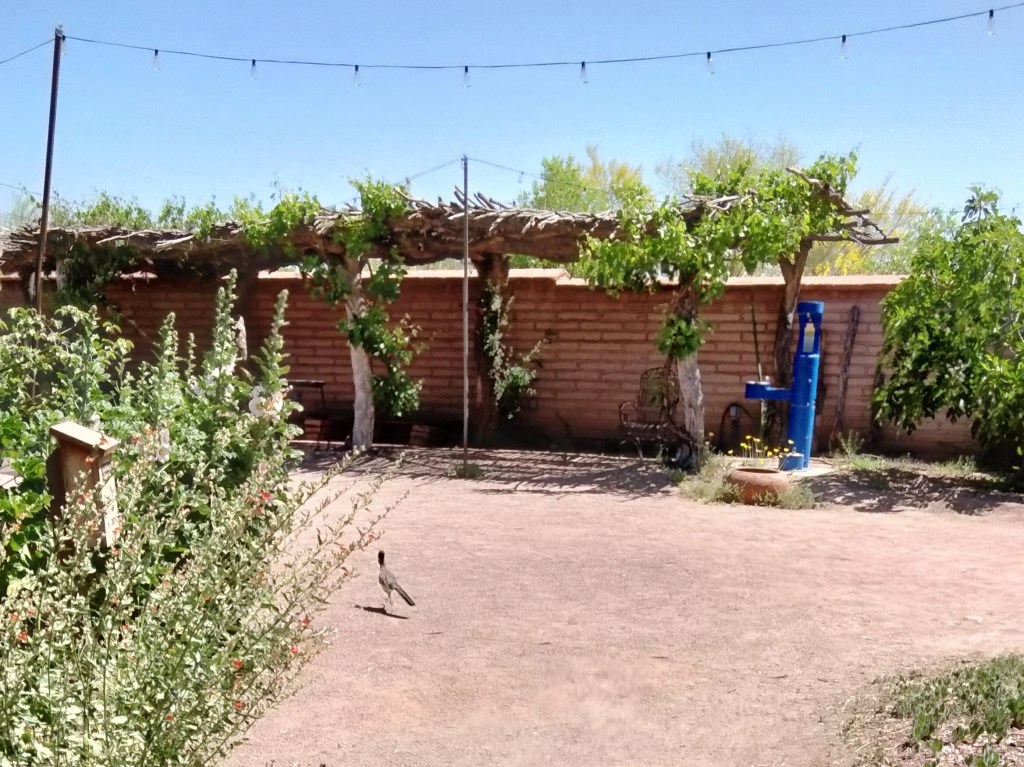
My tour group arrived. I showed them pomegranates, figs, sweet limes, Seville Oranges, and
stone fruit. We crossed the acequia, the rebuilt canal that models ancient irrigation systems. I
pointed out the endangered Huachuca Water Umbel and Gila Topminnow. I chided them to drink
more water. We skirted the yellow tape. Mission Garden keeps her secrets.\
Fun with Fungi and Future Foray with Hernan Castro
Submitted by Peggy Ollerhead, Cohort 3
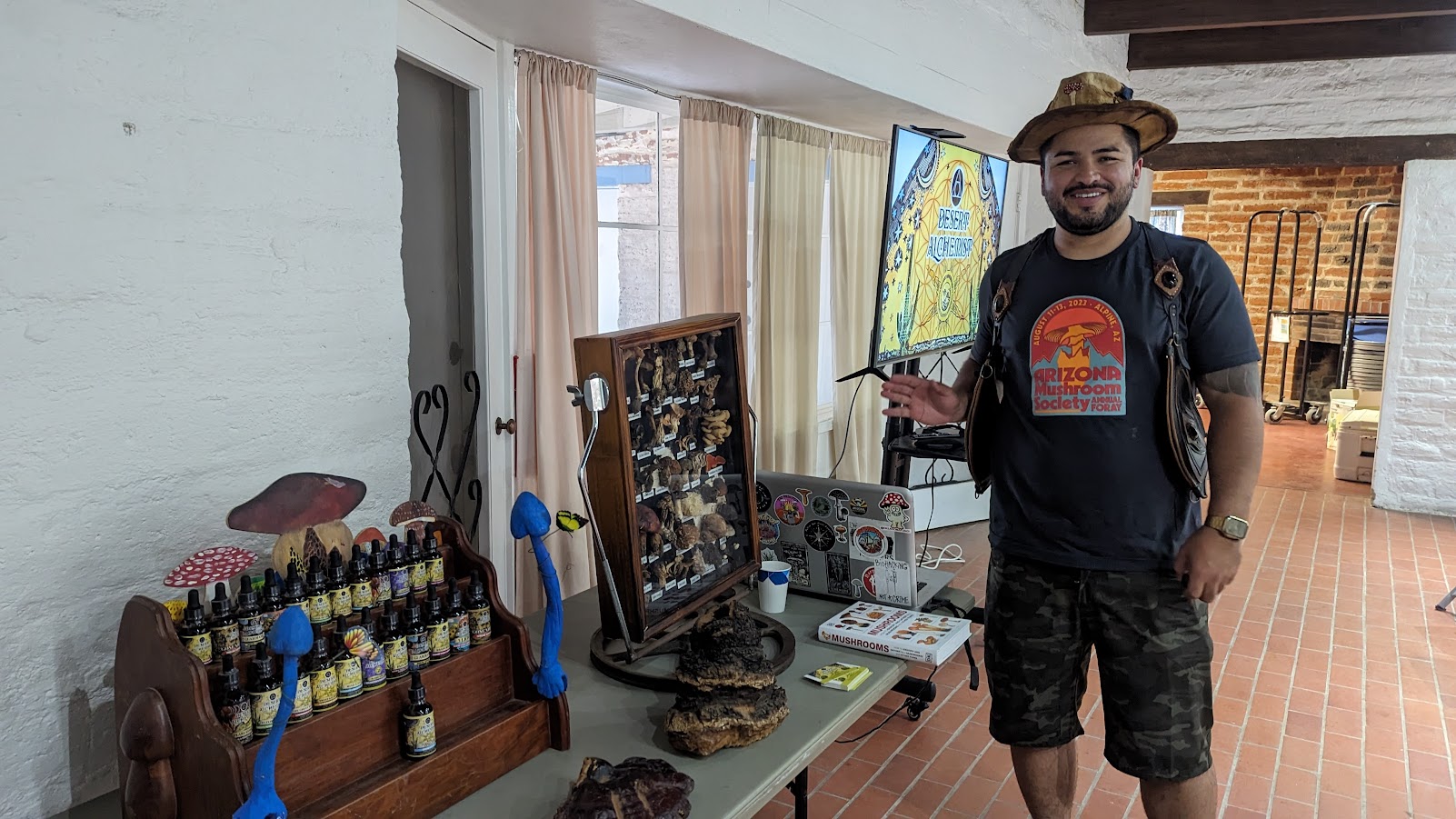
On August 14th more than 20 Master Naturalists attended an Advanced Training with Hernan Castro
from Desert Alchemist on the Identification and Medicinal Uses of Fungi. Hernan shared his
encyclopedic knowledge and passion for fungi. His first attempts at growing fungi started as a hobby,
but as he searched scientific journals for information about cultivation, he also learned more about the
research on the medicinal uses of fungi (mostly in other countries.) This knowledge took on personal
importance when his beloved father suffered three serious strokes leaving him with a poor prognosis of
full recovery. Hernan began a journey to help his father and was able to grow and replicate the fungi he
had read about in his scientific research and prepare tinctures for his father. Over the course of a year,
Hernan’s father recovered 98% of the function in his previously paralyzed right side and Hernan
launched on his path as a Desert Alchemist and mushroom entrepreneur.
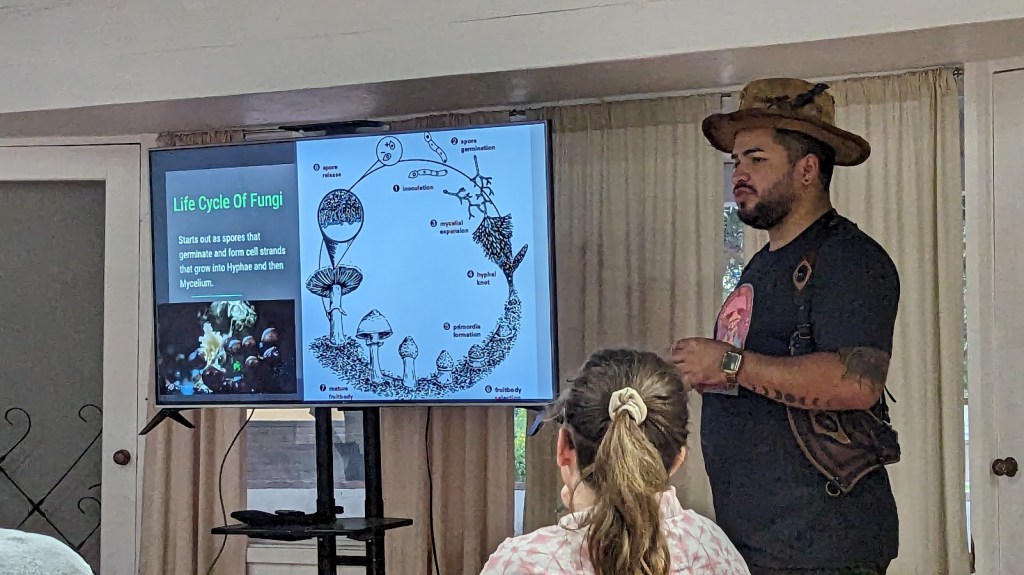

Over the course of the evening, Hernan shared information on fungi through history, the basics of fungi
biology, and evolving research. At the heart of his presentation were the fungi that grow in the Sky
islands of Arizona. Who knew that Arizona contains some of the greatest diversity in fungi species?
Hernan shared photos and stories of some of our local “Super stars”. He explained how to identify
them, differentiate edibles from look-alikes and highlighted their nutritional and medicinal value.
Although his presentation was amazing, nothing substitutes for firsthand experience to learn
identification skills. Izetta Feeney is planning a foray trip for PCMN with Hernan to learn field skills to
coincide with our monsoon season in September. The cost is $35, both weekday and weekend days will
be available and open to the public. Master Naturalists may use the travel time to the foray location and
the trip as Advanced Training hours (skills based.) Stay tuned for follow-up information in an e-mail from
Izetta Feeny.
You can see videos and follow Hernan at http://www.desertalchemist.com, facebook.com/desert alchemist,
and instagram.com desert alchemist. Look for Desert Alchemist and their mushrooms, tinctures, and
mushroom products at the Rilliito Farmer’s Market.



2023 Southeast Arizona Birding Festival
Submitted by Franklin Lane, Cohort 1
For the 4th year in a row (except 2020 for Covid) the Pima County Chapter of the Arizona Master Naturalists has directly supported a Partner Organization by participating in the Southeast Arizona Birding Festival.
Once again, the heavy lifting for managing Chapter participation in the festival was done by Kathe Sudano and Peggy Ollerhead both of Cohort 3. Please express your appreciation for these two Chapter leaders when you see them. Mujeres fuertes!

Kathe Sudano and Peggy Ollerhead
The Bird Festival is one of our top marketing events of the year and has attracted a number of eventual PCMN members. Tabling volunteers this year included: Carol Anderson and Jean Loney from C1, Penny Marshal and Sharon Overstreet from C2, Jan Schwartz C4, Kathy Altman and Linda Dugan C5, Summer Marshal, Dana Hook, Diane Taylor, and Kim Girard C6 and from our latest cohort, Tammy Visco, Greg Mishaga, Elena Garcia Ansani and Jan Spell C7. Thank you all for your participation. Tabling at community events is a great way to earn your required (5) hours of annual Chapter Service time. Contact Kathe or Peggy with your future interest.

This year’s event was particularly exciting because of the recent selection of Melissa Fratello as Tucson Audubon Society’s new Executive Director. Melissa is a member of Cohort 5 and a past President of the PCMN. Congratulations Melissa!

Melissa Fratello and friend
“I couldn’t be joining TAS at a more exciting time, and with the added bonus of reconnecting with PCMN as a partner, to boot! My network, and my understanding of this region, is so much stronger because of my participation in the PCMN course. I am really looking forward to finding new ways to partner moving forward. The birds need us!” MF
PCMN volunteers also led a couple festival field trips. Early Friday morning (8/11) Franklin Lane C1 and Christina Klock C7 teamed up to lead a Desert Ecology Hike in Sabino Canyon. In addition to a general introduction to Sonoran Desert, Christine was able to help the (6) hikers identify (28) different bird species.
White-winged Dove 5
Mourning Dove 10
Greater Roadrunner 3
Anna’s Hummingbird 4
Broad-billed Hummingbird 2
Gila Woodpecker 6
Western Wood-Pewee 1
Pacific-slope Flycatcher 1
Ash-throated Flycatcher 3
Brown-crested Flycatcher 2
Bell’s Vireo 1 (Heard)
Common Raven 2
Verdin 5
Purple Martin 4
Black-tailed Gnatcatcher 1 ( Heard)
Cactus Wren 4
Curve-billed Thrasher 2
Phainopepla 2 Flyovers
House Finch 12
Lesser Goldfinch 12
Rufous-winged Sparrow 2
Black-throated Sparrow 4
Canyon Towhee 2
Abert’s Towhee 2
Yellow Warbler 1
Northern Cardinal 2 Fledgling begging to be fed by dad.
Black-headed Grosbeak 1
Blue Grosbeak 1

TAS Festival Hikers from Tennessee, California, Arizona, and Florida
On Saturday morning Christina also led a guided bird walk with three birders at Fort Lowell Park. Fort Lowell Park is second only to Reid Park in the number of bird species seen annually within the Tucson City park system. The “birdy-ness” is due to the number of niche habitats, including a pond, remnants of a pecan orchard, grassy ball fields, and mesquite/creosote desert areas. Our walk on Saturday yielded over 20 species, including an American Kestrel, Green Heron, over-summering American Widgeons, and three juvenile Cooper’s Hawks. The young Cooper’s Hawks have been putting on a daily show with the local Ravens – each trying to out-harass the other. Two of the three birders were not from this area, so we also had a great time identifying mesquite trees and several lizard species. We were surprised by a scorpion that ran across our path down near the Tanque Verde wash. What a nice treat for the out-of-towners!

Photo credit: Jeffry Scott
He was taking photos the same day as our walk and got this wonderful shot of the juvenile Cooper’s Hawk and Raven.
Birds aside, the following two photographs show the tremendous difference between this monsoon season and last. The first is Sabino Dam during a similar TAS hike in August last year (2022) and the second depicts a shot standing on the actual dam this year. Only hyporheic flow sustaining the small downstream pools.

Sabino Dam August 2022

Sabino Dam August 2023
“Existence in the desert had a simplicity that I found wholly satisfying; there, everything not a necessity was an encumbrance.” Wilfred Thesiger, The Life of My Choice
The Mysterious, Unbelievable World of Bats with Jeff Babson
Post submitted by Jessica Paul, Cohort 4; Photos courtesy of Peggy Ollerhead, Cohort 3
On a recent evening in July, 21 naturalists and friends gathered at Brandi Fenton to attend an enthralling presentation by Jeff Babson, a wildlife specialist with Pima County Natural Resources, Parks and Recreation. The day’s topic was bats, and Jeff took the audience on an extraordinary journey through these enigmatic creatures’ history, behavior, and diversity.
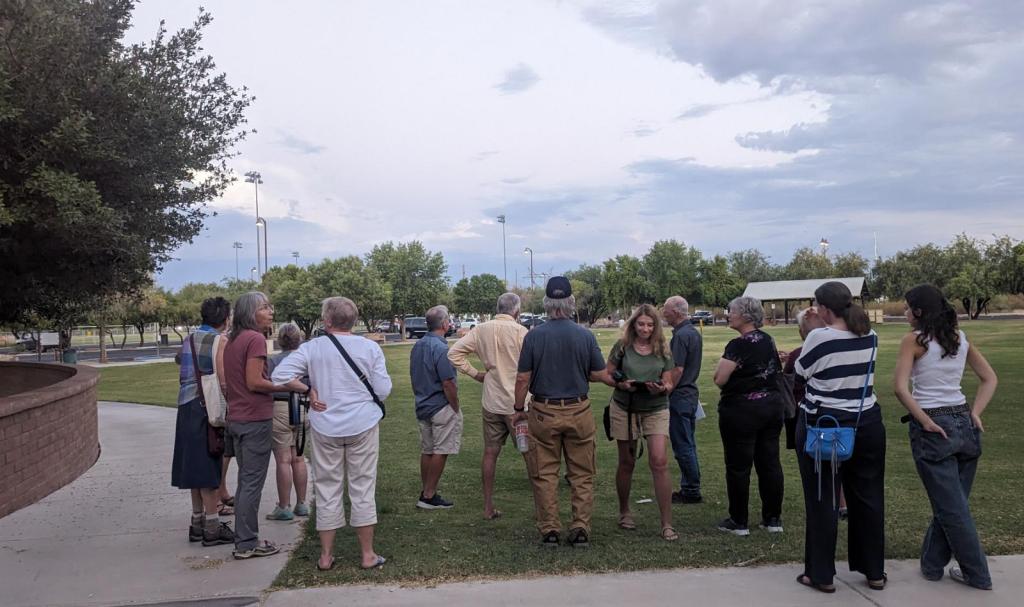
Jeff kicked off the presentation by sharing intriguing insights into the history of bats, going back a staggering 55 million years to the Icaronycteris index, one of the earliest bat fossils discovered. Due to the challenges in fossilizing small bones, early bat history remains somewhat obscure. However, discoveries like Onychonycteris finneyi, with its small cochlea (part of the ear), revealed that bats could fly before they developed echolocation abilities.
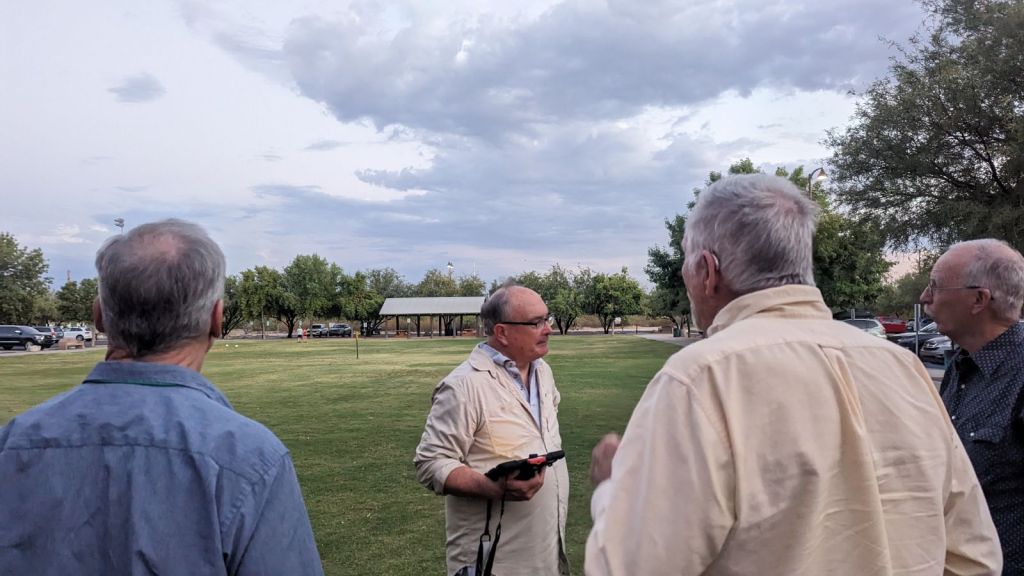
The audience was amazed to learn that not all bats are nocturnal, with flying foxes being a notable example. These old-world fruit bats, known for their impressive wingspan and loud calls, are more active in the morning. Jeff speculated that the original bats may not have been nocturnal either but switched to nighttime activities due to fewer predators, abundant insects, open flowers, and cooler, and more humid conditions.
During the bat presentation, Jeff revealed the diverse families of bats found in North America, captivating the audience with intriguing facts about various species. From the impressive wingspan of the Golden-crowned flying fox to the peculiar facial adornments related to echolocation, each bat species holds its own unique charm.
The presentation highlighted the vital role bats play in our ecosystem. Over 500 species of plants rely on bat pollination, making bats crucial for the reproduction of various plant species, including the columnar cactus and agave. Additionally, some bats, like the Mexican Long-tongued Bat and Lesser Long-nosed bat, are crucial pollinators of agaves and have recently been recovered from near-endangered status.
However, bats face several threats, including habitat loss, pesticides, and the deadly white-nose syndrome, which has caused a 90% decline in some bat populations. Efforts are underway to protect and educate the public about the importance of these remarkable creatures. Organizations like Bat Conservation International (BCI) and the Borderlands Restoration Network are working to conserve bat populations and promote coexistence with humans.
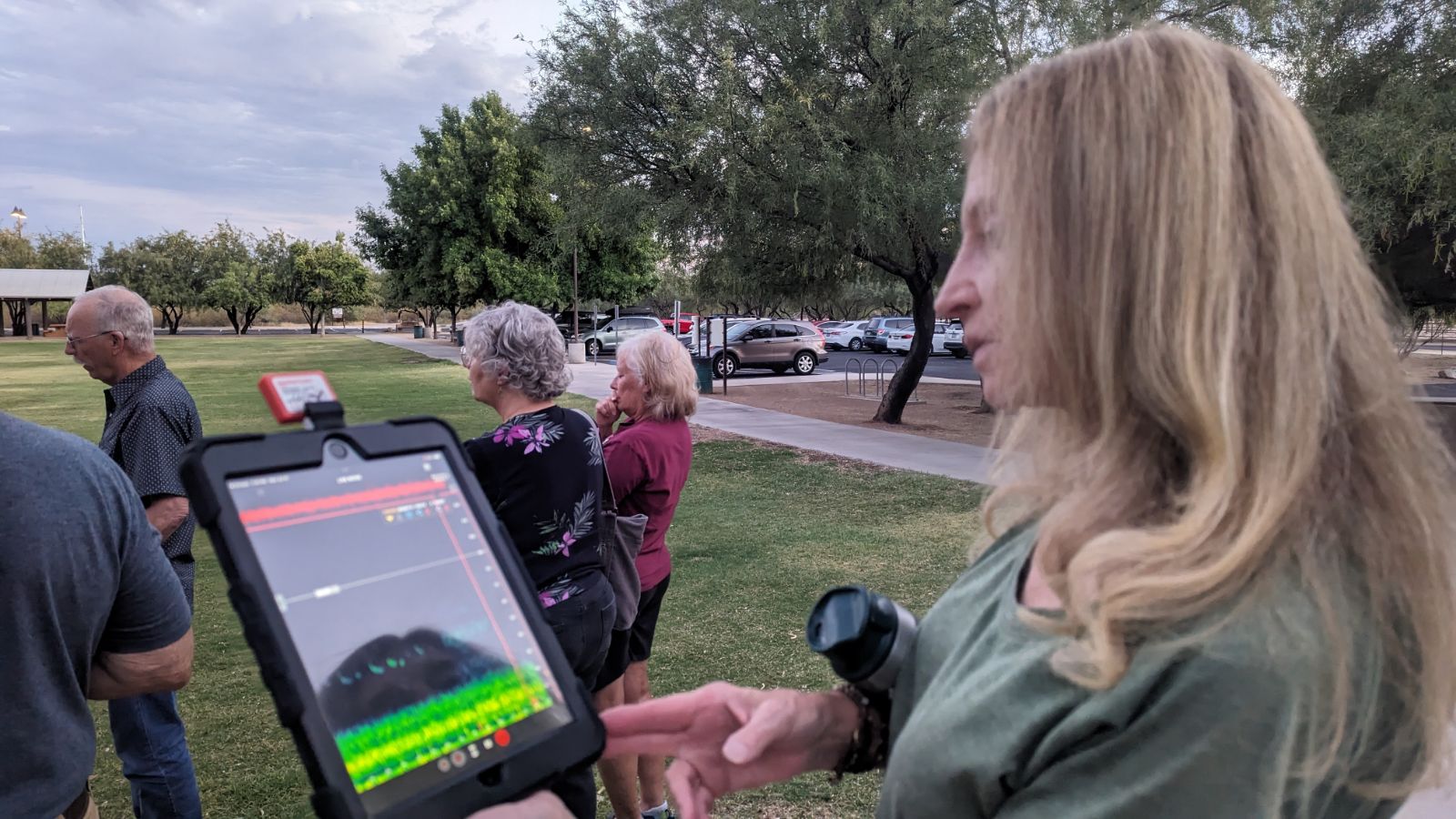
After the presentation, participants grabbed their phones and tablets and used the “Echo Meter: device and software” to listen for and identify bats.
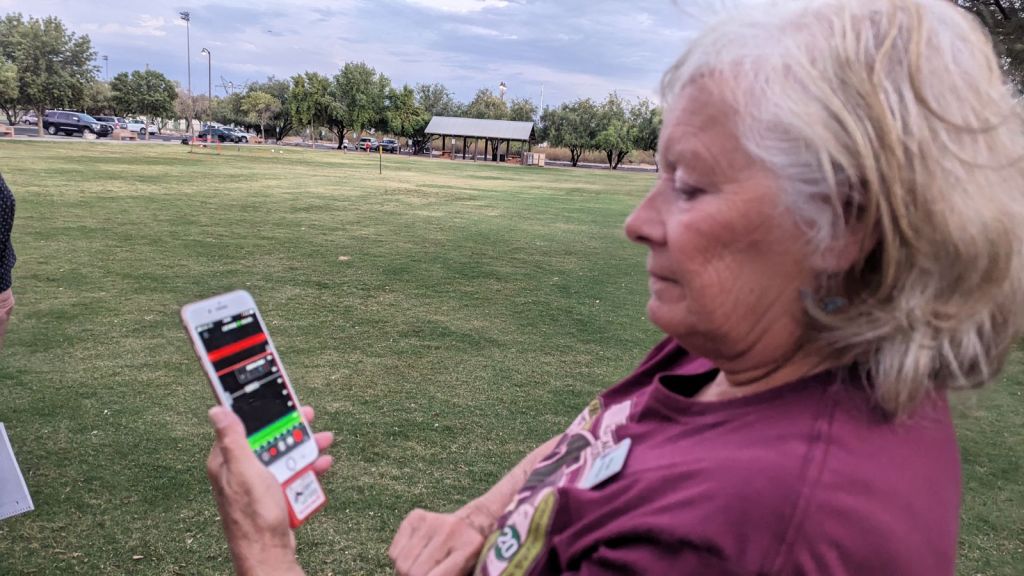
Overall, the bat presentation left attendees with a newfound appreciation for these extraordinary mammals, and we look forward to future opportunities to learn more about the diverse and remarkable world of bats
Stingy Blue
By Linda Dugan, Cohort 5
The clement desert morning started out warm before I even arrived at Sabino Canyon. That was at 6:30 Tuesday morning, April 11, and I took note of a warm breeze passing over me just as I observed the yellow-white ball creeping up over the dark mountains. After many weeks of wet and cool weather, I wasn’t eagerly awaiting the heat I knew was arriving in Tucson in the next few days. It hit 96 degrees the day before on my back porch, so I felt a sense of urgency to venture early onto the trail, because I knew in my gut hiking in 90 plus degree weather, which the National Weather Service was predicting, was a place mostly scorpions and lizards would find themselves. We all have varying degrees of tolerance to the heat in this part of the country, but I’ve learned, often the hard way, that my aging body doesn’t take kindly to desert heat. And I’ve also learned through the years that April sun in Tucson can be even hotter than June sun or July sun or even August sun in the northern climes where I’d spent long segments of my younger years; where winters are so cold and frigid you forget there even is a sun.
Not the case in Tucson. The winter days on occasion are cold, but nothing like Northern Cold. And the sun…well it’s always broadcasting reminders to us of its profusion with at least 350 sunny days per annum. In the Sonoran desert the sun assaults us like daily thunderstorms bombarding a tropical forest.
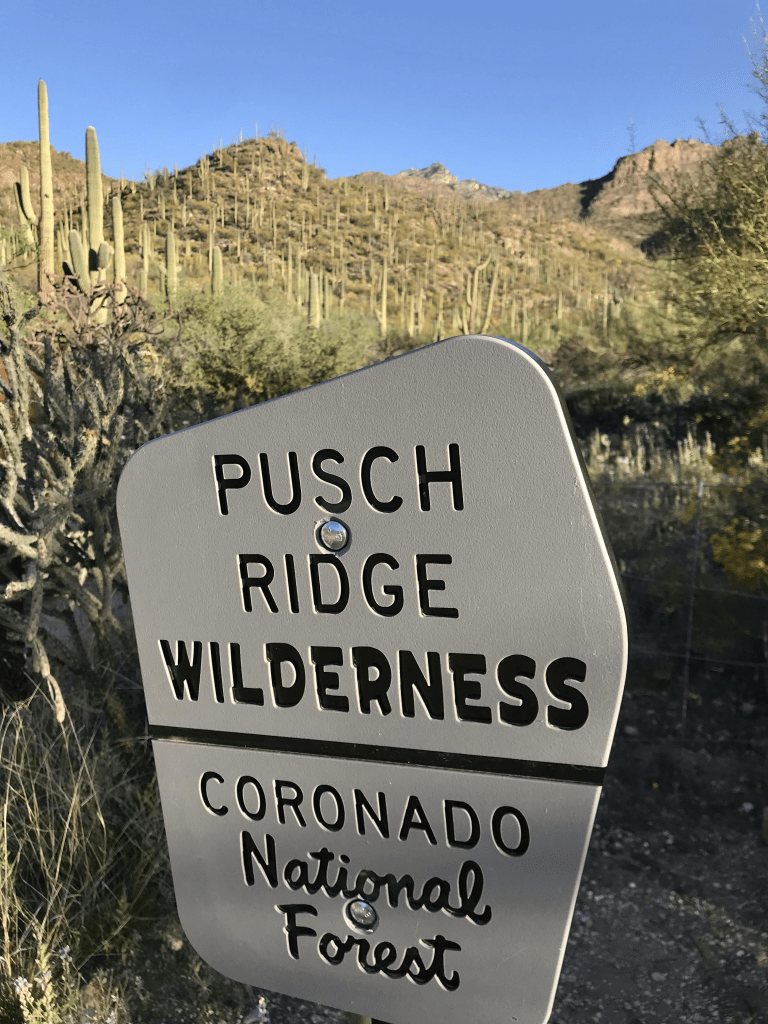
The parking lot was already filling up at Sabino, probably the last of the snowbirds or winter visitors, I thought to myself, as I pulled out a camel pack of cold water from the Ford Ranger and hitched it to my back, grabbed my walking stick and pushed my IPhone into my back pocket. The phone was the motivation behind my hike that day because I was determined to photograph the display of wildflowers I knew were showing their lovely faces along Esperero Trail. And show they did. It was an exhibition.
I walked eagerly along the trail, after exiting the main road which leads crowds of people along Sabino Canyon up over 3 ½ miles to the top, then dead ends into a turn-around spot for walkers, tram riders and bicyclists; where they then make their way back down to the visitor’s center. I hadn’t taken that path for several decades and today I shunned the hordes and made my way along Esperero Trail, a quiet and leisure traipsing through thick forests of creosote, saguaros, chollas, prickly pear, barrels, mesquite, agave and palo verde. Birds flitted noiselessly back and forth between saguaros as if they were guarding the desert from human activity. It was too early in the season for cactus and the indigenous trees to bloom. But the desert was awash with rainbow colors of wildflowers, which is usually one of the first signs of spring. I noted fairy dusters, poppies, plum seed, mallow, and brittlebush in dynamic bloom. It was stunning to see this profusion of color in the desert.
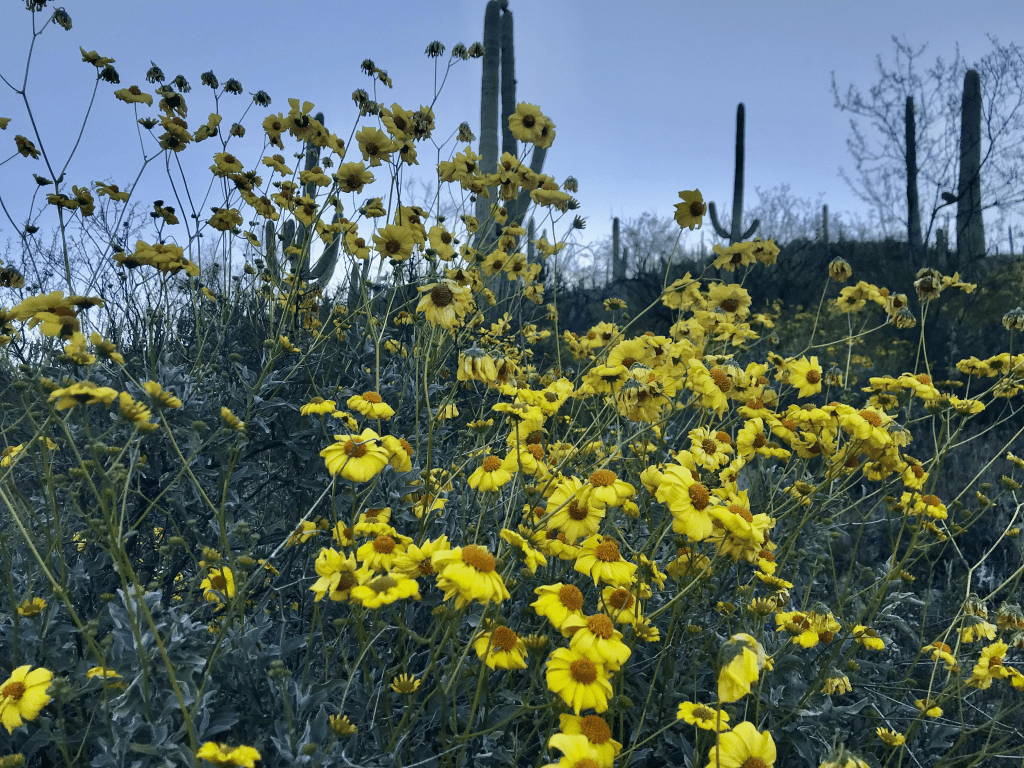
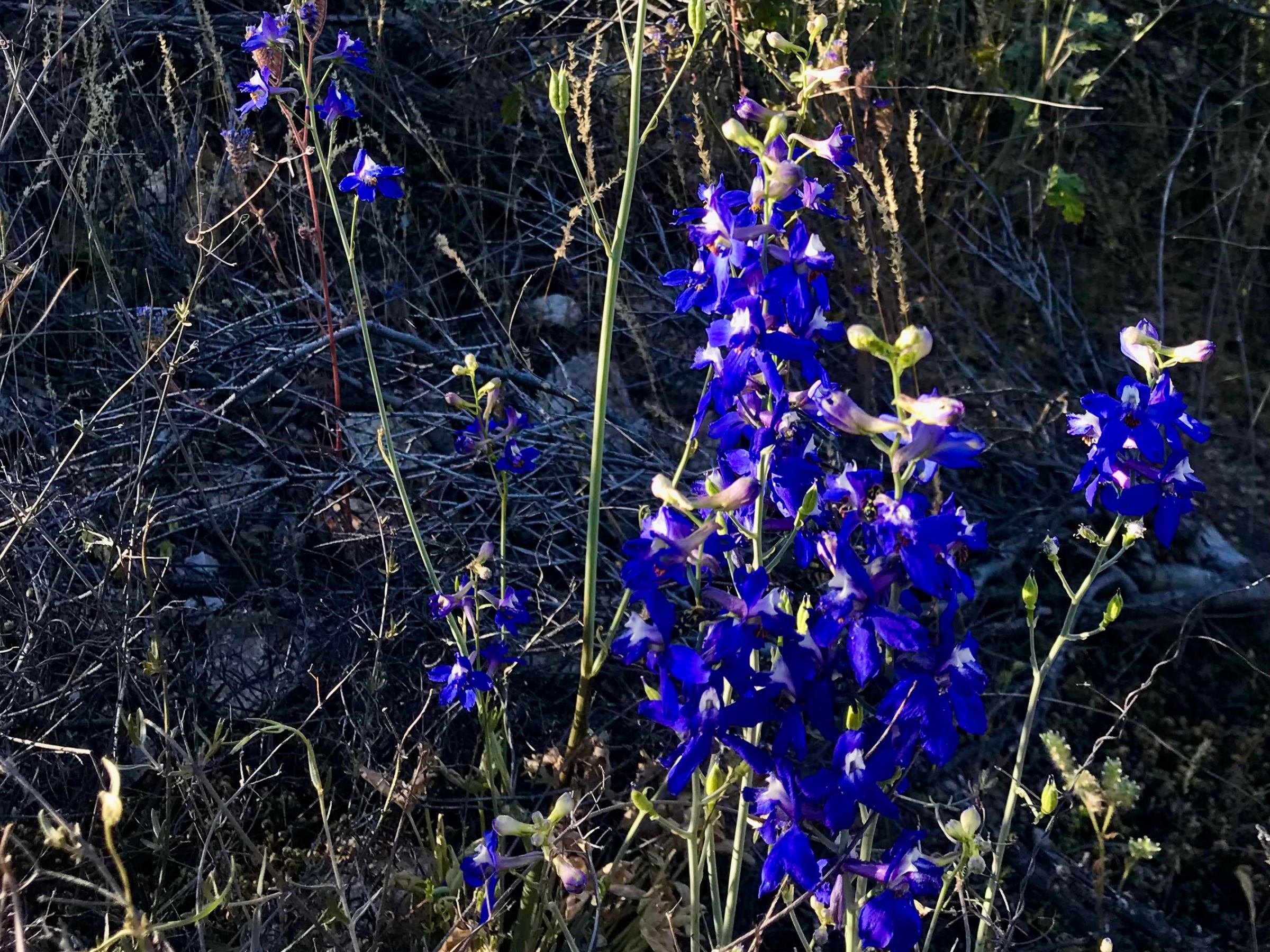
The desert displayed the dominant color of yellow painted across the landscape, but my eye and camera also caught swaths of red, orange, coral and white with speckles of blue and purple. One hiker stopped along the way as I bent down to photograph a blue desert larkspur (delphinium parishii). “A beautiful day,” he noted after I erected myself and looked up at him. It was. Not quite hot enough to make me want to seek out cooler domains, but warm enough to know the desert was only going to escalate into higher temps the longer I lingered on its playground. I turned to the man and pointed to the blue flowers brushing up against my calf. “It’s unusual to see the color blue out here in the desert,” I said casually as I smiled at him. He looked straight at me behind his sunglasses and large floppy hat. “There is plenty of yellow and green of course, after all the rain and some red, too. And scores of white plum seed. Even this coral color from the mallow is prominent, but how often do you see blue out here?” I asked him, happy to have a captive audience for a brief moment. I bent over and delicately touched the blue stemmed flowers. An Anna’s Hummingbird hovered fleetingly over the larkspur before skedaddling away in a hurry. I watched it dart sporadically around as if it were dancing to energetic music.
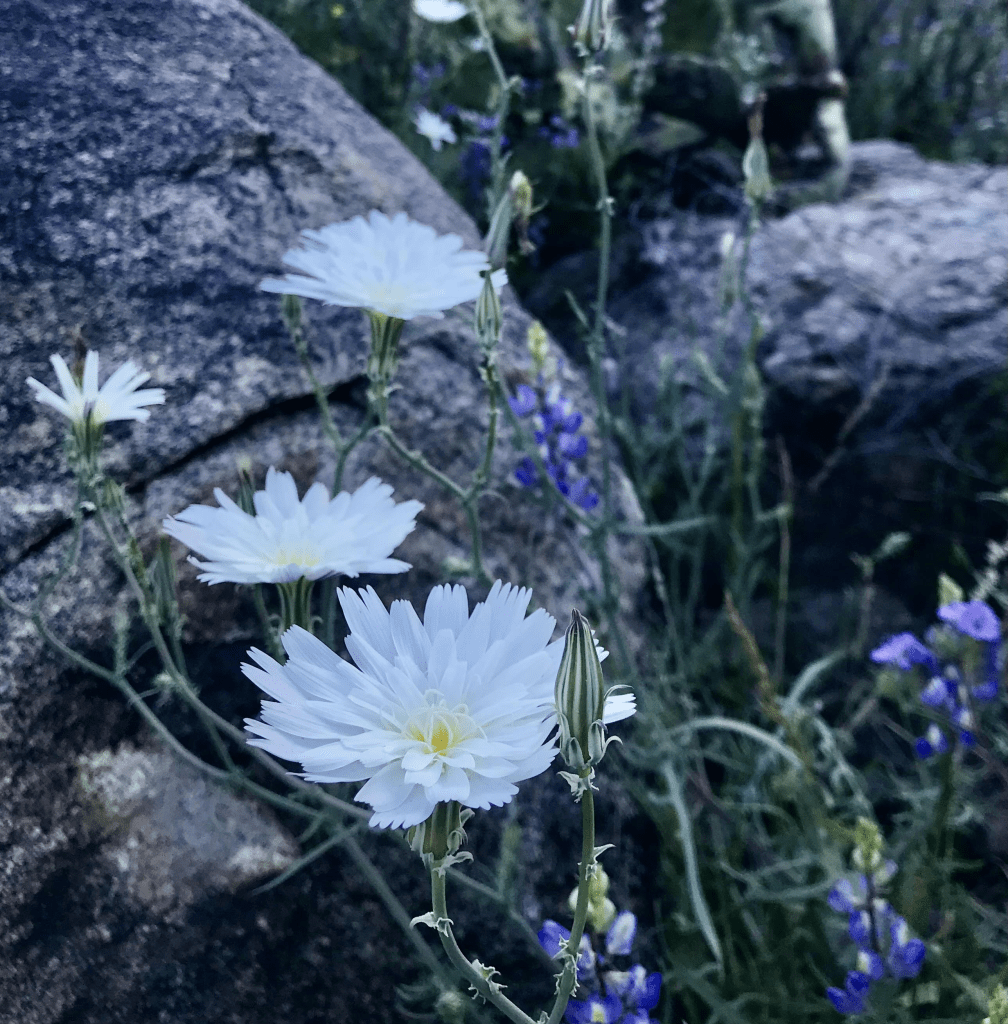
He nodded, “I hardly ever see blue in the desert now that you mention it. Mother Nature must be stingy with that color,” he laughed a little and moved on down the path. He was right about that. According to an article published by the Faculty of Sciences, Engineering and Technology at the University of Adelaide, the color blue is the rarest color found in nature. Only 10% of all flowers on the planet have the color blue.
Later, I detoured off the main trail and meandered onto a narrower path thinking I might see something new in the way of flowers. What I saw was a lethargic rattlesnake I came upon suddenly and startled him with the sound of my feet crunching against small pieces of gravel and rock. The body was camouflaged well, hiding in the brown earth, coiled up in the sun. But I heard the sound of the rattle loud and clear and saw it vibrating madly at me like an angry teacher shaking an index finger at noisy children. I instinctively backed away from the aggrieved snake, too quickly to snap a picture of it, as my brain moved me instinctively into flight mode. The snake wasn’t interested in being photographed and instead slithered off into the brush and was gone in an instant.
The desert is a stingy place. Stingy with its water, rain, and moisture mostly. Stingy with the color blue. And stingy with rattlesnakes who don’t favor being photographed by people. As I made my way back to the parking lot, my GPS watch indicated I had hiked five miles. I wondered how much longer these displays of wildflowers would offer their gift of color now the incessant heat of the desert would soon be encroaching on us. It wouldn’t be long before the desert would be inundated with 100 degree plus temperatures. Day after day of them. All those specks of desert blue would fade away in their own time, like clockwork, and die back from whence they came. The only blue left would be the azure color of the sky on endless cloudless days. I took one last panoramic view of the picturesque desert, drinking in the sights, sounds and smells of its flora and fauna. This exquisite Sonoran Desert was my home. Stingy indeed, but also generous in its beauty and biodiversity of animal and plant life, who also call this unique and fragile terrain their home.
Reference: https://set.adelaide.edu.au/news/list/2019/08/20/why-is-the-colour-blue-so-rare-in-nature
 Pima Master Naturalists
You must be logged in to post a comment.