
The Hidden Threat of Death Pipes
Kathe Sudano, Cohort 3
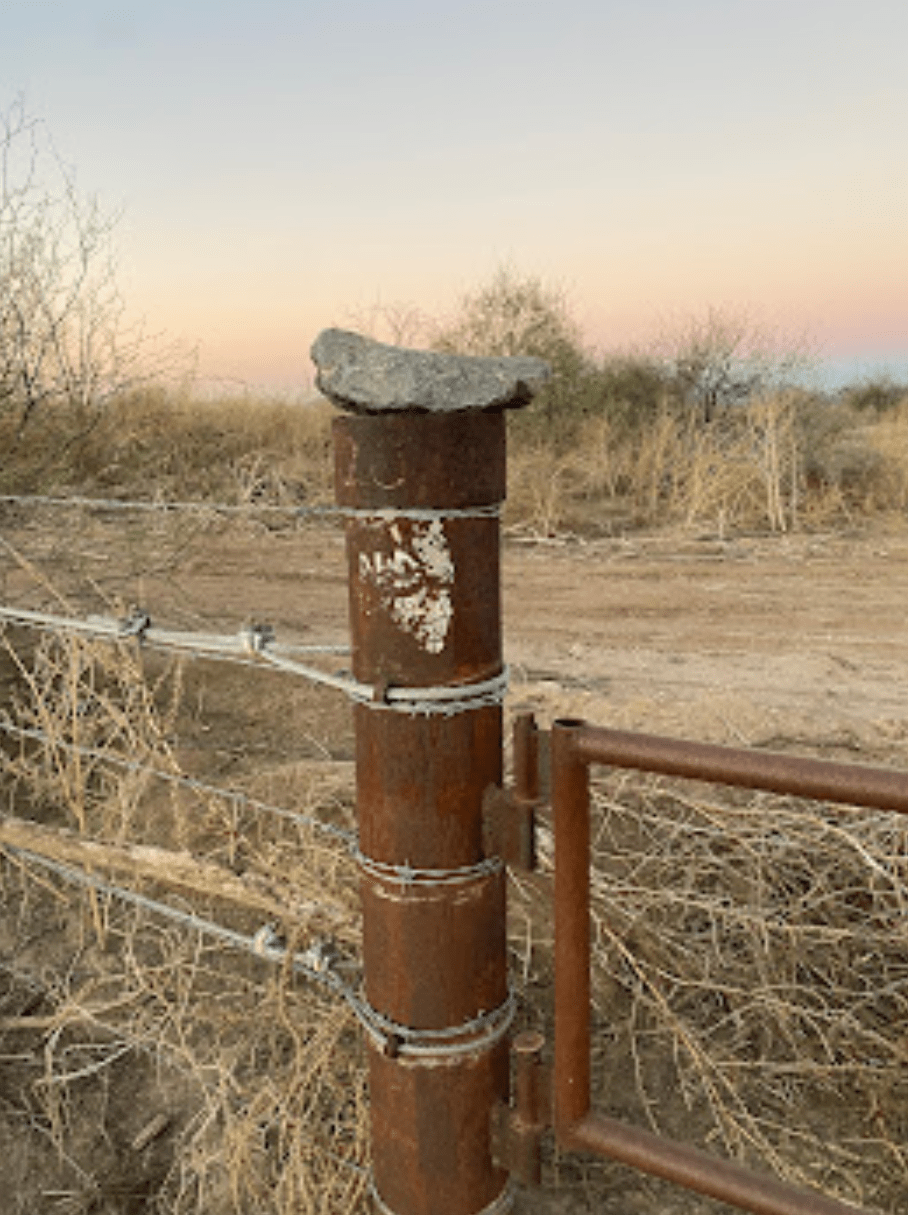
On Saturday, March 2nd, 2024, about a dozen of us volunteers signed up to assist Tucson Audubon’s Conservation Project Manager, Olya Weekly, to cap open vertical pipes in Catalina Regional Park. Most of us had no idea the dangers these innocuous structures pose to birds and other wildlife. Commonly referred to as Death Pipes, small creatures can become trapped inside them when seeking a place to nest, hibernate or roost. Unable to climb the smooth surface of the pipe or spread their wings, birds eventually die a slow death.
Cavity nesting birds are most likely victims, but lizards, snakes, small mammals, and insects fall victim to these pipes. As birders, we often venture into wilderness areas making us valuable allies in locating and reporting the pipes. Tucson Audubon asks that you please report open vertical pipes through their website using the form at tucsonaudubon.org/deathpipes. We ask for a few details about the pipe’s location and dimensions and a photo if possible. We also kindly ask that you temporarily cap the pipe with readily available objects until we can arrive to permanently address the issue.
Several methods exist to cap open pipes that serve no obvious function. Temporarily, you can place a large rock on top of the pipe or stuff trash, vegetation, or rocks inside. For those addressing pipes on their own property and seeking a more permanent solution, options include using wire mesh with a clamp, a cement cap, or complete removal of the pipe. The possibilities are endless, but ensure the cap is secure and not easily movable by wind or animals. Most of this info was copied from a blog by Olga Weekly who works for Tucson Audubon. While they are currently wrapping up capping days and will resume in the fall, please report any pipes you encounter on their website here: https://tucsonaudubon.org/deathpipes/. Remember open pipes are death traps for birds!
COMMUNITY PARTNER SPOTLIGHT: MARANA PARKS & RECREATION
by Dan Collins and Dave DeGroot
Whether your interests and abilities as a Sonoran Desert naturalist lean towards education and interpretation, citizen science, or stewardship, Marana Parks & Recreation offers ample opportunities for Arizona Master Naturalists (AZMN) to volunteer in ongoing programs and special events. Activities are currently held on the beautiful Tortolita Mountain Trails, the expanding facilities at the Tortolita Preserve, and the recently renovated wetlands of El Rio Preserve, as detailed herein.
Tortolita Mountain Trails: With the Wild Burro Trailhead parking lot and facilities located just beyond the gated entrance of the Ritz-Carlton, Dove Mountain, the 29 miles of trails in the Tortolita Mountains transverse Cochie, Wild Burro, and Ruelas Canyons and the scenic mountain ranges separating them. The trails are well-maintained by the Town of Marana, and offer grand vistas highlighting spectacular crested saguaros, ancient Hohokam petroglyphs and grinding stones, and line shacks constructed by ranchers a century ago.
AZMN naturalists Dan Collins and Matthew Woodhall currently provide interpretation for Guided Hikes in the Tortolitas, with Dave DeGroot and Paul Stillman also volunteering in the past. On the second Saturday of each month – from October through April – a dozen or more hikers may participate in these easy to moderate level hikes. Nighttime hikes are also held in June and September. Working alongside Marana Parks and Recreation staff, who serve as the lead and tail guides, naturalists make frequent stops for educational and interpretive opportunities – sharing about the flora, fauna, geology, climate, and cultural history of the Sonoran Desert.
These Saturday hikes have become so popular that weekday hikes have been recently added; Matthew leads an Educational Hike, centered on the unique climate conditions and species adaptations that contribute to the rich biodiversity of the Sonoran Desert. Additionally, Jared Suydam, Environmental Education Program Coordinator with Pima County Conservation Lands and Resources, guides an Ethnobotany Hike – a fascinating look at how humans have utilized desert plants for necessities like food, shelter and medicine.
Tortolita Preserve: The 2,400 acre Tortolita Preserve lies just southwest of the Tortolita Mountains – the main entrance located at 6250 West Moore Road. With 9 miles of trails over flat and gently sloping natural desert, the Preserve is popular for walking, hiking, easy mountain biking, horseback riding, bird watching, and nature photography (no off-road vehicles allowed). Within the past year, Marana has added a xeriscaped parking lot, portable restrooms and fencing. Future planned improvements include expanding the trail system to include two larger loops, with a third smaller loop designed as an interpretive trail.
AZMN naturalists first became involved with the Tortolita Preserve in November, 2022 and again in April, 2023 when Marana Parks and Recreation joined with a number of local environmental groups to conduct BioBlitz events to catalog plants and animals in the Preserve. Dozens of Master Naturalists participated. The resulting document, published online by AZMN’s Dave DeGroot, was a first-ever look at the hundreds of plants and animals that make their home in the Preserve – from solitary velvet ants (a species of wasp) to large mule deer and pumas. The two BioBlitz events riveted attention on the Preserve and encouraged ongoing public appreciation of this unique desert ecosystem.
Currently, Marana offers a Nature Trek in the Preserve, led by AZMN naturalist Vicki Ettleman and Pima County naturalist Sandy Reith. Marana Parks and Recreation describes this Thursday nature walk as “a morning of guided exploration, wandering among the stately saguaros as we watch for birds and other wildlife that make their homes in this beautiful patch of native desert vegetation”.
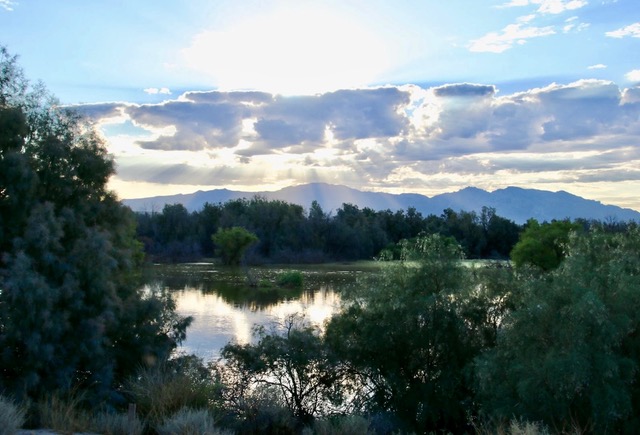
El Rio Preserve: Now a year-round wetlands rivaling that of the Sweetwater Wetlands, El Rio preserve is located off Silverbell Road, just north of Los Morteros, the Hohokam archeological site. This Preserve protects 104 acres of riparian habitat along the Santa Cruz River and The Loop multi-use path, connecting 137 miles around the community. Amenities include picnic tables under a shade ramada, interpretive signage, and a railed viewing deck that overlooks the wetlands.
Along migratory routes for many North American bird species, Marana’s website states that “nearly 250 bird species have been identified at the El Rio Preserve. Among these are egrets, vireos, cormorants, warblers, mallards, and hummingbirds, all of which flock to the lush oasis the Preserve provides. In addition to birds, the preserve’s wetlands provide refuge for a variety of mammals, reptiles, and insects”. This amazing biodiversity in the Preserve is reflected in the many programs offered here.
Vicki Ettleman and Sandy Reith lead a nature program geared for all ages; Lizards and Other Critters is a guided walk “in search of lizards, snakes, birds, small mammals, and other desert wildlife that call El Rio Preserve home”. Also, AZMN Naturalist Summer Marshall does her own Nature Trek here, exploring the distinct plant and animal communities of this Sonoran Desert riparian habitat.
So, what would a birding hot-spot be without Jeff Babson, Pima County’s Environmental Education Specialist, offering his unique humor to his expertise and insights? Jeff conducts a Birding program at the Preserveon Tuesday mornings, in addition to a seasonal program on dragonflies, entitled Dragons and Damsels.
Lastly, Dave DeGroot has assisted Marana in hosting student field trips around El Rio’s lake by supervising a Petroglyph Study Station. He sets up a viewing station near one of the petroglyph sites at the base of the mountains. Dave, a retired teacher, says he thoroughly enjoys introducing students to the concept that “others made their homes here, long before we came along.”
Perhaps you would be interested in bringing your own naturalist program to one of these great outdoor venues, or volunteering in one of the ongoing programs already offered. Marana is especially in need of adding more AZMN volunteers to the longer Guided Hikes in the Tortolitas, so they can also offer a second, shorter hike option, such as on the December and January Petroglyph Hikes. A great way to explore these opportunities is to register for these or other programs on the Marana Parks & Recreation website. Also, you can find complete information and contacts on the Volunteer Job Description form.

Desert Tortoise Monitoring in Tucson Mountain Park
By Melissa Mundt
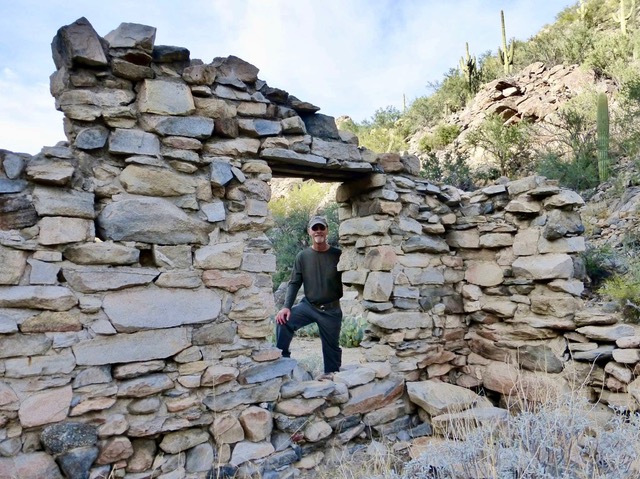
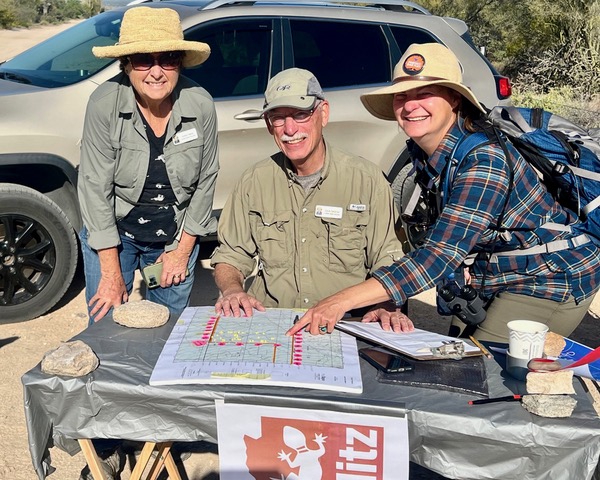
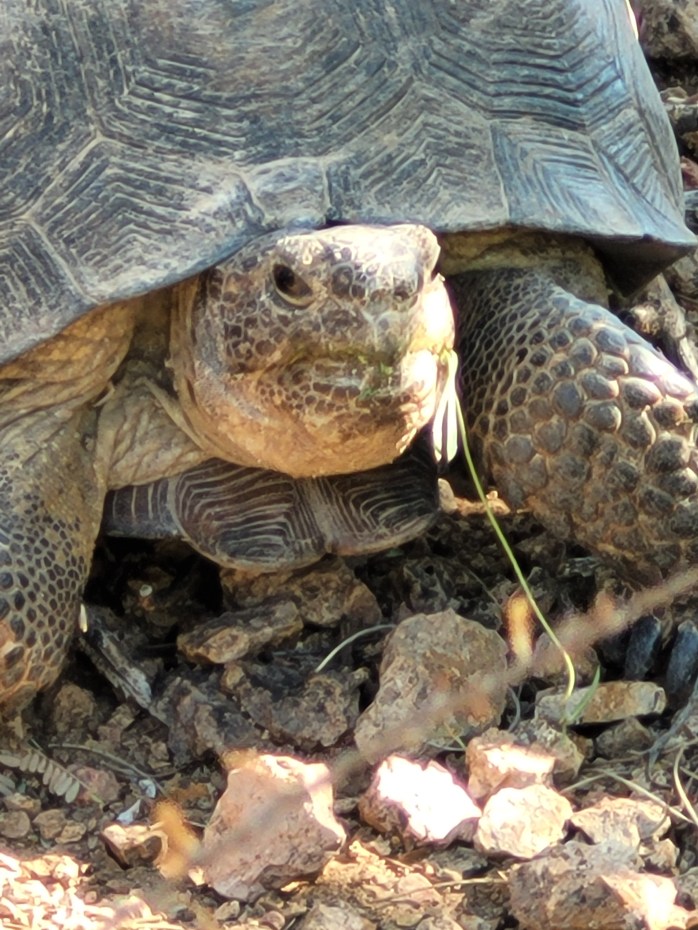
As part of the Multi Species Conservation Plan, Pima County Conservation Lands & Resources monitors populations of Desert Tortoises in the Tucson Mountains (learn more about this work here). I was able to go to support the Conservation Biologists and to better understand this programming.
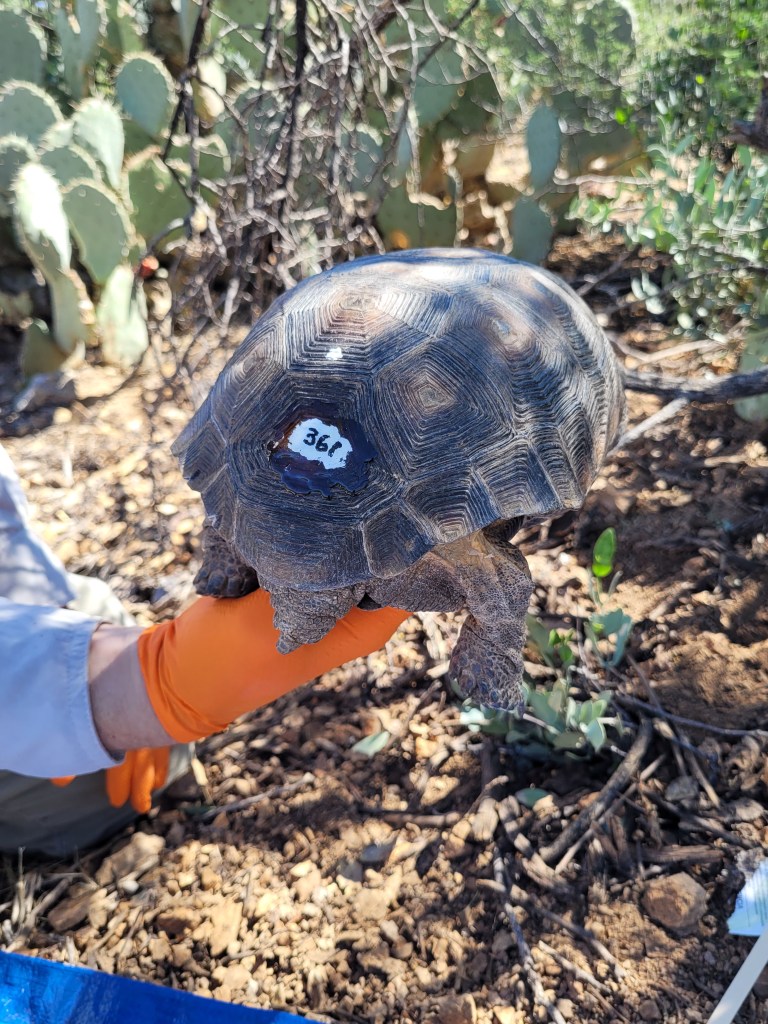
I had the opportunity to go out with Ian Murray and the team in late August. They shared the background of the monitoring protocols and got me up to speed. Desert Tortoises are monitored every 3 years in 20 long term study plots. Tortoises are marked with “license plates” to identify individuals that are recaptured.
It was hot work over rough terrain but in 5 hours we found and “processed” (took weight, measurements, marked or identified) 7 tortoises in 2 plots. It was an amazing experience to find them and help enter data that is used to monitor the health and population of this iconic species.
Reach out with any questions: melissa.mundt@pima.gov


Southwest Synchronous Fireflies at Tumacacori
By Chris Robie, Cohort 6 & Xerces Ambassador
Growing up on a Pennsylvania farm, firefly shows were a common summer occurrence. Barefoot, we chased and captured them in glass jars, often forgetting about them until the tiny, lifeless bodies were dumped out the next day.
For the past fifty years, we’ve lived and enjoyed the natural world, including fireflies, throughout the U.S. Four years ago, life brought us to Arizona. Here, I became a Xerces Ambassador and then a Pima County Master Naturalist, deepening my appreciation for invertebrates. While I miss monarchs, I’ve occasionally seen one.
However, I never imagined seeing fireflies in the desert. Until August 11th, when a front-page newspaper article announced their discovery at Tumacacori National Historical Park. To my surprise, the interviewed Ranger Biologist, Tony Palmer, was an acquaintance from Omaha, NE, whom I had met volunteering at a local nature center, Fontenelle Forest. Without hesitation, I signed up for one of the 50 visitor spots available over five nights.
On August 28th, Tony graciously allowed me to set up a table with Xerces materials to share with visitors before we ventured into the darkening orchard for a hike. Sometimes, an experience deserves more than mere sentences; so I wrote a poem.
If we’re lucky enough to have fireflies with us next year, I highly recommend witnessing this magical display. Special thanks to Tony Palmer, the staff at Tumacacori, and Arizona Daily Star reporter Henry Brean.

Ethereal Lights
Tiny ethereal lights
awaken the darkening orchard’s silhouette
and we gaze in wonder
at what is so rare
west of the Rockies.
Blink, blink, blink,
the male Photinus knulli rise;
for a moment, a part of the constellation sky,
then sink
to the grasses below,
where a female awaits to choose her mate.
We are humbled to witness their fate.
Is it a bright flicker for their future,
or for this delicate invertebrate, as others,
is it too late?
We watch mesmerized,
reach out to touch their invisible dance,
and whisper a prayer,
please give us humans
another chance?
- Written after visiting the Southwest Synchronous Fireflies at Tumacacori National Historic Park.
AZMN Field Trip to the Amerind Museum
Arizona Master Naturalists Join Our New Partner
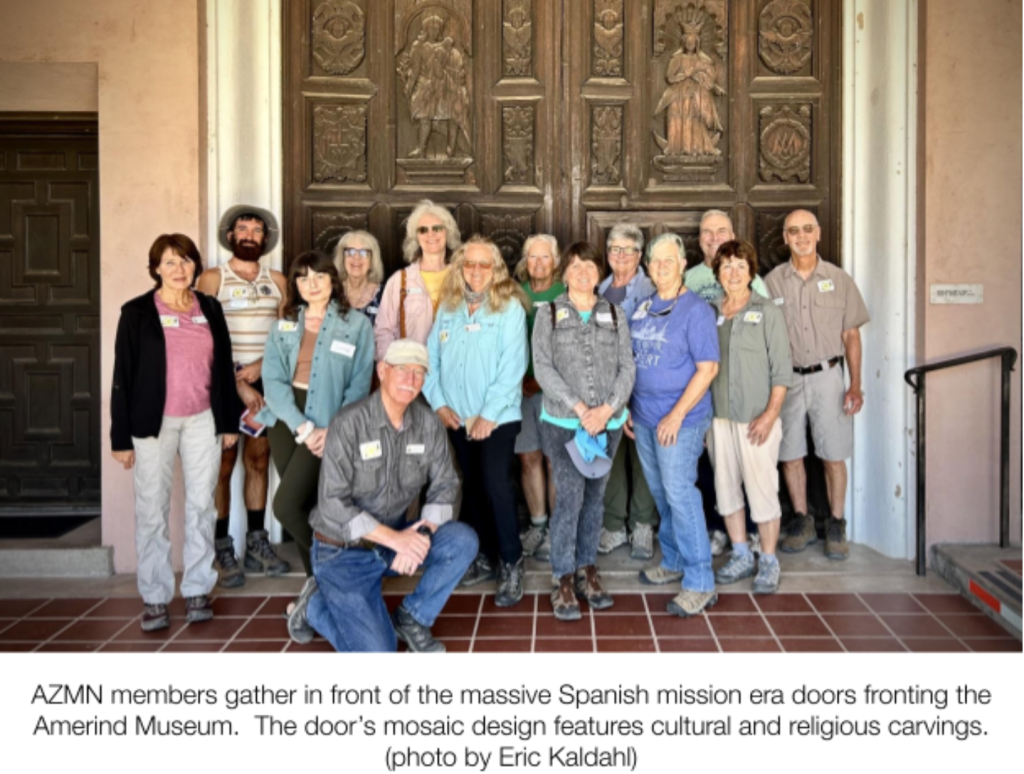
Eric Kaldahl, PHD, the President and CEO of Amerind, greeted each naturalist as we entered the impressive and expansive library. After a brief personal introduction, Eric spoke about the history of the land since its habitation by Native Peoples, the influence of the Spanish mission era, its ranch history under the Fulton family, and its acquisition as the Amerind Foundation in 1937. Presently Amerind has docents that work inside the museum, but with the recent expansion of the Texas Canyon nature trails, Eric is seeking AZMN volunteers to serve in three capacities: trail guides for monthly interpretive hikes, trail maintenance crews, and site stewards.

Eric shared that an important consideration for naturalists engaged in interpretive programs on the trails is to relate the subject under consideration to the primary mission of Amerind. For example, when leading a bird walk, a naturalist might speak of the turkey feathers utilized in blankets and robes by the Pueblos, or their captivity of macaws for the colorful feathers used in ceremonial rites. Similarly, a naturalist leading a hike focused on native plants could share that Indigenous Peoples boiled fresh mesquite pods to make molasses or dried and ground the pods for flour, wove baskets made from beargrass and yuccas, and used fiber extracted from agaves to produce rope, cordage, sleeping mats and sandals.
After a question & answer period, AZMN volunteers enjoyed a tour of the art gallery and museum. Both areas incorporate several rooms on the lower and upper levels of the two-story building, The art gallery showcases pottery and paintings from both Western and Native artists, with displays changing from time to time. The Amerind Museum features permanent exhibits of beautiful Navajo and Zuni jewelry, engaging archeological artifacts, and hundreds of other items from both the Indigenous and ranching cultures.

From there, our tour group divided, with ten naturalists joining Eric on a 2-mile guided hike on the trails in the Nature Preserve, and four others choosing to take a short walk on the self-guided Ethnobotany Trail. The main trail system at Amerind consists of several inter-looping paths, with trail signs marking every intersection and benches placed every quarter-mile or so. Two other one-way trails take hikers to the Bird Pond or Whale Rock, respectively. The quarter-mile Ethnobotany Trail begins at the museum, with 15 interpretive stops ending at the picnic area. The detailed Ethnobotany Guide can be found online at Amerind’s website, or a paper booklet of the Guide is available for loan at the Museum.
Afterwards, we all gathered together again for a picnic lunch in the courtyard of the Fulton House, and Eric opened up the home for tour. This U-shaped ranch-style house was built in 1931 by William Fulton, the owner of the FF Ranch and founder of the Amerind Foundation. While the working ranch was famous for breeding championship quarter horses, Fulton’s other passion was archeology, and excavations in Texas Canyon soon resulted in discovery of human habitation spanning centuries before. Throughout its history, Amerind has continued to support archaeological research that contributing to our knowledge of the history of the Southwest and appreciation of the Native Peoples that have called it home.
At the end of our visit to Amerind, Eric extended an invitation to those that might be interested in volunteering at Amerind, and six Master Naturalists responded positively. Volunteering at Amerind is appealing to members of both the AZMN Borderlands and Pima County Chapters, as Amerind lies a leisurely one-hour drive from both Sierra Vista and Tucson – just one volunteer day a month could fully satisfy the 60-hour annual requirement for recertification. If you missed the field trip, but would like further information, check out the web-links below.
– article by Dan Collins, PCMN
Pima Master Naturalists Happenings
By Dana Hook
It is wonderful to be celebrating the monsoons in Tucson with an early rain on June 21st. The smell of greenness and sighs of relief show that moisture is in the air. I hope that all of you have a chance to experience some of the excitement that comes with our storms and renewed rain.
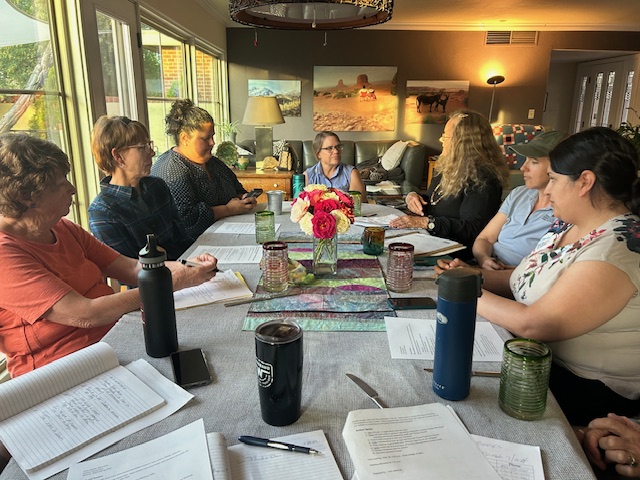
The Steering Committee for PCMN met May 28th with the following members participating: : Dana Hook, Peggy Ollerhead, Izetta Feeny, Vicki Ettleman, and Deb Petrich (by phone). (see a photo) We meet quarterly, as the role of our committee has changed over the past year with the State organization taking on more of the responsibilities as well as us now having an engaged Chapter Sponsor, Pima County. Melissa Mundt is our Chapter Advisor representing the County within our organization. We are all adjusting to these changes, and we have some leadership roles that are so important to what we have the opportunity to do together as a Chapter: Timekeeper, Communications, Outreach, Advanced Training, and Partnerships. These important roles have committees that appreciate a diversity of ideas and assistance. These are good places for our members to get some of their volunteer hours and help us continue as a strong Chapter.
Speaking of volunteers, I was so pleased to have five members from Cohort-8 attend the Steering Committee meeting on May 28th. (see photo) The enthusiasm they have towards our Chapter is infectious. I believe all five of them agreed to some committee work just at that meeting. More of us working together bringing our ideas for Chapter events, volunteering at our Partner events, and showing up for our own Advanced Training, socializing, and members meetings will continue to grow our Chapter and make a difference here in our County.
Listed below are the events that we discussed that the May 28th meeting for you to attend and support:
1) Tucson Audubon Birding Festival Tabling–August 9th and 10th
2) Mission Garden Critter Night tabling – August TBD
3) Catalina State Park behind the scenes with reptiles two mornings in August TBD
4) Cavinr Field Trip – October TBD
5) Member Meetings – October and November
6) Annual Meeting/Holiday Party – December
Deb Petrich will send out invitations and details regarding these events. I hope to see you there. Dana
Master Naturalist goes on the road with “Secrets of the Santa Rita Mountains”
A Cohort 2 Master Naturalist, Dave DeGroot, is gathering stories from years of hiking the Santa Rita Mountains. He will share them in fast-moving presentations in local libraries under the title “Secrets of the Santa Rita Mountains.” Libraries are booking his pesentation for dates in mid-August.
“When I was teaching in Sahuarita I used to head for the mountains every Friday afternoon as soon as I was off the clock,” Dave says. “Depending on the time of the year, I could usually count on four or five hours of hiking on low trails, high trails, game trails, etc. The mountains were a place where I would recharge my batteries.”
Dave also took a lot of pictures with his iPhone, a camera with a long lens, and a trail camera.
“Close encounters with big animals were always exciting,” Dave says. “Bears, Coues whitetail deer, coatis, and ringtails were always memorable, but even kangaroo rats have stories to tell. Once I rescued a kangaroo rat who was stuck painfully inside a jacket of jumping cholla spines. And then there are the four kinds of big cats that haunt the northern part of the Santa Ritas – three of which showed up on trail camera pictures.”

Dave is a certified Master Naturalist and a docent for both Friends of Madera Canyon and the Town of Marana (Tortolita Mountains). As a teacher he organized field trips into the Santa Ritas for his classes, during which students hiked, studied wildlife, and even panned for gold.
“I think that even people who know a lot about the mountains will learn new things from my presentation – especially about the northern area above Vail and Corona de Tucson,” Dave says. “I try to keep my style of speaking and projecting pictures on a big screen closer to ‘entertainment’ than ‘exposition.’ “
Three libraries so far have booked Dave’s presentation. Each event will last approximately 45 minutes and will be open to the public in the library’s community room.
- Tues., Aug. 13: Sahuarita Public Library, 670 Sahuarita Rd. (near Sahuarita Town Hall) 4:30 pm.
- Thurs., Aug. 15: Wheeler Taft-Abbett Library, 7800 N. Schisler (Silverbell & N. Cortaro) 5:30 pm.
- Thurs., Aug. 22: Dusenberry-River Library, 5605 E. River (River and Craycroft) 5:30 pm.
Tucson air quality may be affected by huge new mine
By Dave Degroot
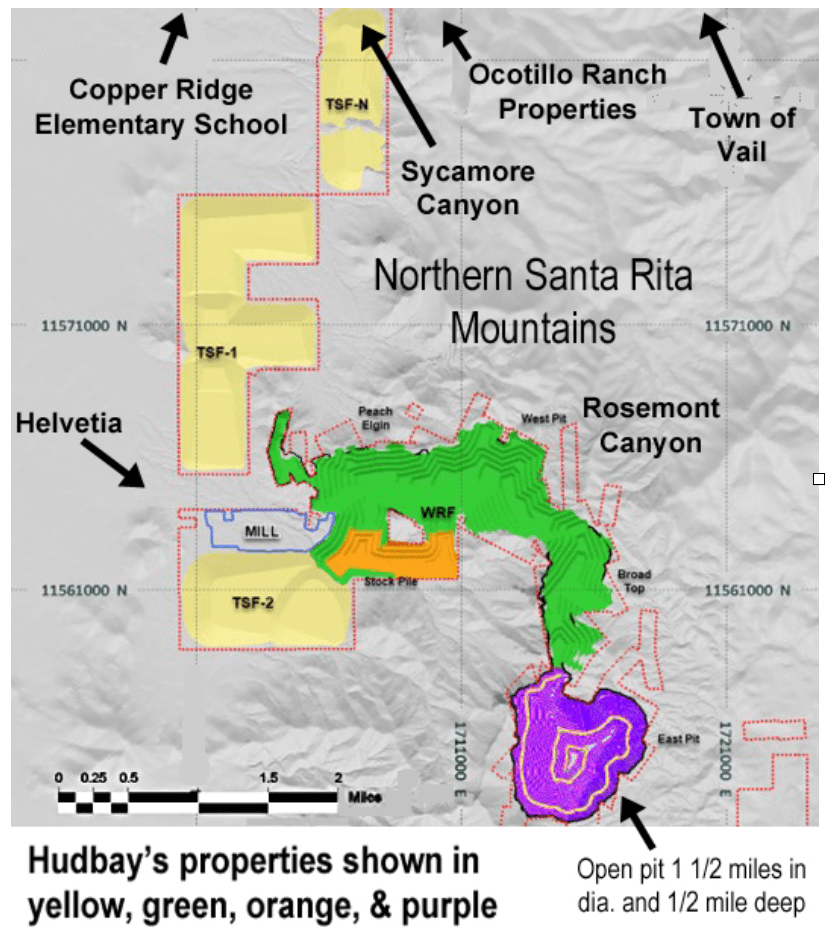
A new open pit mine is being planned in the northern Santa Rita Mountains by the multinational Hudbay Minerals Corporation of Toronto, Canada. A final step in the approval process for the huge mine will probably begin in August, 2024.
The location of this new mine can already be seen from across the Tucson basin. When it is fully approved, it will produce massive craters in the mountains, dust clouds, exhaust fumes, mountains of waste material, and microscopic particles in the air – all within a few miles of schools and established housing developments southwest of Vail, Arizona.
Opponents of the mine worry about slipshod planning on Hudbay’s part.
In an open letter to Arizona’s Department of Environmental Quality (ADEQ), Jeremy Nichols of the national Center for Biological Diversity (a respected organization with offices in nine states and Mexico,) wrote that Hudbay is engaging in what could be called unrealistic, wishful thinking in saying that it can operate safely.
“Although [Hudbay’s] fogging sprays, scrubbers, and dust collectors can achieve high control efficiencies, it is unreasonable [for them to say] they will achieve a 99% control efficiency at all times during the life of the proposed mine.”
The Center for Biological Diversity also said Hudbay is “significantly underestimating” the planned mine’s output of toxic particles: “the potential could be more than double what Hudbay is currently estimating.”
For these reasons, the Center for Biological Diversity states that Hudbay should be held to STRICTER standards than what it is asking for. Hudbay wants to be called a “Class 2” operation but the Center for Biological Diversity says that in reality it will be a more dangerous “Class 1” operation.
PLEASE write our elected officials. Many voices CAN make a difference, but if the officials don’t hear from us, it is likely that Hudbay will get everything it wants.
US Senators and Representatives
Senator Kyrsten Sinema
20 E. Ochoa St.
Tucson, AZ 85701
Phone: (520) 639-7080
`
Senator Mark Kelly
1661 N. Swan Rd., Suite 238
Tucson, AZ 85712
Phone: (520) 475-5177
`
Representative Juan Ciscomani
1636 N Swan Road, Suite 200
Tucson, AZ 85712
Phone: (520) 881-3588
Arizona Governor
Katie Hobbs
State Capitol
1700 West Washington,
Phoenix, AZ, 85007
Phone: 602/542-4331
MN Book Club seeks more members!

The PC Master Naturalist Book Club is seeking more members. We meet 5 x per year, the 3rd Thursday evening of the month, at club member’s homes. We read non-fiction books about the Sonoran desert, and national and international issues that effect it, such as climate change. Members do NOT have to host at their homes. We typically meet from about 5:30 pm to 7:30 or 8 pm. The next meeting is Sept 19th. We will discuss the book Entangled Life: How Fungi Make Our Worlds, Change Our Minds & Shape Our Futures.
Please contact club coordinator Penny Miller at 304-238-3215 or pmiller451@aol.com for more info and a FAQ sheet. We will accept up to 3 new members on a first come, first serve basis, and hope to hear from Cohort 8 in particular, but any cohort welcomed!
Learn how to catch and tag migrating monarch butterflies!!
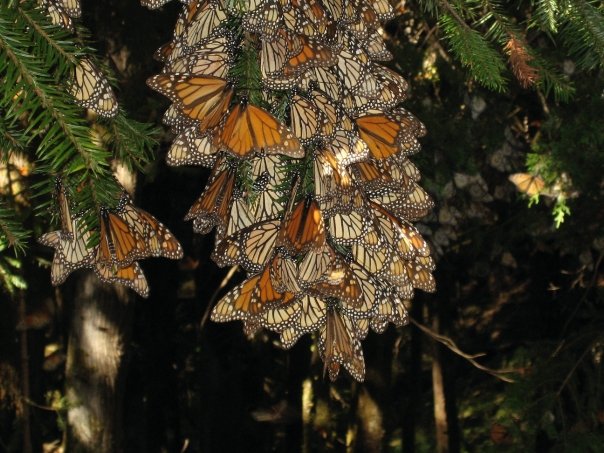
Penny Miller presented a program at the April meeting, on her February trip to the high oyamel fir forests of Mexico to witness the over-wintering monarchs, which numbered in the hundreds of thousands!

Key take-aways are that monarchs are found in AZ year round, moving to higher elevations to avoid the heat in May and June. AZ monarchs prefer these milkweed species available at nurseries: antelope horn, pine leaf, showy, desert or rush, butterfly weed and AZ milkweed.
Monarchs have been considered for future listing as Endangered species. Peak migration through Tucson occurs Sept 26-Oct 26. AZ monarchs migrate to both California and Mexico, depending on prevailing winds.

MNs interested in going out in the field to learn how to catch and tag monarchs with Penny, and Gail Morris, from the Southwest Monarch Study (SMS), should contact Penny at pmiller451@aol.com or 304-238-3215 to sign up. Tagging will take place the first 2 weeks in September, in Tucson, and your hours will count as advanced training/skills based, or volunteer hours for SMS, whichever you most need.
 Pima Master Naturalists
You must be logged in to post a comment.