
The Mysterious, Unbelievable World of Bats with Jeff Babson
Post submitted by Jessica Paul, Cohort 4; Photos courtesy of Peggy Ollerhead, Cohort 3
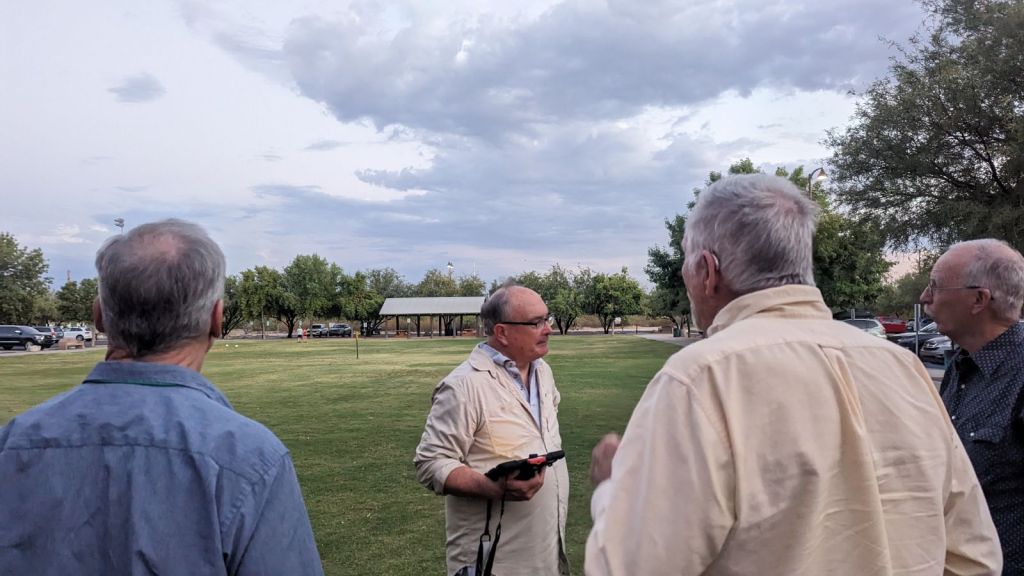
On a recent evening in July, 21 naturalists and friends gathered at Brandi Fenton to attend an enthralling presentation by Jeff Babson, a wildlife specialist with Pima County Natural Resources, Parks and Recreation. The day’s topic was bats, and Jeff took the audience on an extraordinary journey through these enigmatic creatures’ history, behavior, and diversity.

Jeff kicked off the presentation by sharing intriguing insights into the history of bats, going back a staggering 55 million years to the Icaronycteris index, one of the earliest bat fossils discovered. Due to the challenges in fossilizing small bones, early bat history remains somewhat obscure. However, discoveries like Onychonycteris finneyi, with its small cochlea (part of the ear), revealed that bats could fly before they developed echolocation abilities.
The audience was amazed to learn that not all bats are nocturnal, with flying foxes being a notable example. These old-world fruit bats, known for their impressive wingspan and loud calls, are more active in the morning. Jeff speculated that the original bats may not have been nocturnal either but switched to nighttime activities due to fewer predators, abundant insects, open flowers, and cooler, and more humid conditions.
During the bat presentation, Jeff revealed the diverse families of bats found in North America, captivating the audience with intriguing facts about various species. From the impressive wingspan of the Golden-crowned flying fox to the peculiar facial adornments related to echolocation, each bat species holds its own unique charm.
The presentation highlighted the vital role bats play in our ecosystem. Over 500 species of plants rely on bat pollination, making bats crucial for the reproduction of various plant species, including the columnar cactus and agave. Additionally, some bats, like the Mexican Long-tongued Bat and Lesser Long-nosed bat, are crucial pollinators of agaves and have recently been recovered from near-endangered status.
However, bats face several threats, including habitat loss, pesticides, and the deadly white-nose syndrome, which has caused a 90% decline in some bat populations. Efforts are underway to protect and educate the public about the importance of these remarkable creatures. Organizations like Bat Conservation International (BCI) and the Borderlands Restoration Network are working to conserve bat populations and promote coexistence with humans.
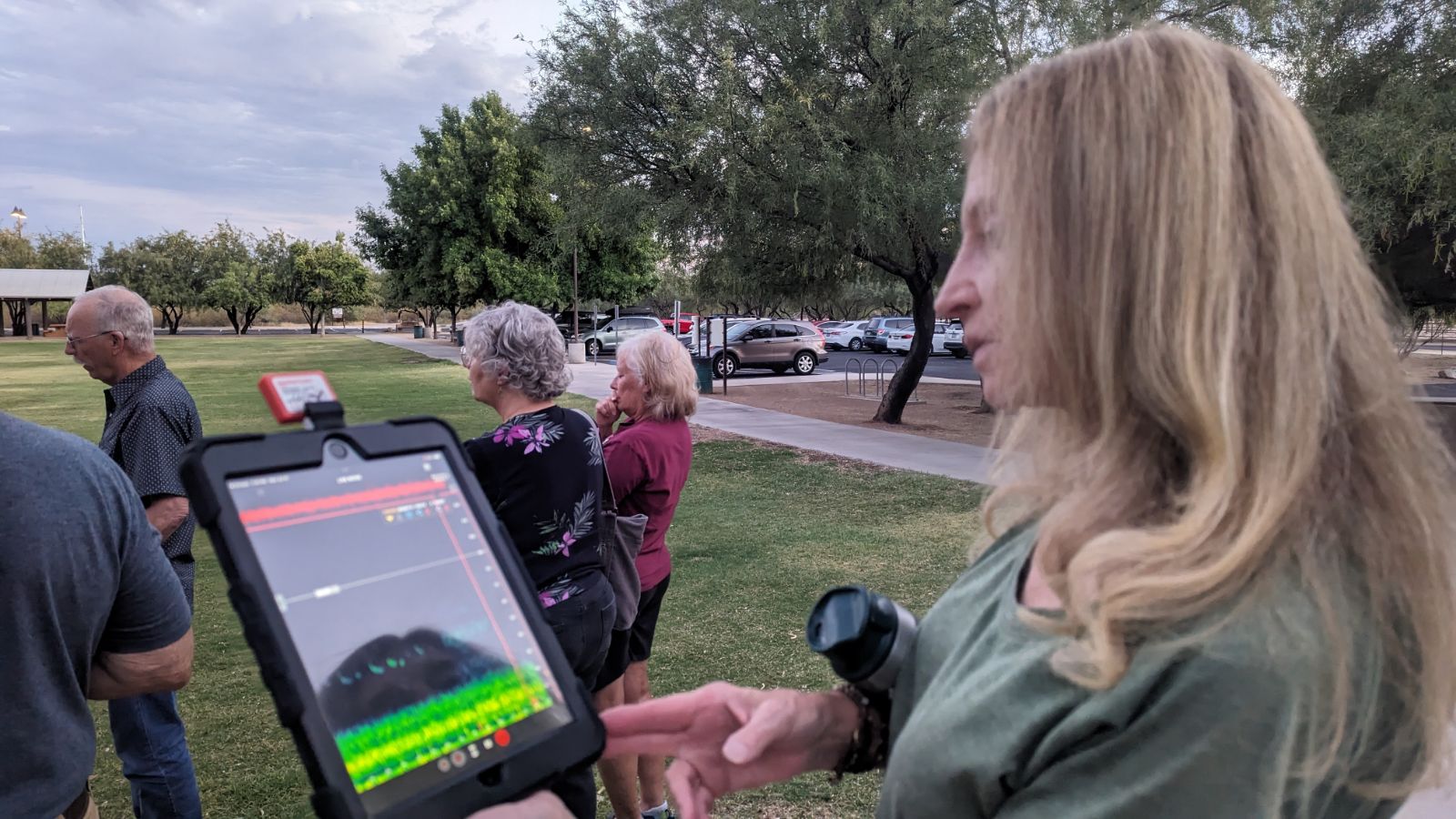
After the presentation, participants grabbed their phones and tablets and used the “Echo Meter: device and software” to listen for and identify bats.

Overall, the bat presentation left attendees with a newfound appreciation for these extraordinary mammals, and we look forward to future opportunities to learn more about the diverse and remarkable world of bats
 Pima Master Naturalists
You must be logged in to post a comment.