
The Hidden Threat of Death Pipes
Kathe Sudano, Cohort 3
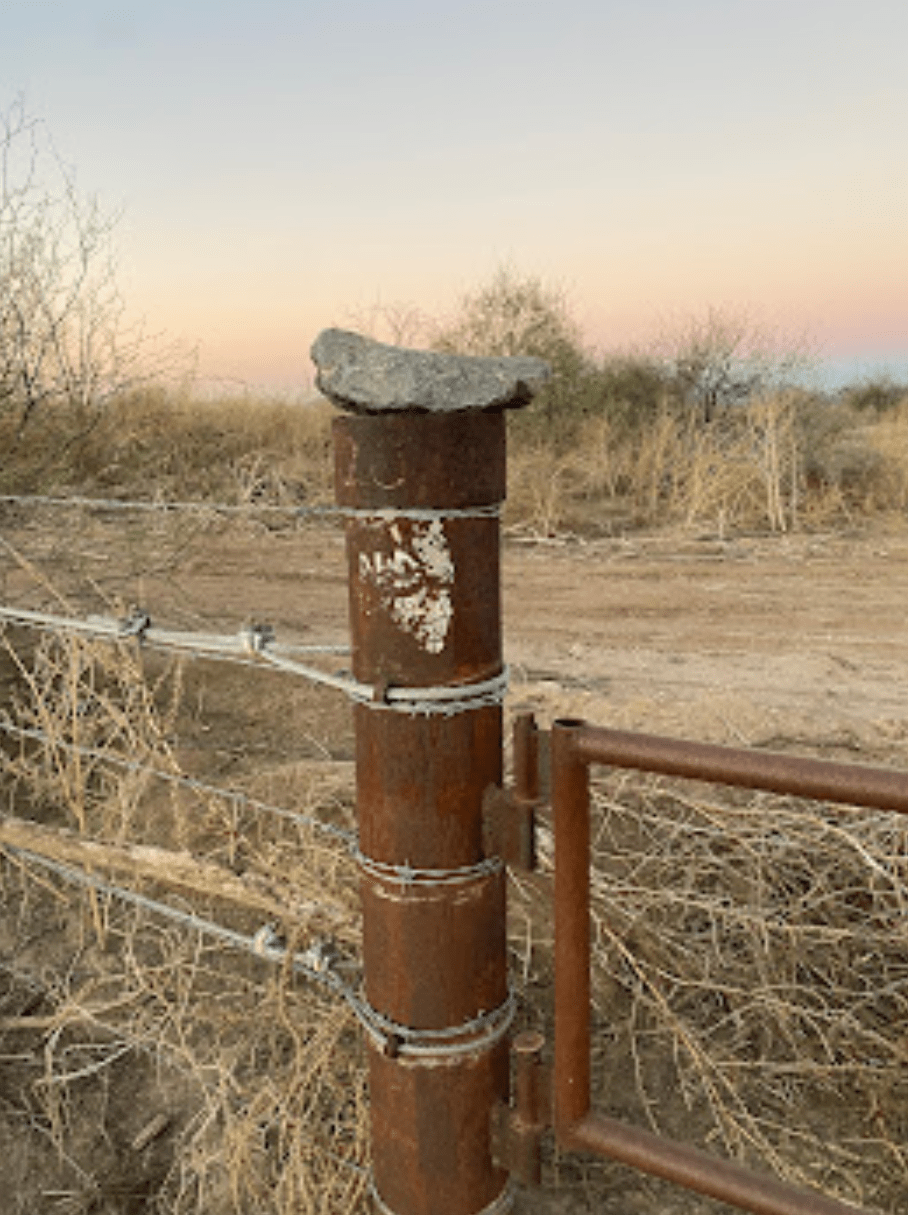
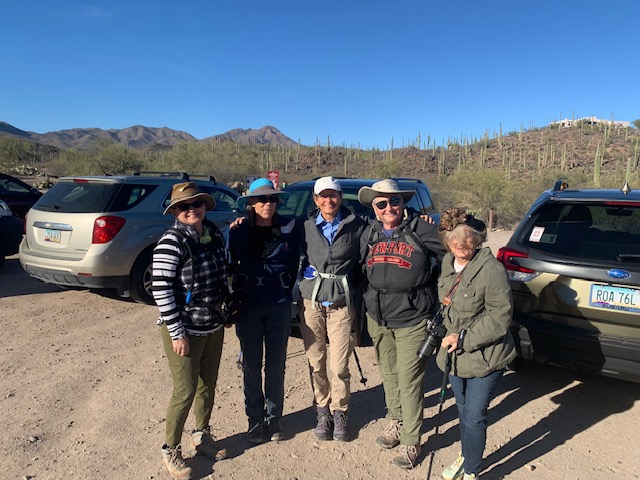
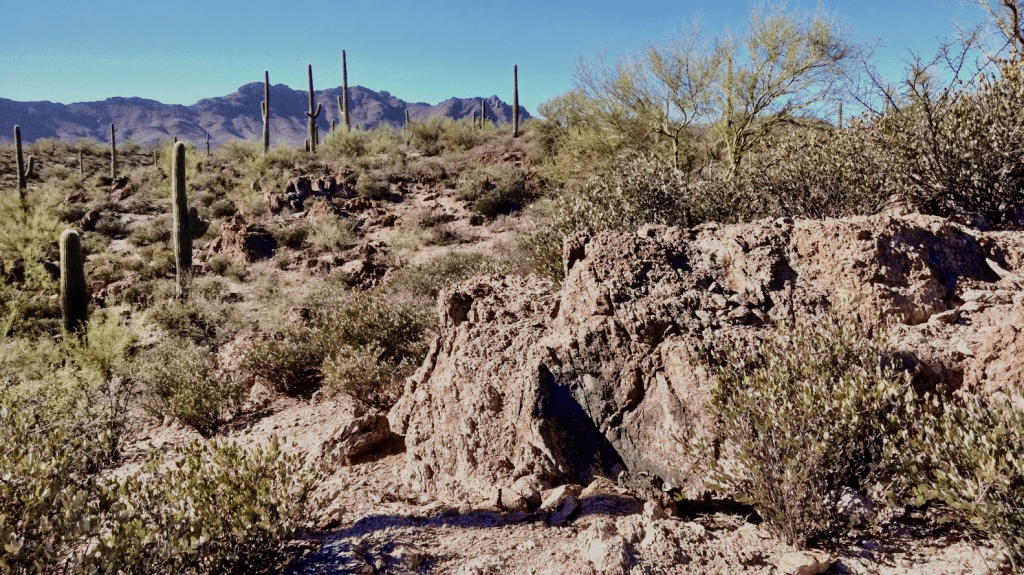
On Saturday, March 2nd, 2024, about a dozen of us volunteers signed up to assist Tucson Audubon’s Conservation Project Manager, Olya Weekly, to cap open vertical pipes in Catalina Regional Park. Most of us had no idea the dangers these innocuous structures pose to birds and other wildlife. Commonly referred to as Death Pipes, small creatures can become trapped inside them when seeking a place to nest, hibernate or roost. Unable to climb the smooth surface of the pipe or spread their wings, birds eventually die a slow death.
Cavity nesting birds are most likely victims, but lizards, snakes, small mammals, and insects fall victim to these pipes. As birders, we often venture into wilderness areas making us valuable allies in locating and reporting the pipes. Tucson Audubon asks that you please report open vertical pipes through their website using the form at tucsonaudubon.org/deathpipes. We ask for a few details about the pipe’s location and dimensions and a photo if possible. We also kindly ask that you temporarily cap the pipe with readily available objects until we can arrive to permanently address the issue.
Several methods exist to cap open pipes that serve no obvious function. Temporarily, you can place a large rock on top of the pipe or stuff trash, vegetation, or rocks inside. For those addressing pipes on their own property and seeking a more permanent solution, options include using wire mesh with a clamp, a cement cap, or complete removal of the pipe. The possibilities are endless, but ensure the cap is secure and not easily movable by wind or animals. Most of this info was copied from a blog by Olga Weekly who works for Tucson Audubon. While they are currently wrapping up capping days and will resume in the fall, please report any pipes you encounter on their website here: https://tucsonaudubon.org/deathpipes/. Remember open pipes are death traps for birds!
Pima MN 2023 Annual Meeting
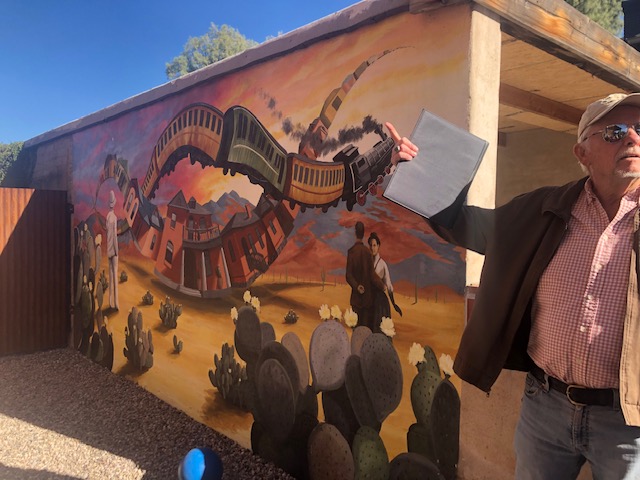
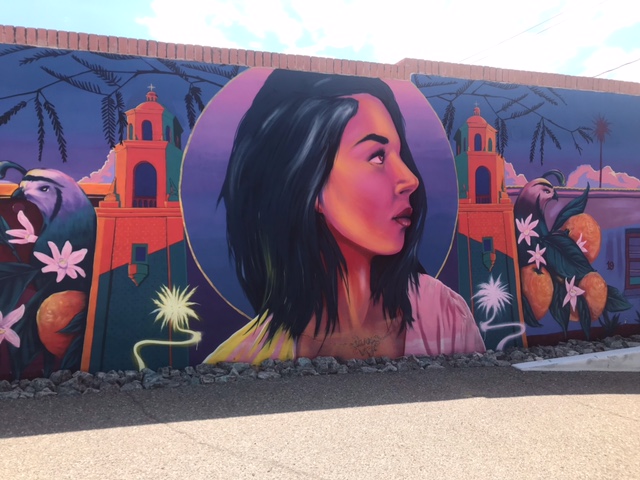
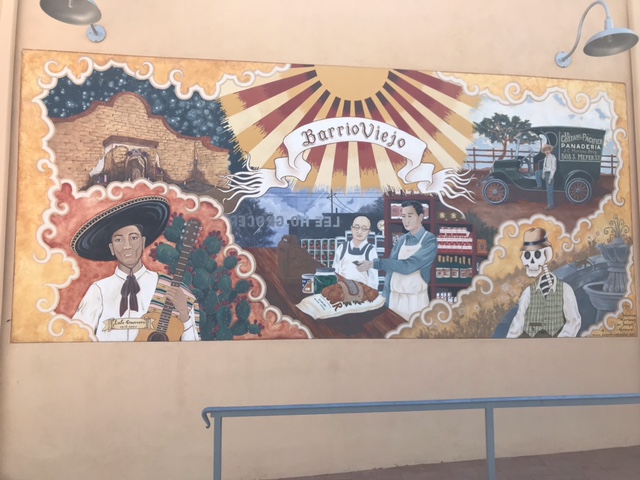
Franklin Lane presenting the Train Mural by Joe Pagac during his Barrio Viejo Walking Tour
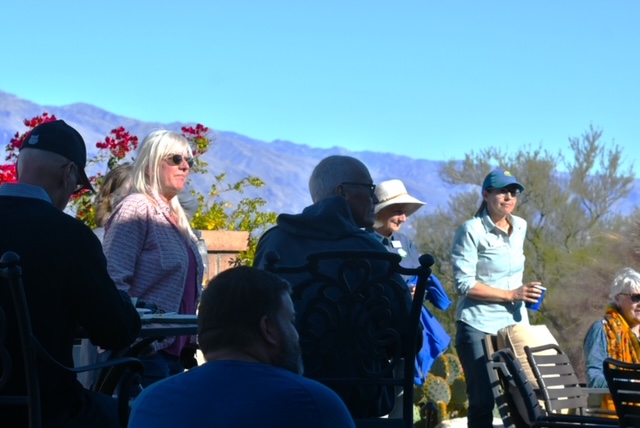
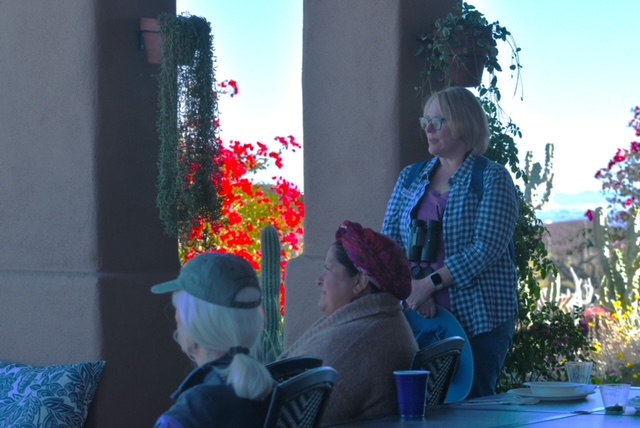
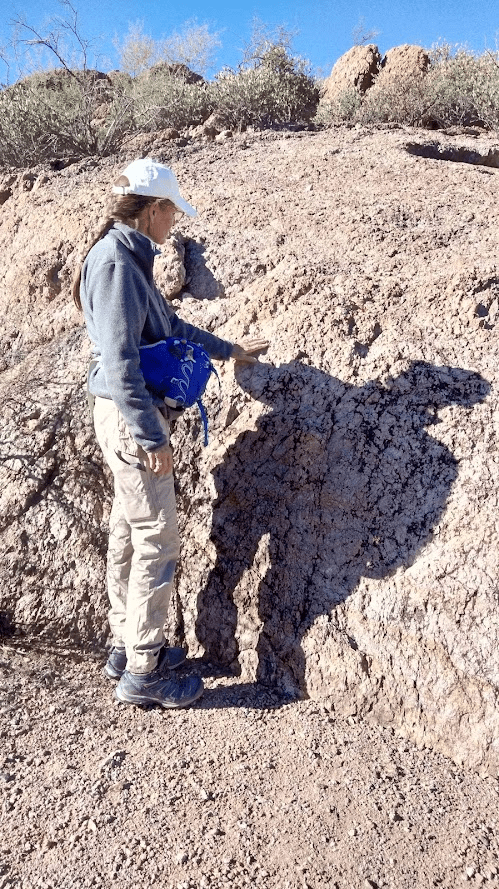
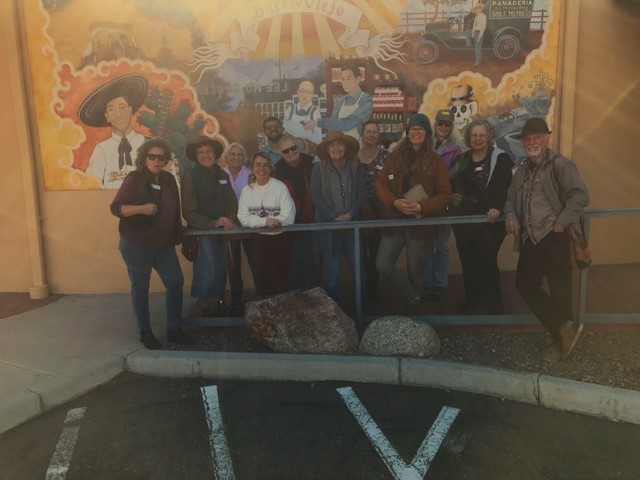
On a beautiful, sunny Sunday on December 10th, the Pima Chapter held their annual meeting, graciously hosted by Penny Miller (C2), at her home in the Tucson Mountains. Scrumptious food, good friends and a good time was had by all! Attendance was at an all-time high for the chapter with 46 people including members, new recruits (C8) and family members. Twelve (12) MNs participated in pre-meeting activities which included a Barrio Viejo Walking Tour guided by Franklin Lane (C1), a Nature Hike with a Geology Twist at Sweetwater Preserve conducted by Jenna Marvin (C3) and a Sweetwater Wetlands Birdwalk lead by Christina Klock (C7).
Pima County Natural Resources and Parks & Recreation, Environmental Education (EE), took over as the Chapter’s Sponsor in 2023. Chapter Advisor, Melissa Mundt (C5), gave a brief presentation on EE’s role as our Chapter Sponsor. A BIG thank you was given to all members for their continued volunteer service to our community and associate partners and to the chapter. In addition, 5 year certification awards were presented to 19 Pima Chapter members who have recertified for 5 or more years thanking them.
Post by Deb Petrich C1; Photos courtesy of Kathy McLin C3, Linda Doughty C6, Tania Morris C6, Dana Hook C6, Franklin Lane C1



PCMN Book Club Review – Brave the Wild River: The Untold Story of Two Woman Who Mapped the Botany of The Grand Canyon

Post by Izetta Feeny, Cohort 3 and Penny Miller, Cohort 2
Brave The Wild River: The Untold Story of Two Woman Who Mapped the Botany of The Grand Canyon
Written by Melissa L. Sevigny copyright 2023
Winner of the 2023 National Outdoor Book Award for History/Biography
Melissa Sevigny has written an account of the first two non-native women to travel the Colorado River through the Grand Canyon. The trip was made in 1938 in three wooden boats. For the women who accomplished this the significance was not that they were women but that they were the first botanists to map the plants of the canyon. The author researched their diaries of the trip as well as those of the four men traveling with them. She also researched the newspaper accounts of the trip. They caused quite a media frenzy because they were women, but the fact that they were botanists and this was the first scientific expedition to collect and note plants in the canyon was rarely mentioned by journalists. Whether you read it for the incredible adventure that it was or for the insight into the canyon before the building of dams began, you will finish with a new understanding of both the ecology and the beauty of the canyon.
*** Book Preview 21 pages of 288 (click here) ***
The Pima Chapter formed its own Book Club back in 2020. The group is capped at 15 and there are currently 11 members but the group is looking to recruit 4 more members from the Pima Chapter. Members pitch books then everyone votes on which book to read. Book topics must tie into the PCMN program of nature, and cultures in the Sonoran desert, or broad environmental issues that impact that region, such as climate change, water use, etc. Members meet every other month and rotate through different member’s homes in various parts of the city.
Pima Chapter Book Club FAQs
Why was the Book Club formed initially?
- The club provided social opportunities for Master Naturalists to meet other MN’s particularly from other cohorts and cohorts that had never met in person during the years the training was delivered completely online, due to covid.
- Reading books about the Sonoran Desert serves to enhance the skills and knowledge of master naturalists and builds on the content learned in the training curriculum.
- Hearing the take-aways of others about the book deepens and broadens the impact of the content and brings additional perspectives to the reader.
- Social activities within the MN program serve to create and strengthen friendships; that strong social fabric will serve to keep the chapter strong and sustainable long term.
Where and when do we meet? Club member’s homes, rotated. If no one offers to host a meeting, the club meets at Penny’s house on the West side of town. Every other month, except no summer meetings. THIRD THURSDAY of the month: Jan 18, March 21, May 23, Sept 19, November 21 in 2024. One hour social, one hour book discussion, more social time! Typically, 5-6 pm social time, 6-7 pm book review and club business, 7-8 pm or so more social time!
How many members? Capped at 15, as someone goes off, we accept a new person.
Do I have to agree to host a meeting? NOPE! Not everyone is set up to park and house 15 people, although 8 -10 is the usual attendance.
If I host, do I have to provide a meal and drinks? NOPE! You can if you want, sometimes we tie food to the book topic if possible, it can also just be snacks, or BYO food. Its totally up to the host.
What type of books do we read? Nonfiction, desert and nature related topics. Members pitch books, then everyone votes. Book topic must tie into the PC MN program of nature, and cultures in the Sonoran desert, or broad environmental issues that impact that region, such as climate change, water use, etc.
What if I join, then don’t like the book or don’t finish it? Come anyway!
What’s the attendance policy? If you miss more than 3 meetings in a row, (3 is okay, to accommodate snowbird members) you will be asked if you have extenuating circumstances, and wish to remain in the club or free your spot for someone else.
Do I get any Advanced Training hours credit? Yes! You can count 1 hour (only) for the discussion, as Advanced Training. NO hour credits for reading the book! ☺
How is the Book Club managed? Penny Miller takes care of logistics, Penny and the meeting host provide meeting details. Club members vote on dates, times, books and book club policies/issues as they pop up. Inactive members may be asked to drop off, so others can join.
How do we choose a book? We ask that the person pitching the book has already read it! We no longer pitch or vote on the book via email survey. You must to be present at a club meeting to pitch a book.
Do I have to buy the book? We meet every other month, we decide what books will be next for the upcoming 2-3 meetings, which is 4-6 months out because we meet every other month. This gives everyone the ability to request the book from the local library, purchase it at a used bookstore, or borrow from other club members. Of course we encourage everyone to support local new and used books stores.
How do I ask to join? Contact Penny at pmiller451@aol.com to join, if a space exists, or to be put on wait list…..
Or write your name and email address on the back of this piece of paper! 😊
Cienega Creek Preserve Tracks and Scat Field Lab

Blog Post: Deb Petrich Cohort 1; Photos: Jean Boris, Cohort 2, Paul Redinger Cohort 5, Deb Petrich Cohort 1
On a beautiful, warm Fall Saturday on September 30th, several master naturalists (Jean Boris, Jane Williamson-Davenport, Melissa Mundt, Paula Redinger, and Acacia Dupierre) along with some friends participated in a tracking and scat field lab in the Cienega Creek Natural Preserve This workshop was coordinated by Deb Petrich and presented by Hank Harlow, former Cohort 3 master naturalist and Professor Emeritus in the Department of Zoology & Physiology from the University of Wyoming and Director Emeritus of the University of Wyoming-National Park Service Research Station, Grand Teton National Park. Dr. Harlow has conducted laboratory and field studies on the physiological ecology of vertebrate species such as polar bears in the arctic and Komodo dragons in Indonesia documenting their adaptation to stressful environments. Hank’s training also includes attending Sky Island Alliance’s 3-day wildlife tracking workshop that provided hands-on field instruction and theory in a variety of skills and techniques.
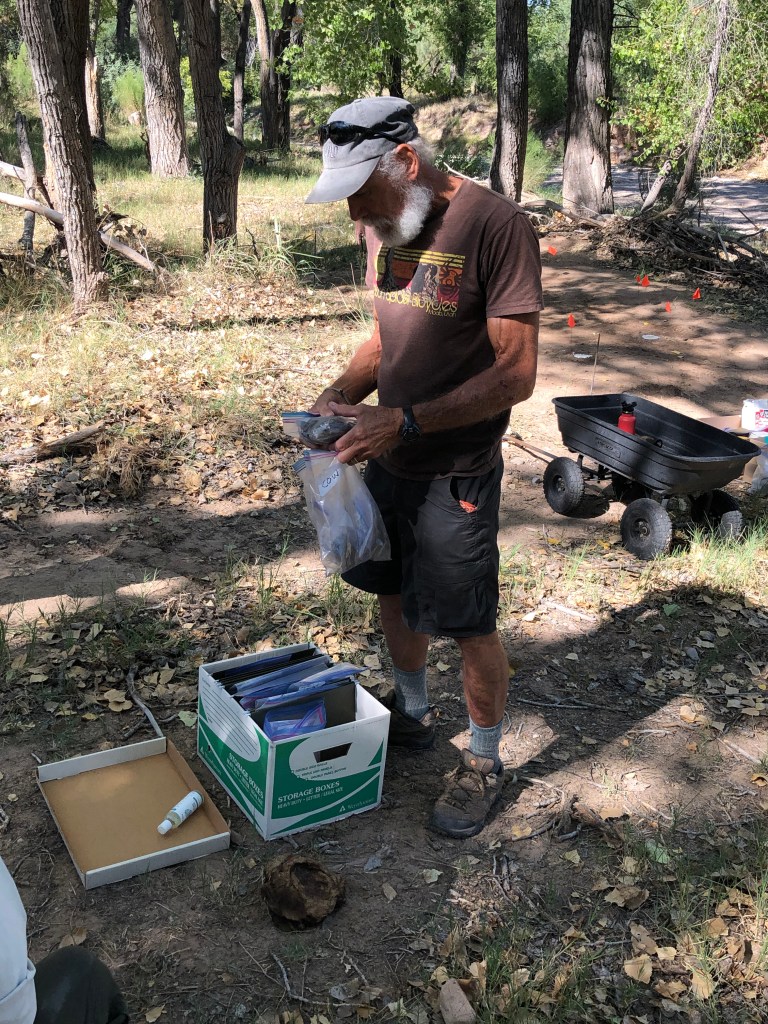
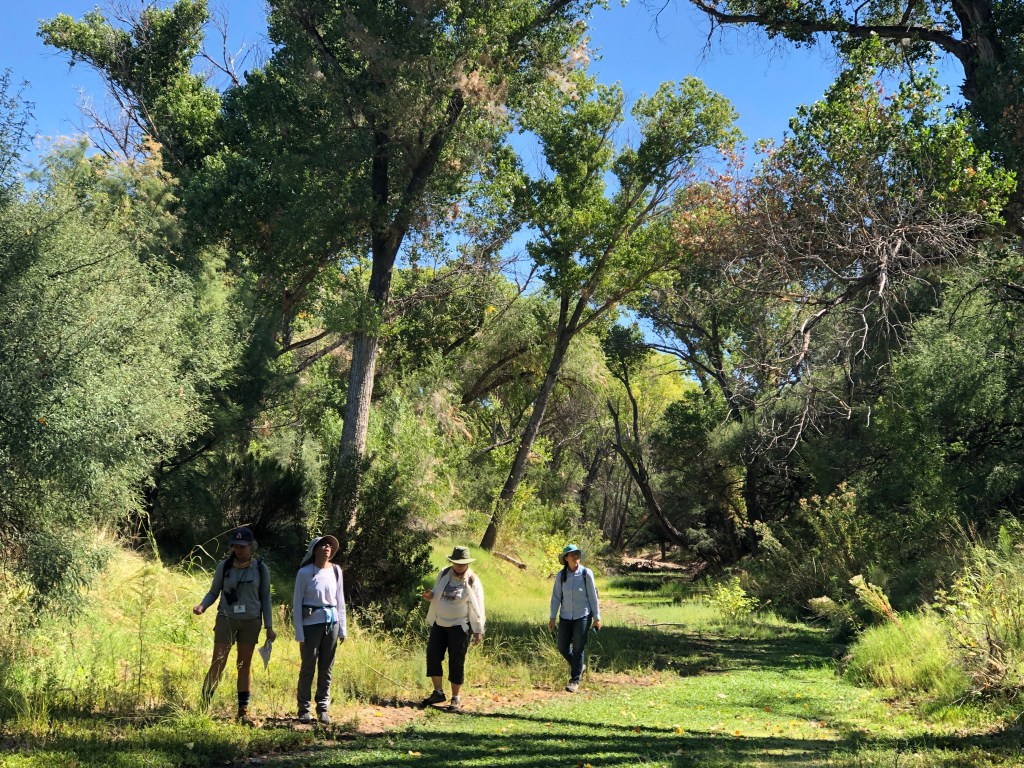
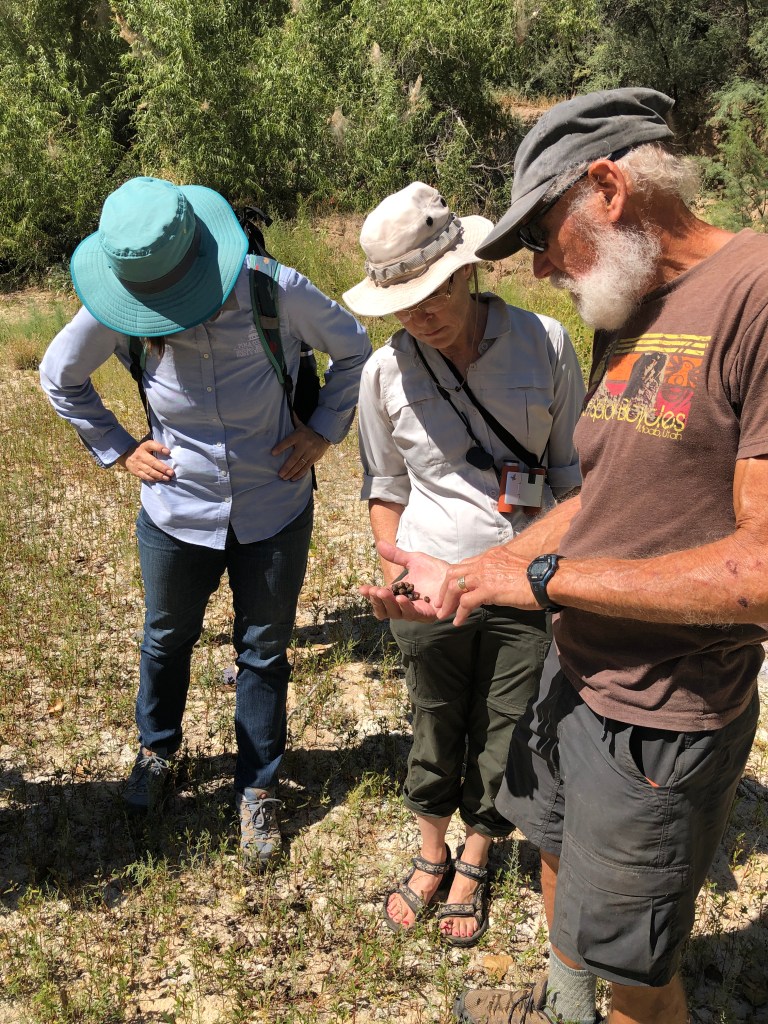
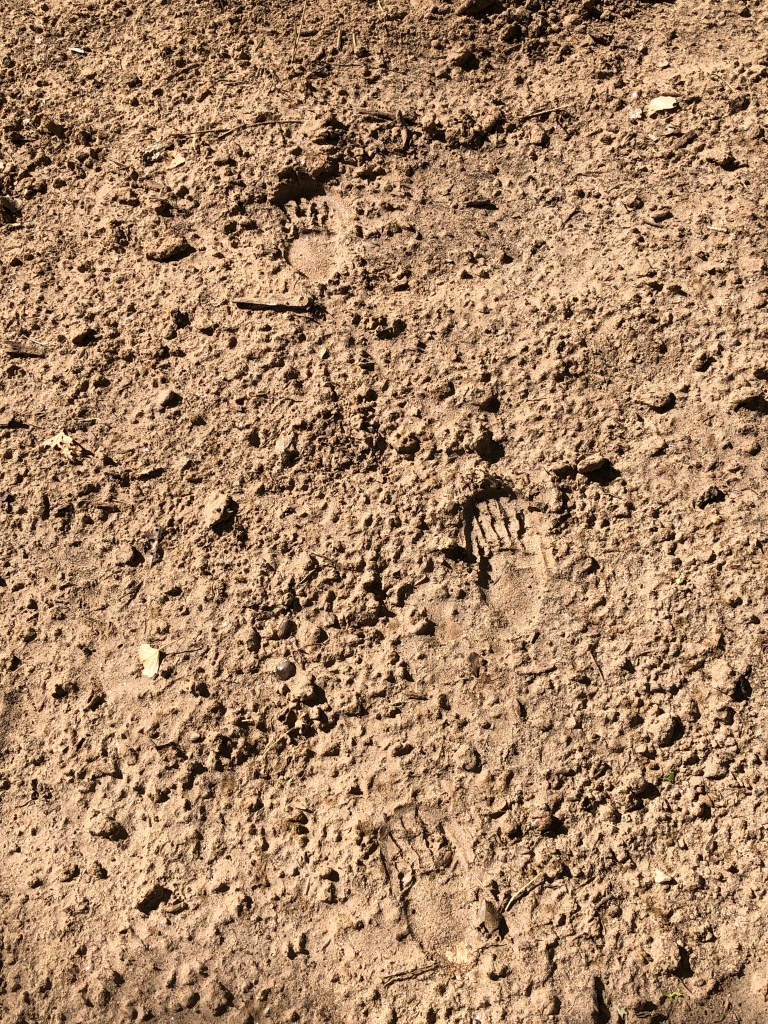
Participants learned basic wildlife tracking skills including track morphology, structure, terminology and how to distinguish between tracks created by wildlife in this riparian area. Tracking cards were handed out to assist with identification and measurements. In addition, a brief scat overview was presented by Hank with sealed ziploc bags of different wildlife’s scat. The group then hiked Cienega Creek looking for tracks and scat to analyze and identify. During our time spent in the field, the group was lucky enough to spot a female bobcat and kitten along with a group of 3 coatimundis. It truly was a magical, learning experience!
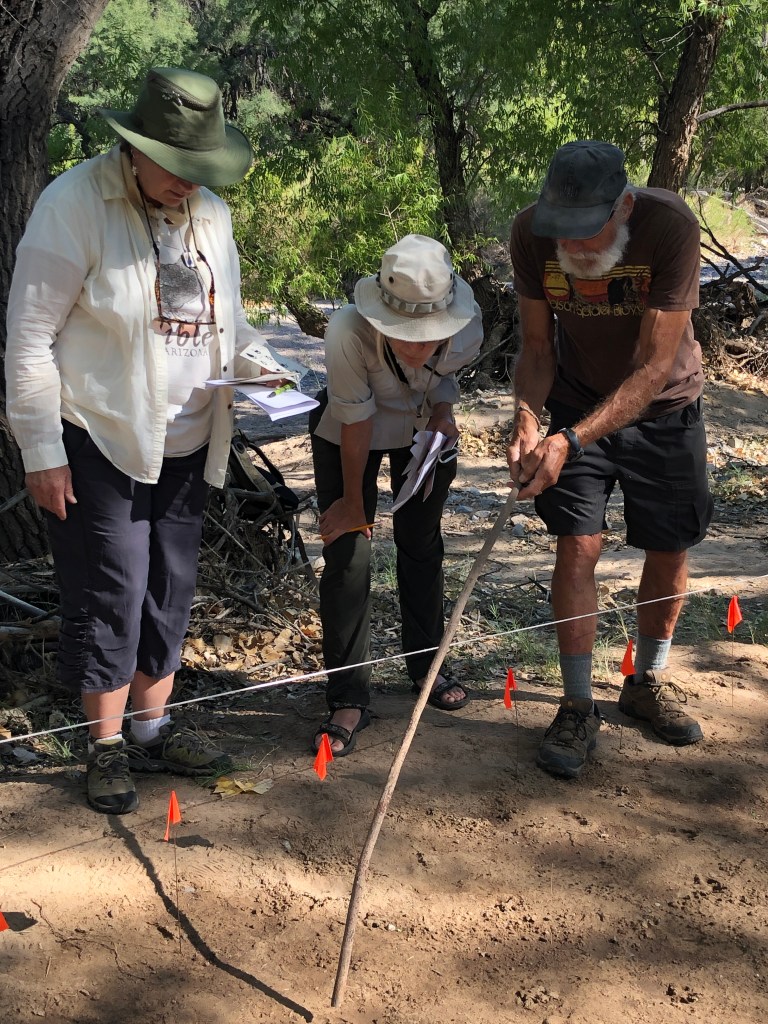
For an educational reference on this riparian area located in Pima County, please visit this Arizona Heritage Waters webpage. In brief, Ciénega Creek Natural Preserve is noted for outstanding quality and variety of natural resources. The riparian environment, a conservation resource equal to any other in the region, rivals that which existed in the Tucson area before 1900. The riparian landscape within the preserve is notable, due to its high biodiversity that is becoming increasingly scarce in Arizona. The preserve is located within a transitional zone between the Sonoran and Chihuahuan Deserts, and exhibits some of the features of each region. The creek supports outstanding examples of cottonwood-willow gallery forest and mesquite bosque. These are home to bird species that have become rare through loss of riparian habitats, including the Southwestern willow flycatcher, Yellow-billed cuckoo, Bell’s vireo, and a various raptors including Great Horned and Barn Owls, and Black, Red-Tail, Gray and Swainson’s hawks. In addition, this area supports very diverse mammal populations as evidenced on wildlife cameras and research by Sky Island Alliance, Coalition for Sonoran Desert Protection and Pima County Natural Resources and Parks&Recreation (PCNRPR).
Field Lab Feedback:
Taking the Tracking and Scat Identification class with Hank was an enlightening experience that I would highly recommend to anyone with a love for nature, curiosity about wildlife and a passion for conservation. Both Hank and assistant Deb were knowledgeable with enthusiasm that was infectious! I would happily take this class again! – Jane Williamson-Davenport, C1
I really loved learning a bit about, as well as watching in action, the subtleties of this skill. It’s clear Hank has a wealth experience, which is essential for such a skill as tracking. – Paul Redinger, C5
A BIG THANK YOU for helping put this together! You made it happen!! Best part was learning about tracks in a beautiful riparian environment. Hiking Cienega Creek and identifying tracks was the highlight of the day! Thanks Deb and Hank. – Jean Boris, C2


Love My Sonoran Eden
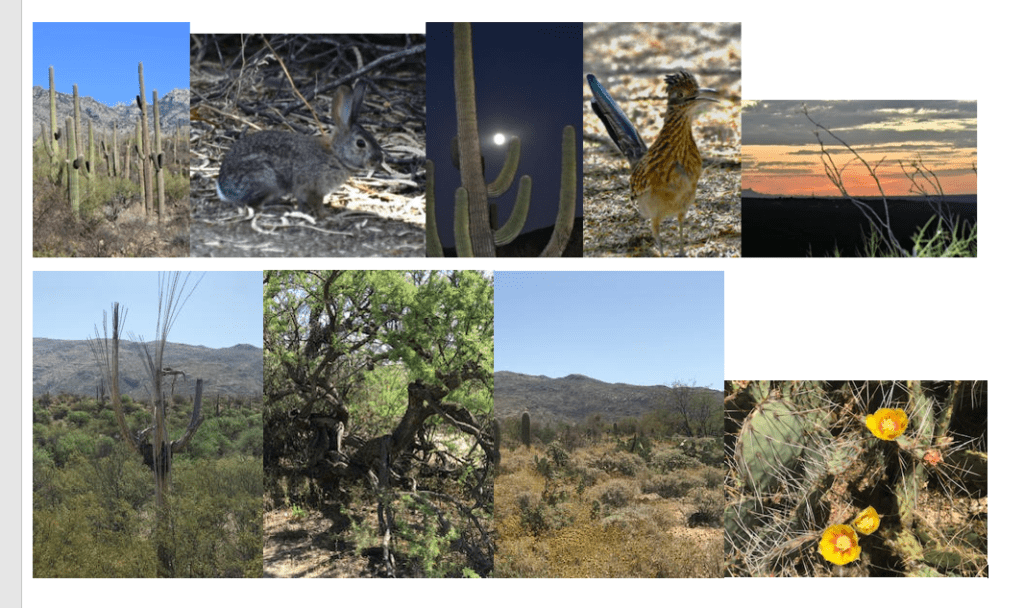
I love how the mountains rise from off the desert floor
Where strewn about in sand and rock,
Cactus and Mesquite trees grow.
And with them Creosote and Brittle Bush, Fairy Dusters and Mallow flower bloom each within their season.
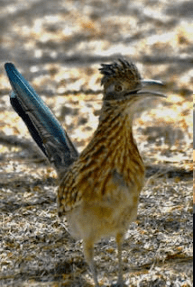
Here Jackrabbits and Desert Cottontail share the land With Gila Monsters, Desert Iguana and Tortoise, Rattlesnake, Roadrunner and Thrasher.
Here Owl, Flicker, and Cactus Wren nest within Saguaro Condo’s Hollowed out by nest building Woodpeckers.
And Lesser Long-nosed and Mexican Long-tongued Bats sip nectar from brilliant white Saguaro blossoms
Promising a rebirth of both keystone species.
It’s here and there packs of Coyote hunt and share life along with the Javelina, Bobcat and Grey Fox.
Rich beyond measure
Am I for this land that surrounds me,
Thrills me with every turn.
I am more alive, more awake, look for me in it’s wild.
Poem by Kathleen Carter McLin, Cohort 3
Mt. Lemmon Mushroom Foraging

Post and photos by Peggy Ollerhead, Cohort 3
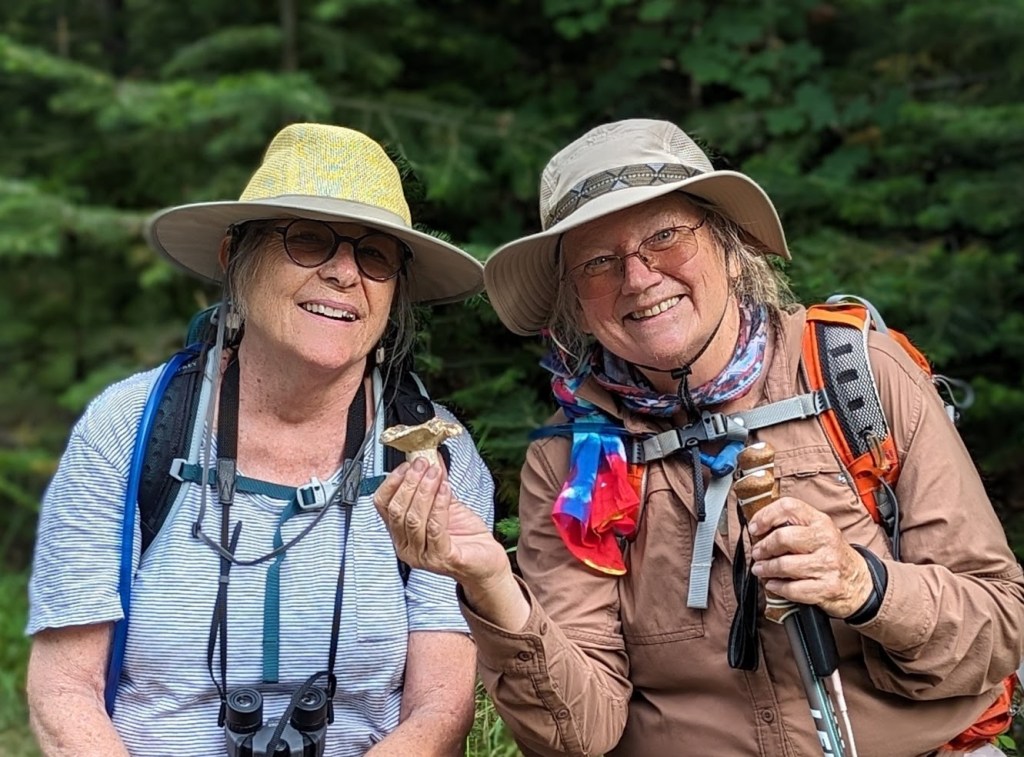
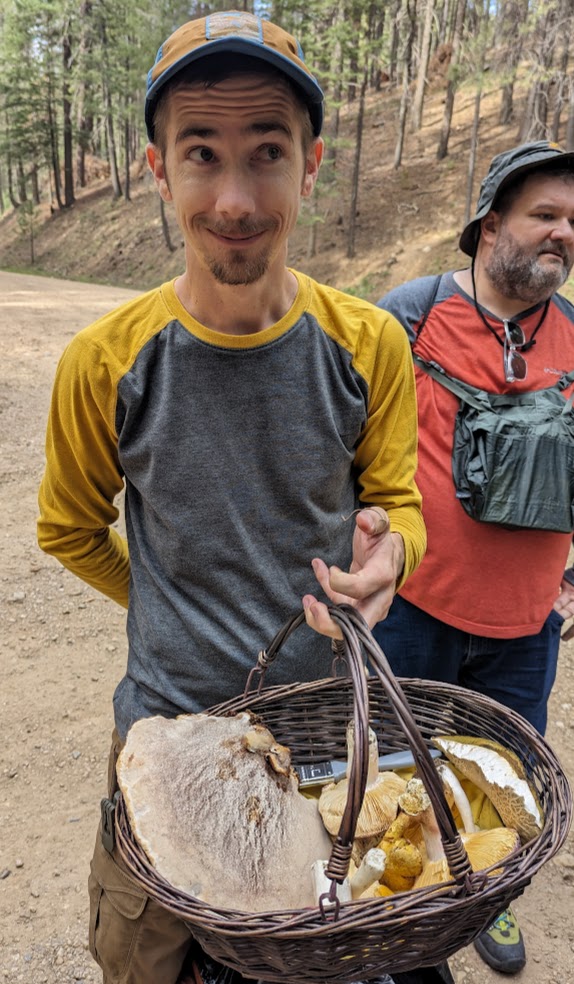
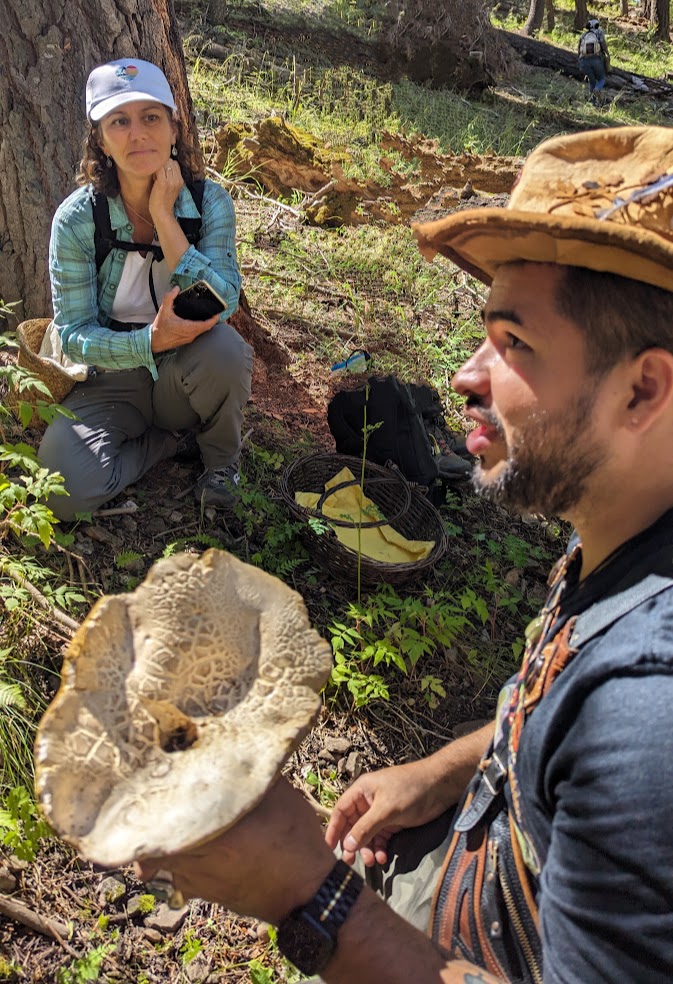
Interested mushroom hunters including four Arizona Master Naturalists from the Pima Chapter (Cameron Becker C2, Kathe Sudano C3, Peggy Ollerhead C3, and Tania Morris C4 Maricopa) joined The Desert Alchemist, Hernan Castro, for a mushroom foraging trip to Mt. Lemmon on September 16th. This trip was a follow-up to the August 14th Advanced Training presentation, titled Identification and Medical Uses of Fungi, that he offered at Brandi Fenton Memorial Park. Participants learned to locate and identify mushrooms and their edible and medicinal uses. Hernan taught field identification strategies, likely mushroom habitats, and methods to distinguish edible from non-edible varieties including the use of scientific test kits that can identify specific types.
Thanks to Izetta Feeney, Advanced Training Committee Chair, for organizing these classroom and field trip Advanced Training options!
Tortolita Preserve First Ever Plant & Animal List
Submitted by Dave DeGroot, Cohort 2
Click on this link to view list: Tortolita Preserve Plant and Animal List
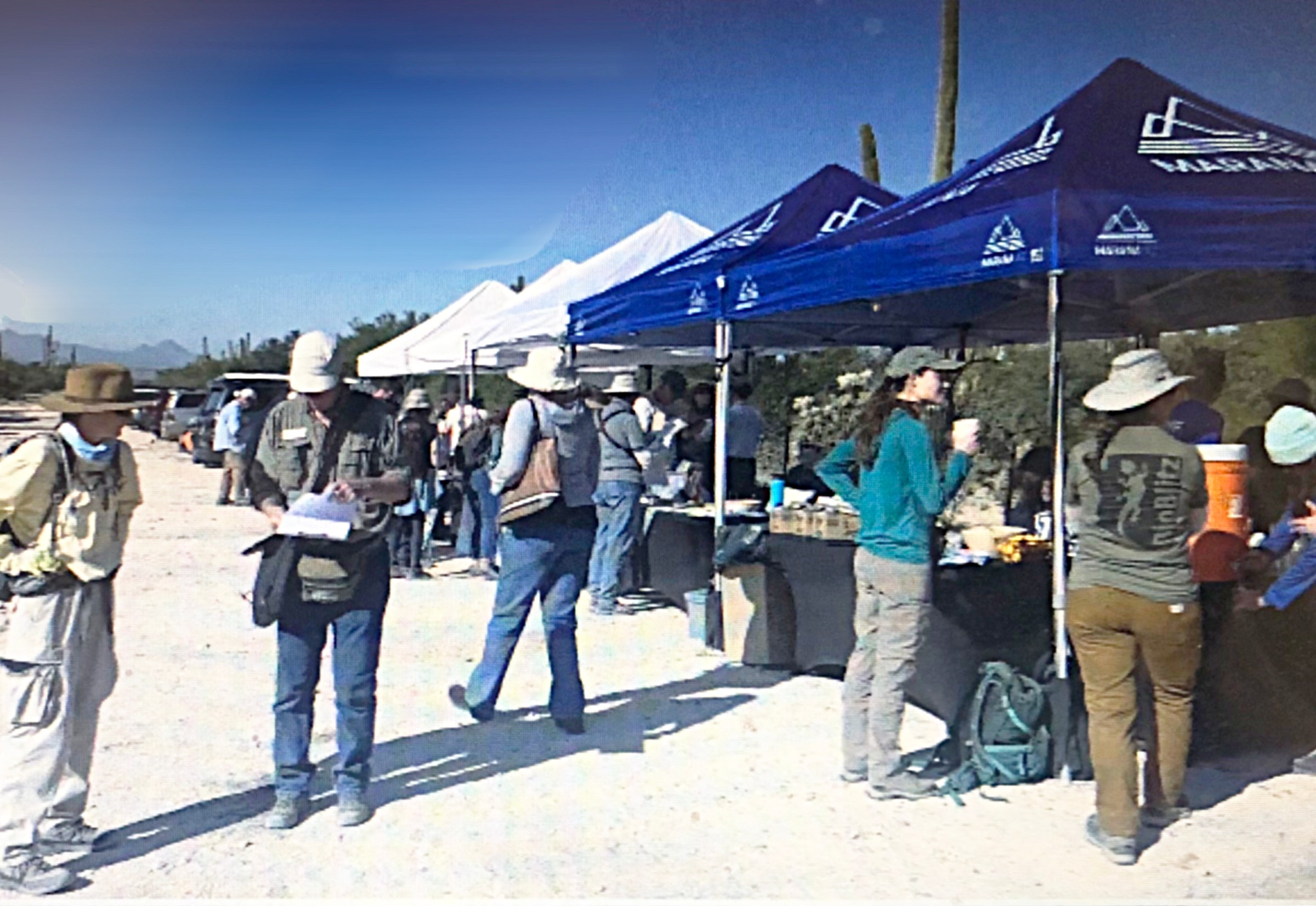
The Tortolita Preserve was established in 2009, to preserve Sonoran Desert monumental-sized Saguaros, Ironwood trees, and habitat that exemplifies desert valley ecosystems. It is located on the Tortolita Fan, part of the Tortolita Mountain Range, in the area of Marana known as Dove Mountain. The Tortolita Preserve land is owned by the State of Arizona Land Dept. and is leased and managed by the Town of Marana – Marana Parks and Recreation. In 2021 the Tortolita Alliance was formed to protect the Preserve after a proposal for re-zoning the land would have allowed strips of commercial development to be established within the present borders.
The 2,400-acre Tortolita Preserve’s entrance is located at 6250 W. Moore Road in Marana. A new public entrance and parking lot at that location was opened on Oct. 28, 2023. This area is thick with native Sonoran Desert vegetation and abundant Saguaro cactus. It is popular for walking, hiking, easy/beginner mountain biking, horse back riding, bird watching, and nature photography.
The first-ever Tortolita Preserve Plant and Animal List (which is still a “work in progress”) was the result of about three years of work by the following people/groups:
1) Dave DeGroot and Ethan Fraijo, 2021-2023,
2) Observations in the eBird “Hotspot,” mostly in 2021 and 2022
3) Master Naturalists working with Marana Parks and Recreation and three other major agencies in BioBlitz #1, 11/19/20/22
4) Master Naturalists in BioBlitz #2, 4/15/2023
This list has been distributed, so far, by two advocacy organizations, to about 1,000 individuals, and a softcover book is being planned for release in 2024.
Arizona Master Naturalists discovered and confirmed the important Mountain Lion observation on this list.
The Ferruginous Pygmy Owl was observed and confirmed approximately 30 years ago.
Grand Canyon Stories with Dave DeGroot

Dave DeGroot, Cohort 2 MN and engaging storyteller, shared his behind-the-scenes stories from his recent book: “Each Trail Has Its Own Story, 35 Years of Exploring the Grand Canyon” at a Fundraising Social for the Pima Chapter, October 30th, at the Hop Shop in Tucson. His presentation was titled “Secrets of the Grand Canyon: Good, Bad, and Ugly Stories From Years of Adventuring on the Trails”. Approximately 18 MNs, a few friends and potential future Cohort 8 recruits attended. Several MNs purchased Dave’s book at the event and a raffle was held for one free book signed by Dave. In addition, $10 from each book sale was donated to the Pima County Master Naturalists. If you would like to purchase this book, you can email Dave at ddg12272@aol.com.


Mountain Lions: Beyond the Myth

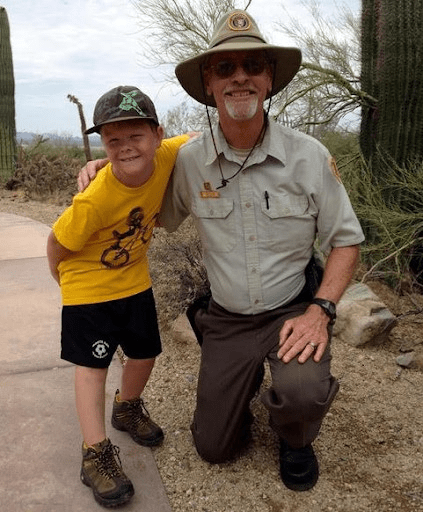
On November 13th, Dan Collins, from Cohort 2 and a Volunteer Interpretive Ranger at Saguaro National Park West, gave a presentation titled Mountain Lions: Beyond the Myth. Misunderstood, maligned, and nearly extirpated by American settlers, the mountain lion remains shrouded in myth and mystery, and faces ongoing challenges to its survival. In his enlightening and entertaining presentation, Dan exposed the folklore and explored the facts surrounding this elusive but essential apex predator.
In addition, during his presentation, Dan shared a map provided to him by the Arizona Game and Fish Dept. showing the home ranges of 3 collared mountain lions under study, and mentioned that a male mountain lion’s home range in the Sonoran Desert could cover 300 to 400 square miles. Since that time, he then came across another map (see below) showing the travels of another male puma under study. This cat’s travels covered some 600 square miles in 8 months, including the Picacho, Tortolita, Santa Catalina and Black mountain ranges.
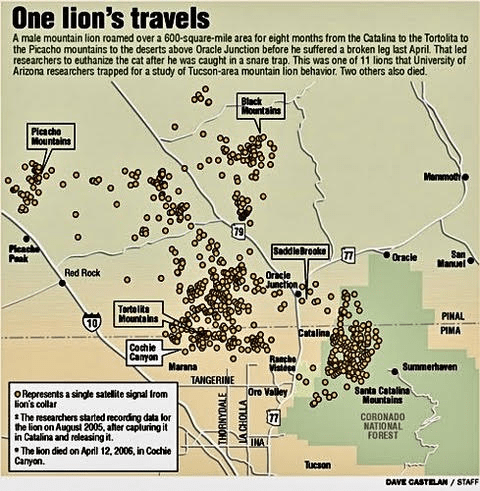
Unfortunately, this puma was injured during capture, and had to be euthanized. Dan mentioned that “capture and collar” studies are not only expensive, but can be dangerous for both the puma and researchers. Much safer and cheaper are wildlife camera, tracking and scat sample studies, and much can be learned from them also.
Written and Submitted by Dan Collins
 Pima Master Naturalists
You must be logged in to post a comment.